
Why Treasury Yields Matter More Than Interest Rates for Gold Traders
Introduction
Many traders monitor every Federal Reserve meeting.
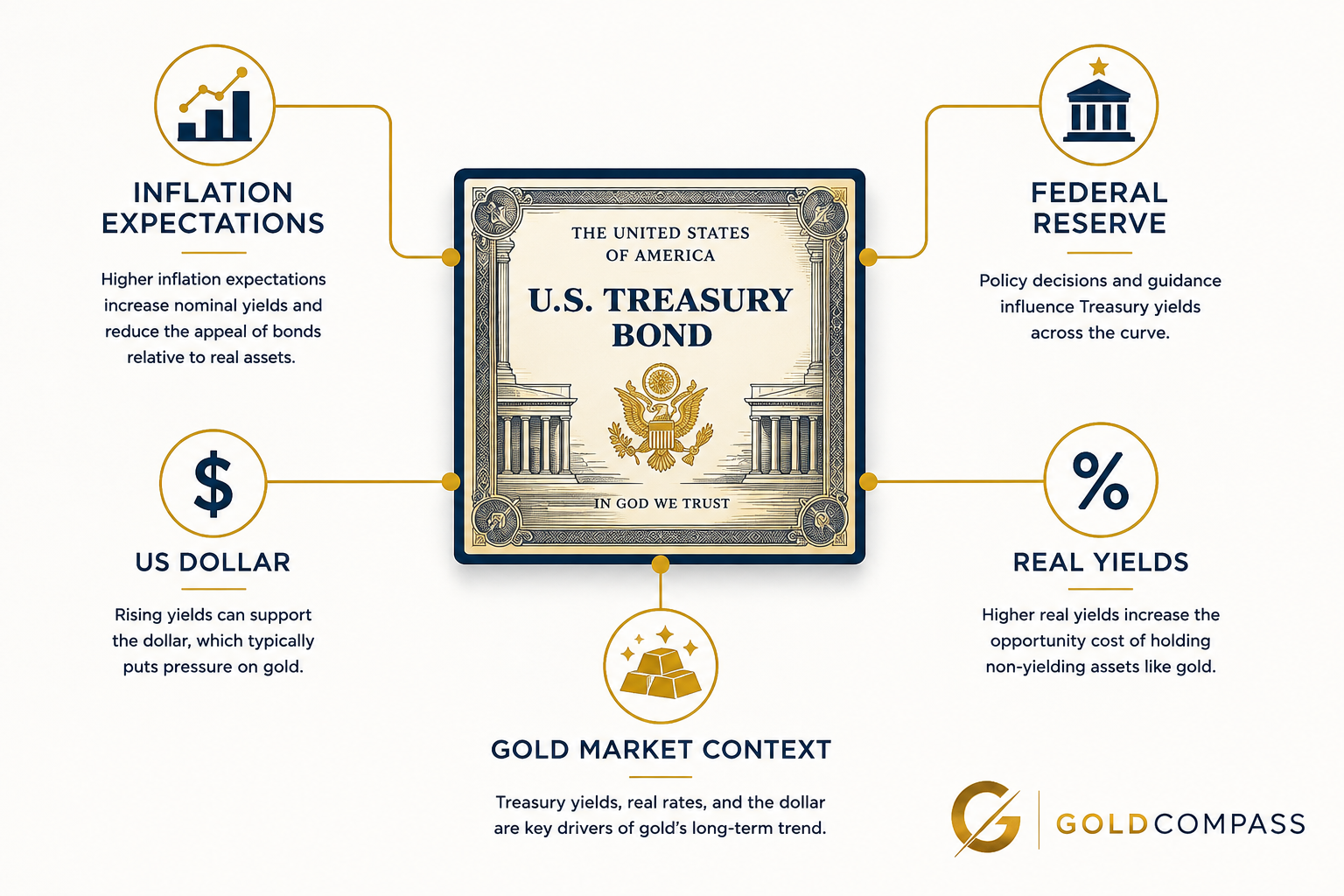
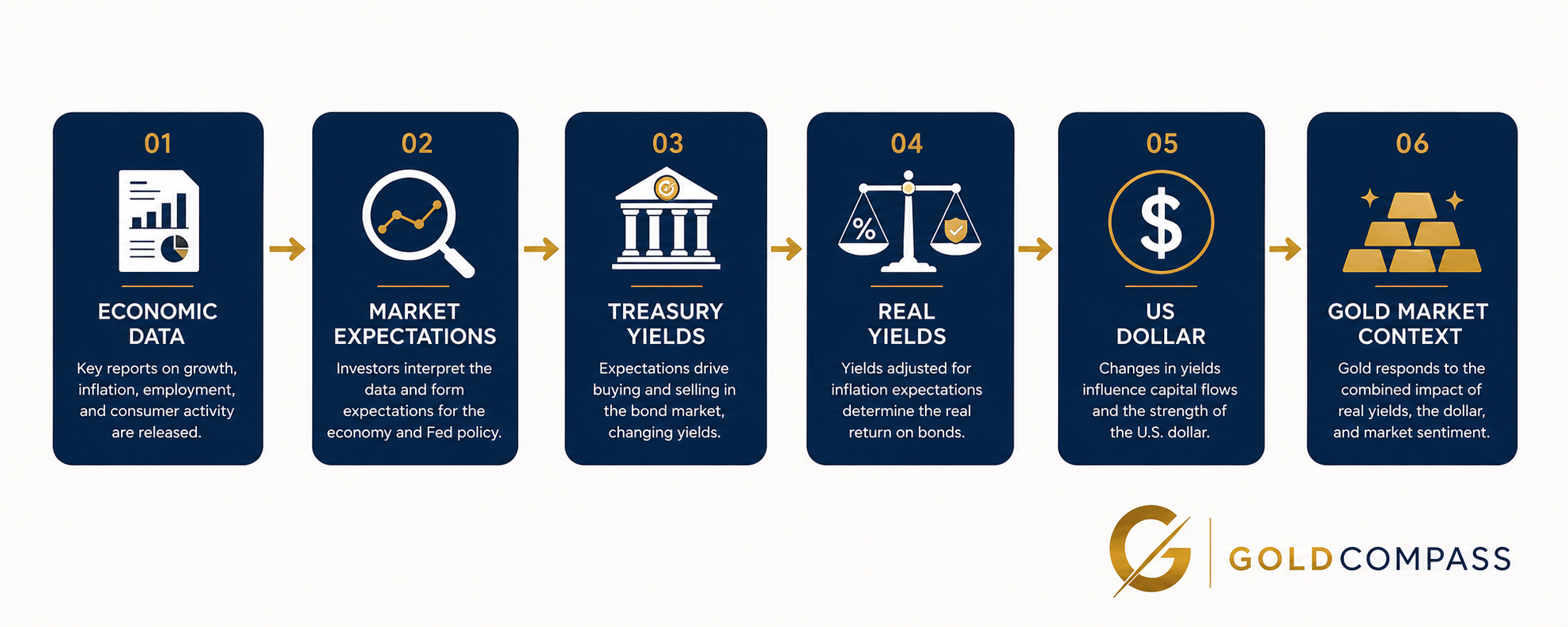
Professional macro traders spend just as much time watching Treasury yields because they continuously reflect how financial markets interpret inflation, growth, and future monetary policy.
Unlike official interest rates, Treasury yields move throughout every trading session.
Understanding them provides valuable context for interpreting movements in gold.
What Are Treasury Yields?
Treasury yields represent the return investors receive for lending money to the U.S. government through Treasury securities.
Different maturities reflect different parts of the economy.
Short-term yields are more sensitive to current Federal Reserve policy, while longer-term yields incorporate expectations about future inflation, growth, and long-term monetary conditions.
The 10-Year Treasury Yield is widely considered the benchmark for global financial markets.
Why Gold Responds to Treasury Yields
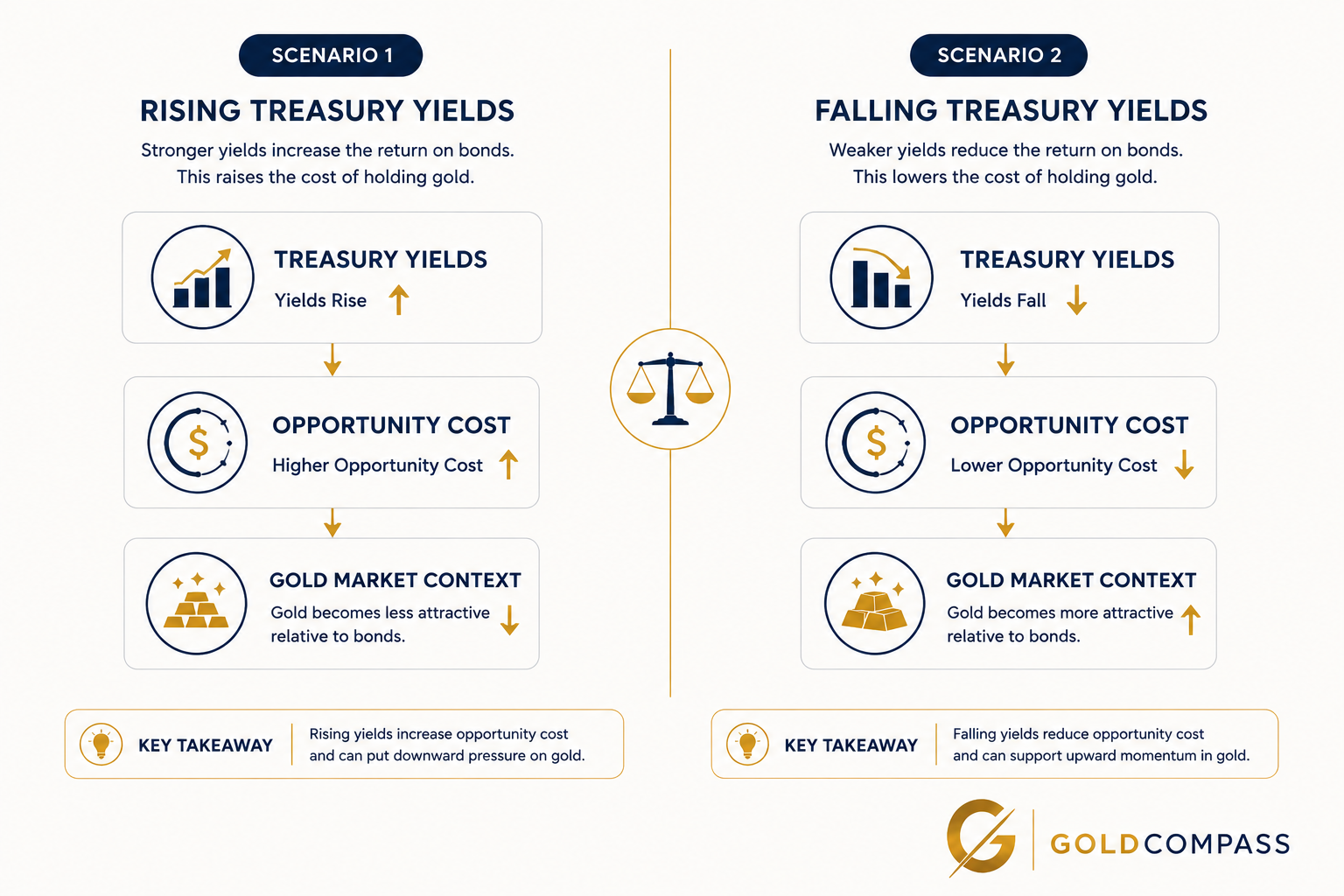
Gold does not generate interest income.
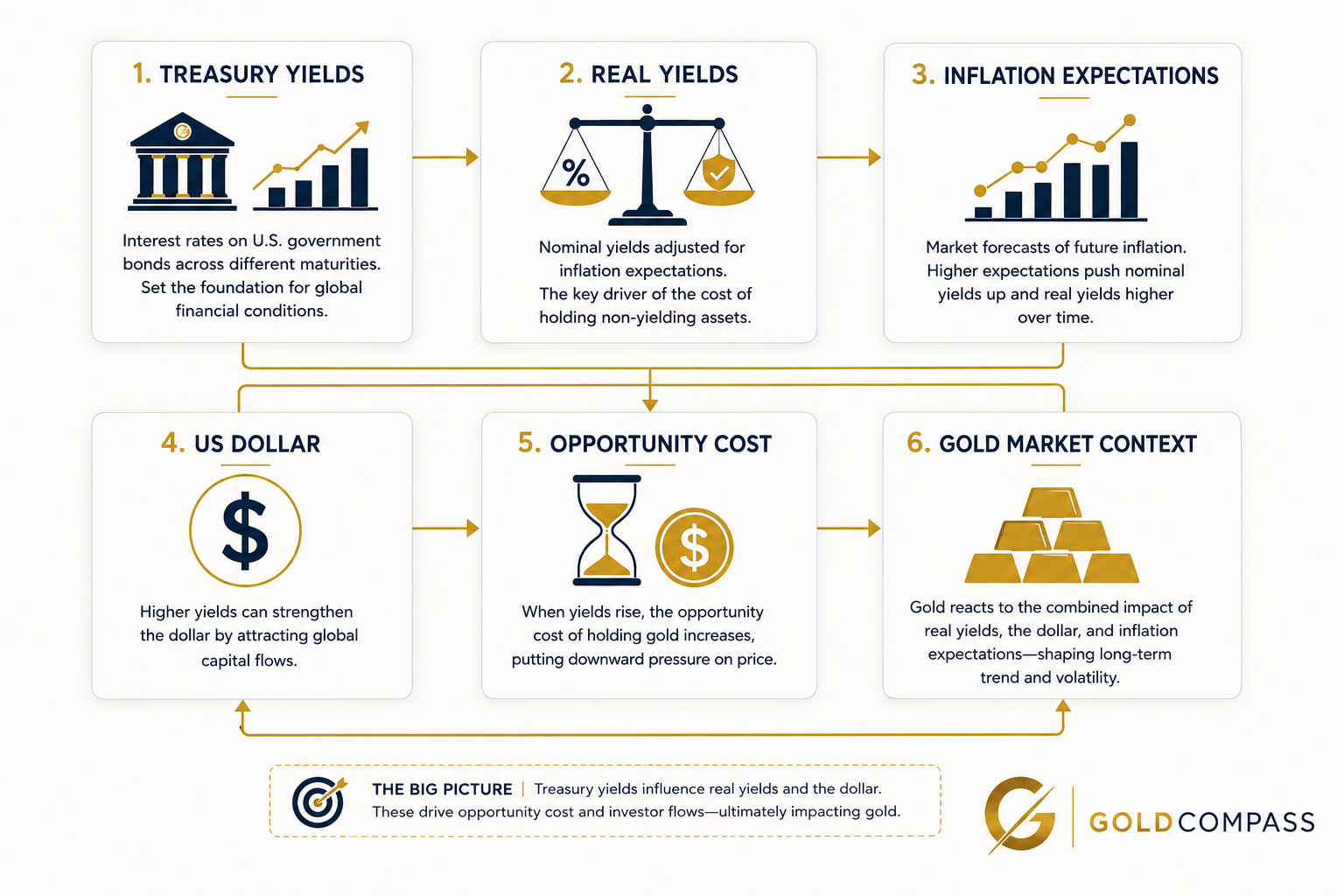
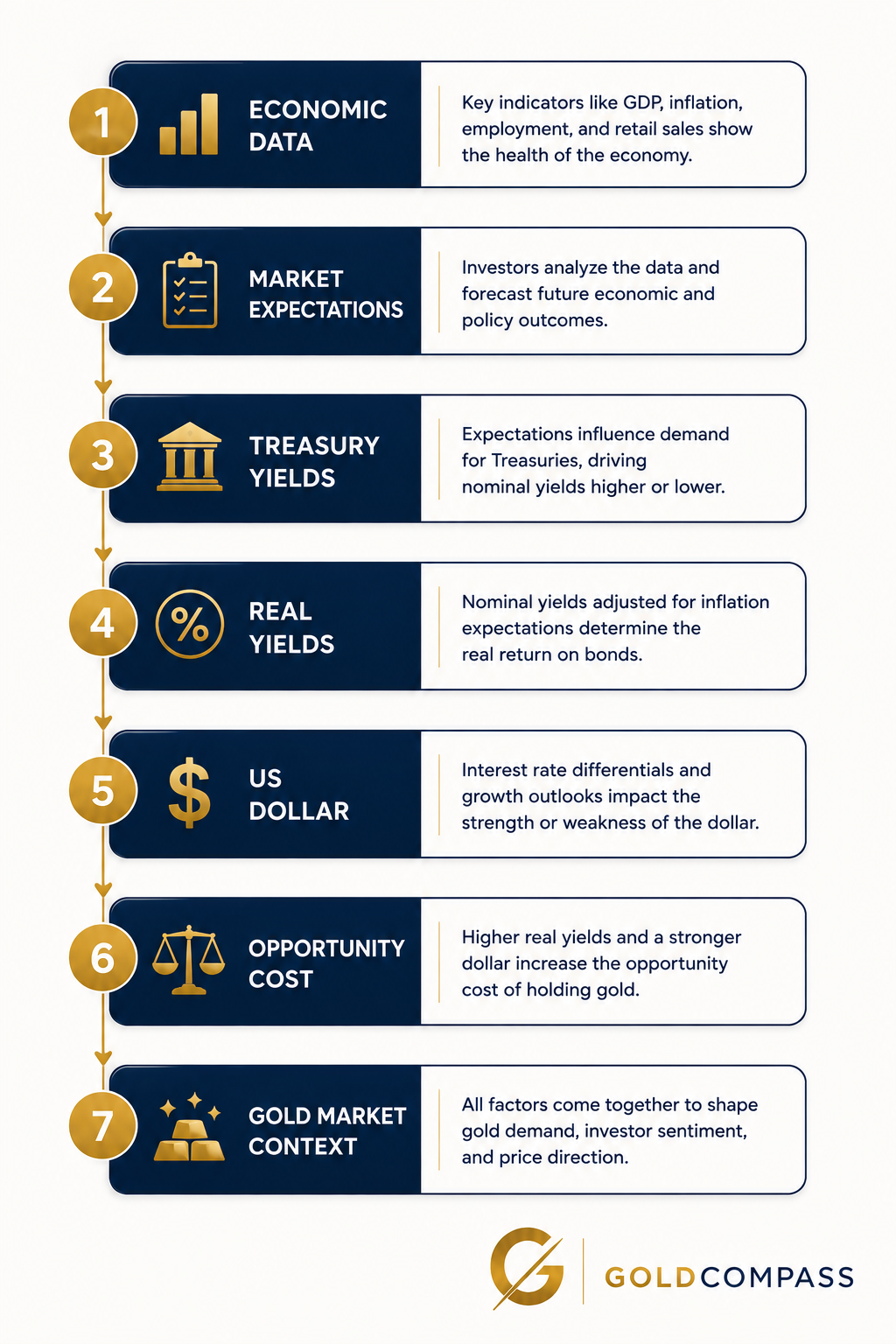
As Treasury yields rise, investors may earn higher returns from government bonds, increasing the opportunity cost of holding gold.
When Treasury yields decline, that opportunity cost falls, often making gold relatively more attractive.
This is why Treasury yields are one of the primary macro indicators followed by gold traders.
Nominal vs Real Yields
Not every yield carries the same information.
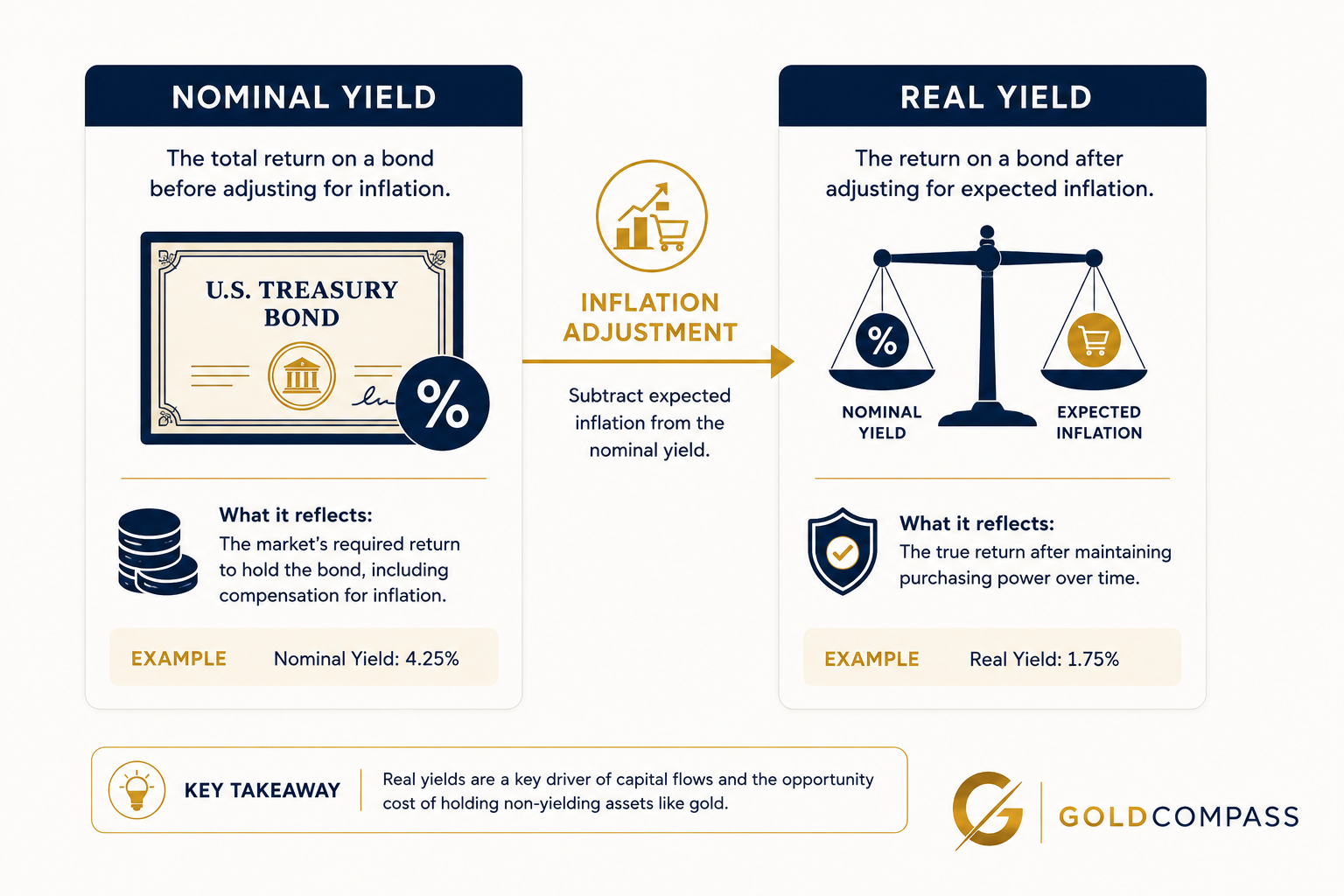
Nominal yields measure the stated return on a bond.
Real yields adjust those returns for expected inflation.
Because gold is frequently viewed as a store of purchasing power, real yields often provide a stronger explanation for longer-term gold price movements.
Treasury Yields Reflect Market Expectations
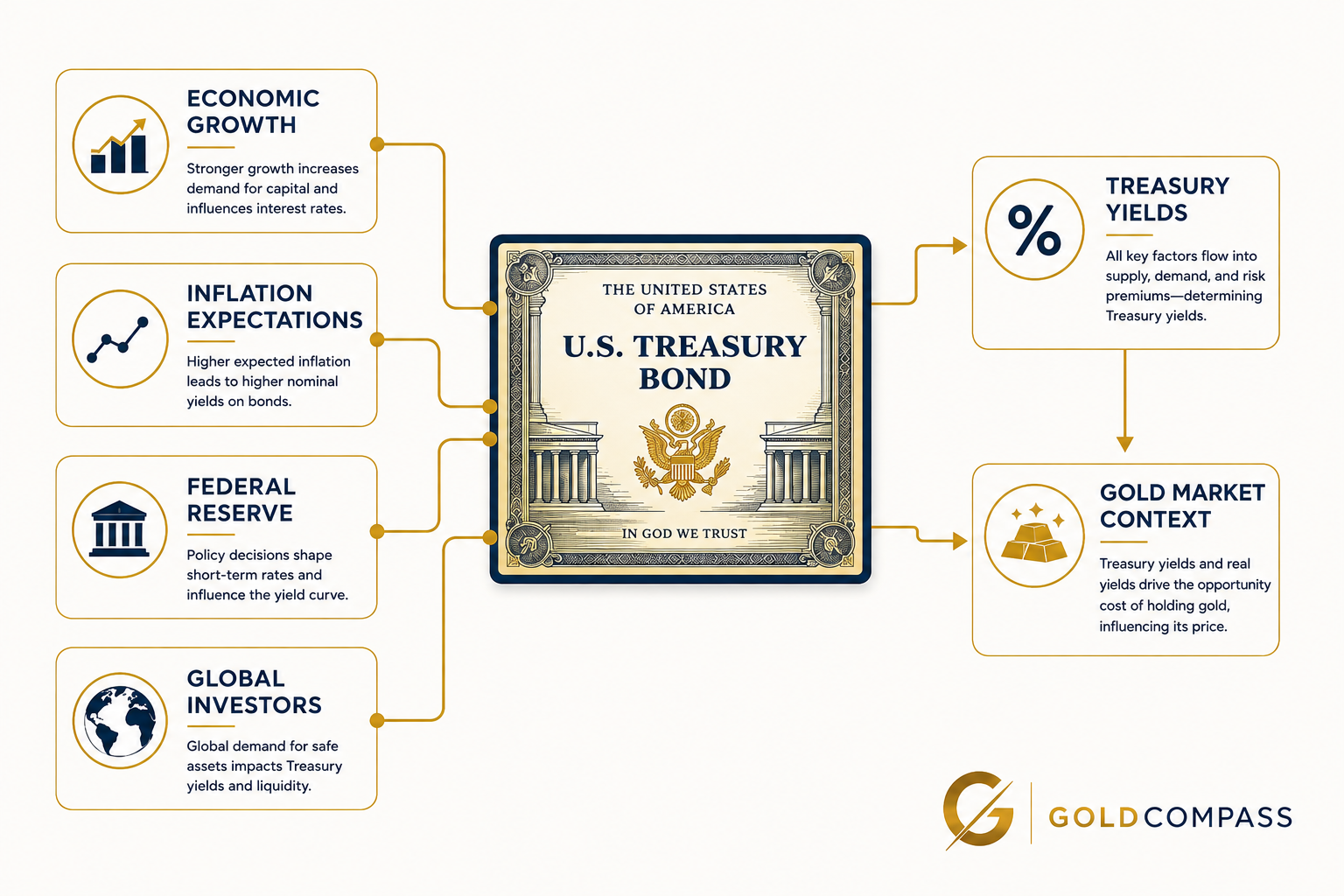
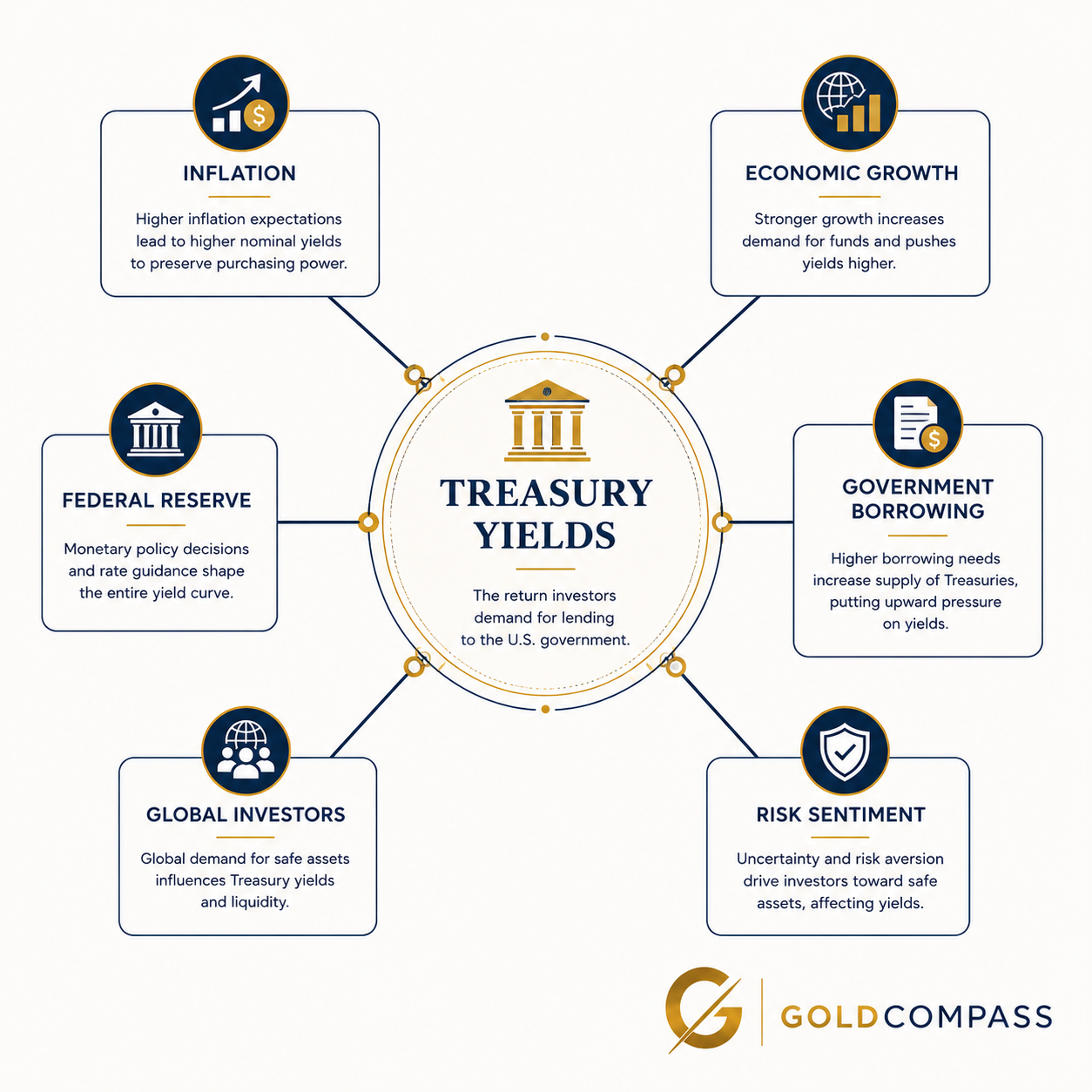
Treasury yields continuously respond to changing expectations regarding:
- Inflation
- Economic growth
- Federal Reserve policy
- Government borrowing
- Global investment demand
- Risk sentiment
Markets frequently adjust yields before official policy decisions occur.
Treasury Yields and the U.S. Dollar
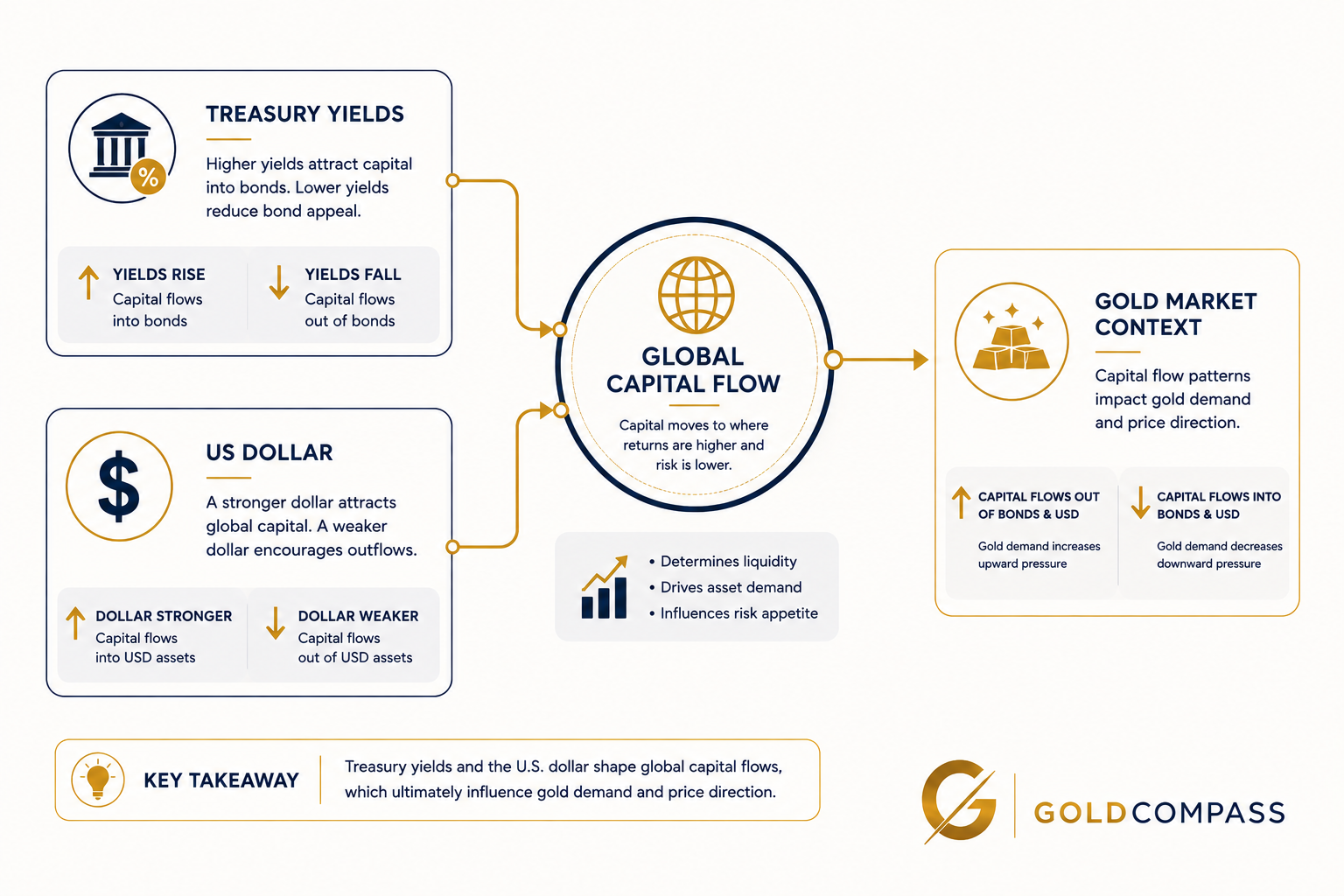
Higher Treasury yields can attract global investment capital.
That increased demand may strengthen the U.S. dollar.
Because gold is internationally priced in dollars, movements in Treasury yields and the dollar often influence gold together.
Looking at both indicators simultaneously provides a more complete macro picture.
Looking Beyond Headlines
Treasury yields rarely move because of one economic report alone.
Markets continuously reassess inflation, employment, growth, consumer demand, monetary policy, and geopolitical developments.
Understanding the broader macro narrative is often more valuable than reacting to individual headlines.
Practical Takeaways
Before interpreting any move in gold, ask yourself:
- Are Treasury yields rising or falling?
- Are real yields changing?
- Why are yields moving?
- Is the U.S. dollar confirming the move?
- Have expectations about future Federal Reserve policy changed?
Answering these questions helps place gold price movements into a broader macroeconomic context.
Key Takeaways
- Treasury yields reflect market expectations in real time.
- Gold often responds more directly to Treasury yields than official interest-rate announcements.
- Real yields generally have a stronger relationship with gold than nominal yields.
- Treasury yields and the U.S. dollar frequently move together.
- Macro context matters more than any single economic headline.
Frequently Asked Questions
Why is the 10-Year Treasury Yield so important?
It serves as a benchmark for long-term borrowing costs and reflects market expectations for growth, inflation, and monetary policy.
Are Treasury yields controlled by the Federal Reserve?
No. Treasury yields are determined by supply and demand in financial markets, although Federal Reserve policy strongly influences expectations.
Why do real yields matter more for gold?
Real yields account for inflation and therefore better represent investors' purchasing-power returns, making them more closely linked to gold.
Can gold rise while Treasury yields increase?
Yes. The broader macroeconomic environment—including inflation expectations, the U.S. dollar, and safe-haven demand—can outweigh the effect of rising nominal yields.