Why Does Gold Sometimes Rise with Inflation... and Sometimes Fall?
Inflation is one of the most talked-about topics in the financial world. It's also one of the most misunderstood.
Many people believe that higher inflation always pushes gold higher. While that can happen, it is not a rule.
In reality, gold doesn't respond to inflation alone. It responds to how inflation changes the market's expectations.
That's why two inflation reports with similar numbers can lead to completely different moves in gold.
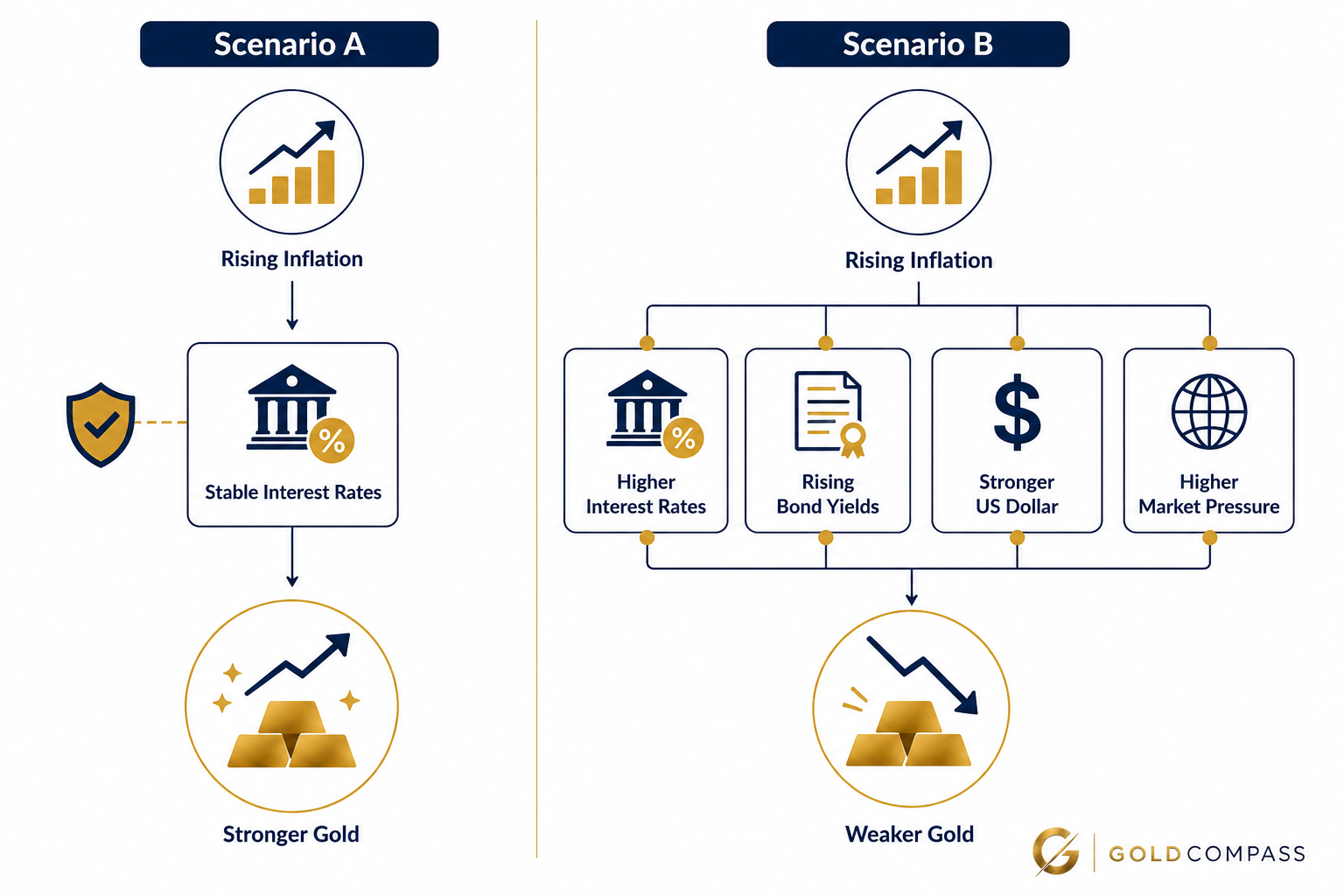
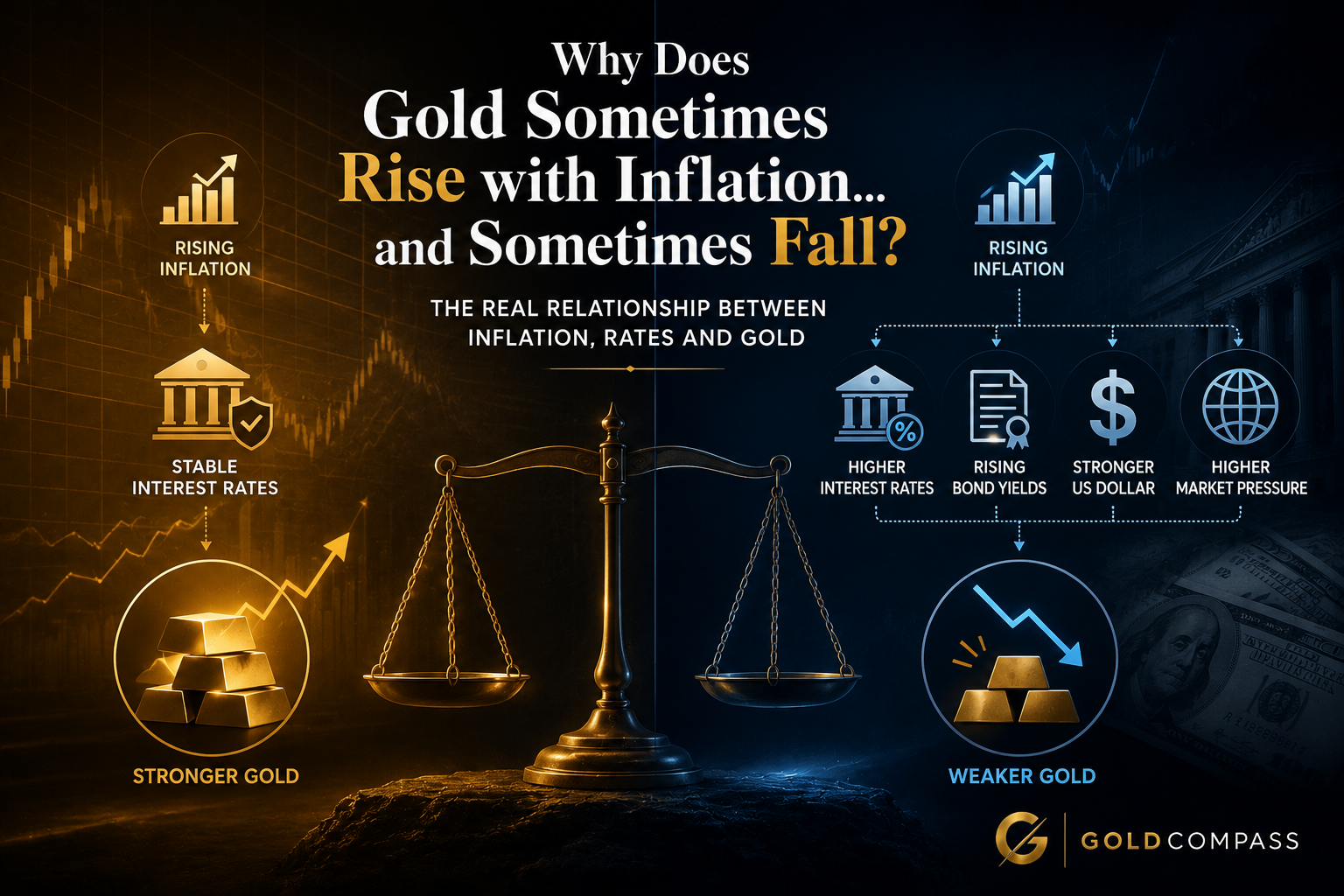
Imagine two scenarios:
- Inflation rises, but investors believe central banks will keep interest rates unchanged. Gold may benefit from that environment.
- Inflation rises, but investors expect aggressive interest rate hikes. Bond yields and the US dollar may strengthen, creating pressure on gold.
The inflation number is the same.
The market reaction is completely different.
The difference lies in expectations, not the headline.
Understanding this relationship helps traders avoid one of the most common mistakes in the gold market: assuming that inflation alone determines the direction of price.
By the end of this guide, you'll understand why professional traders pay close attention not only to inflation itself, but also to interest rates, real yields and the US dollar before forming a market view.