
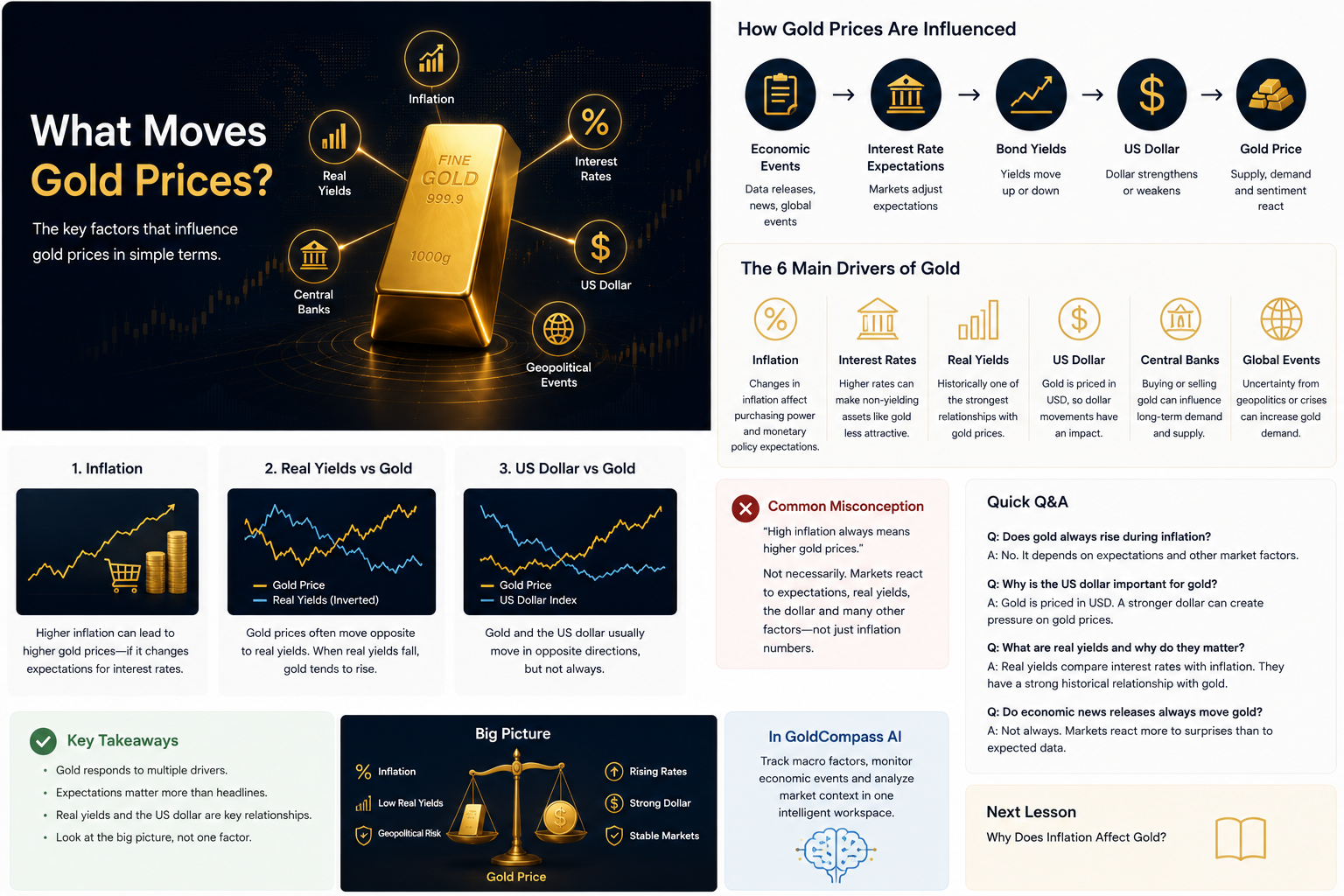
What Moves Gold Prices?
Every day, gold prices react to new information from around the world. Inflation reports, central bank decisions, economic data and geopolitical events can all influence the market.
However, gold rarely moves because of a single event.
Professional traders look beyond the headlines. They focus on how different market forces work together and how those forces change investor expectations.
This guide introduces the six most important drivers of gold and explains why understanding the bigger picture is often more valuable than following individual news stories.
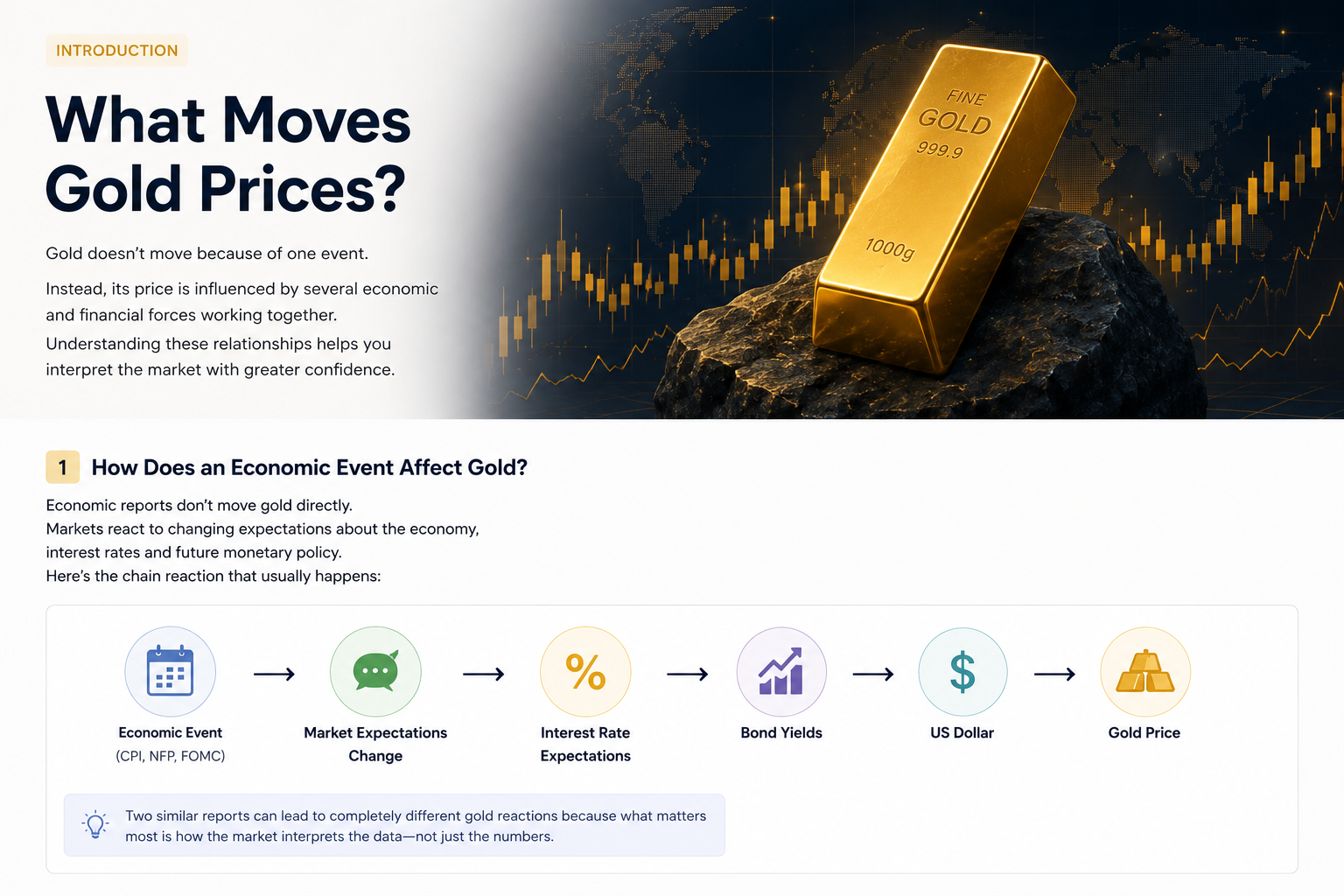 ### The Six Main Drivers of Gold
- Inflation
- Interest Rates
- Real Yields
- US Dollar
- Central Bank Activity
- Geopolitical Events
Think of them as pieces of the same puzzle. Looking at only one piece rarely tells the whole story.
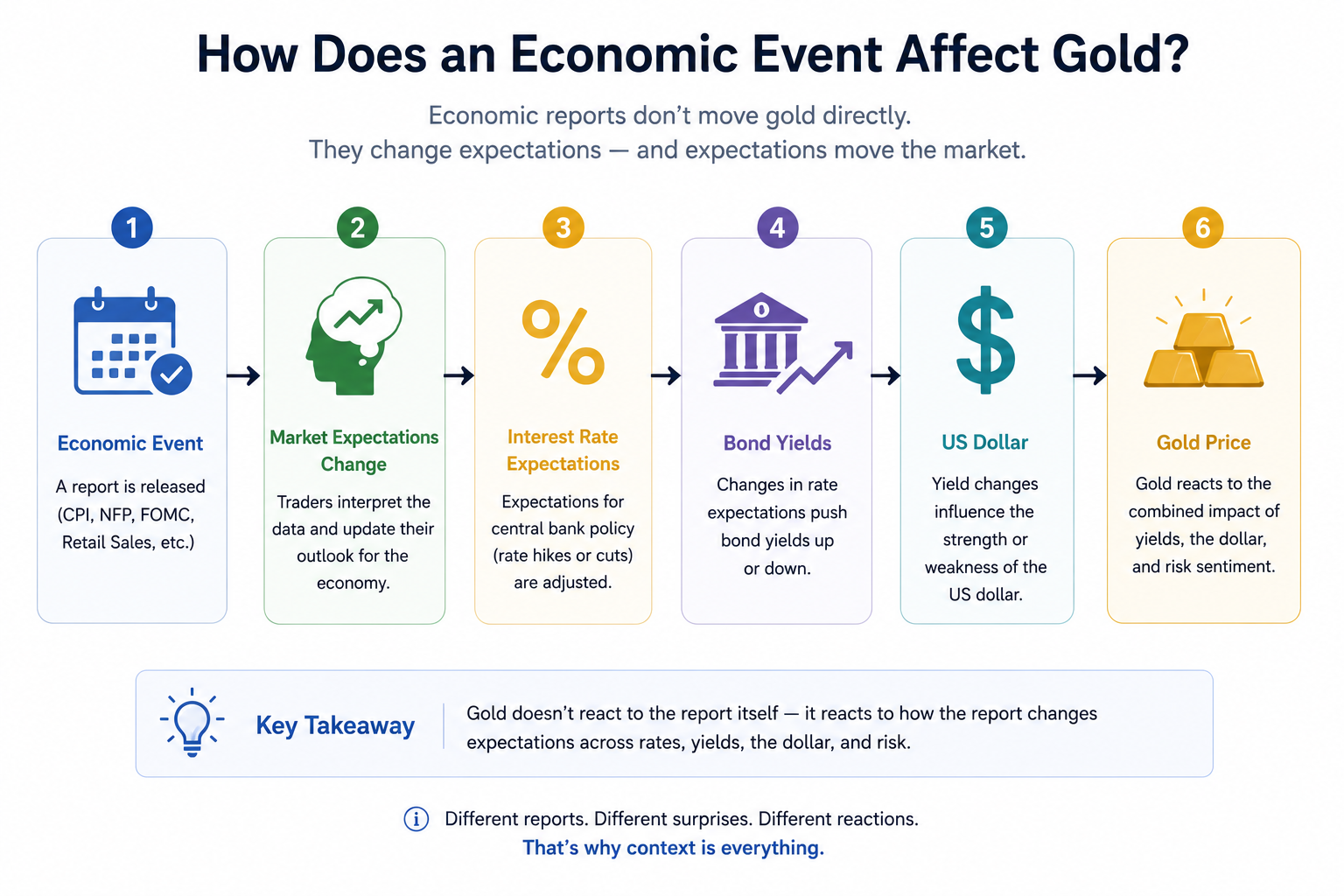
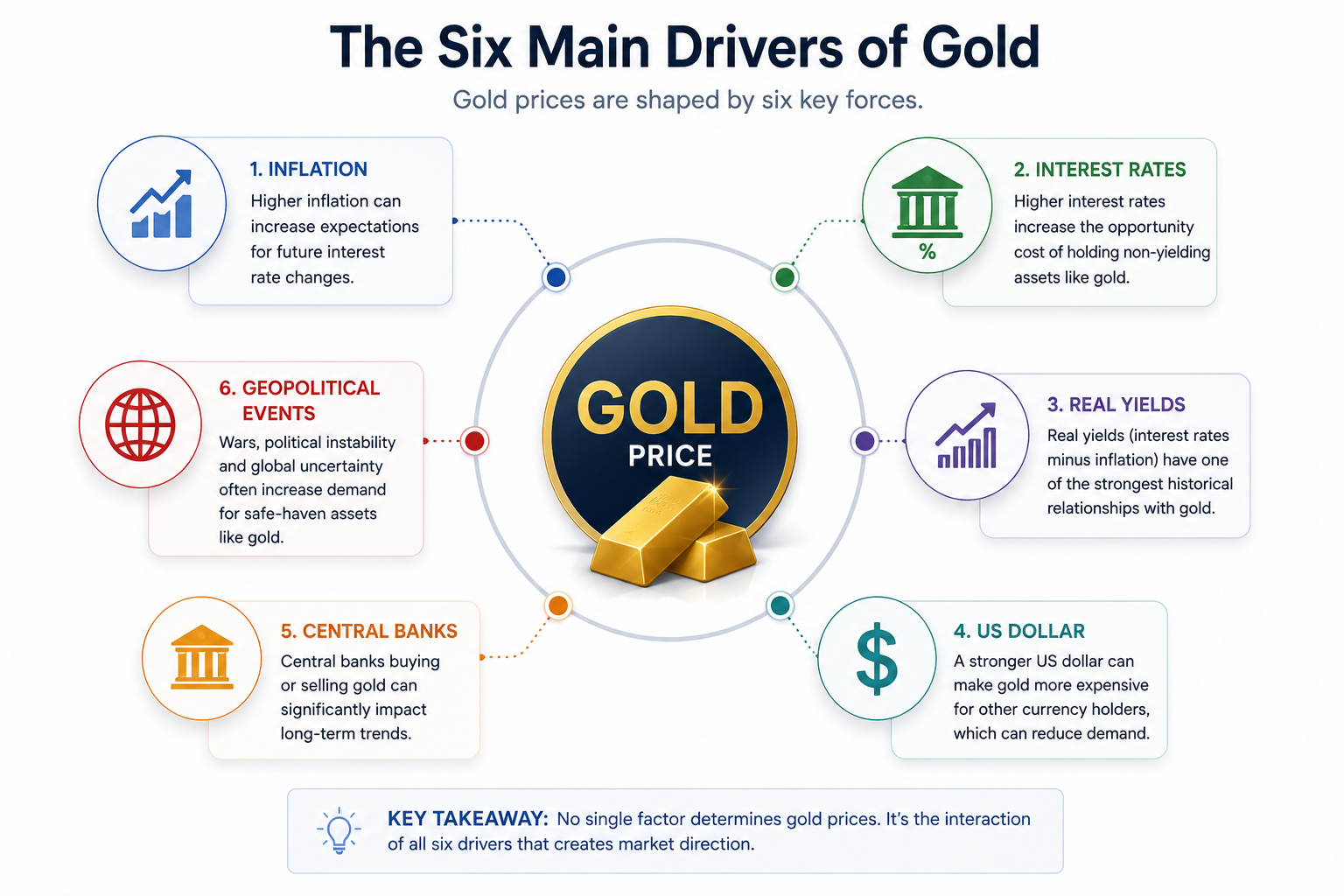 ## How Does an Economic Event Affect Gold?
Imagine a new inflation report is released.
The report itself doesn't move gold.
What matters is how traders interpret the data.
Economic Report
↓
Market Expectations
↓
Interest Rate Outlook
↓
Bond Yields
↓
US Dollar
↓
Gold Price
This is why two similar reports can produce completely different market reactions.
Why Does Inflation Matter?
Inflation measures how quickly prices are rising across the economy.
If inflation comes in higher than expected, traders immediately begin asking:
- Will central banks raise interest rates?
- Will bond yields rise?
- Will the US dollar become stronger?
The answers to those questions often matter more than the inflation number itself.
 ## Why Is the US Dollar Important?
Gold is traded globally in US dollars.
When the dollar becomes stronger, gold generally becomes more expensive for international buyers.
When the dollar weakens, gold may become more attractive.
This relationship is common, but it's not a rule. Other market forces can influence the outcome.
Why Do Beginners Get Confused?
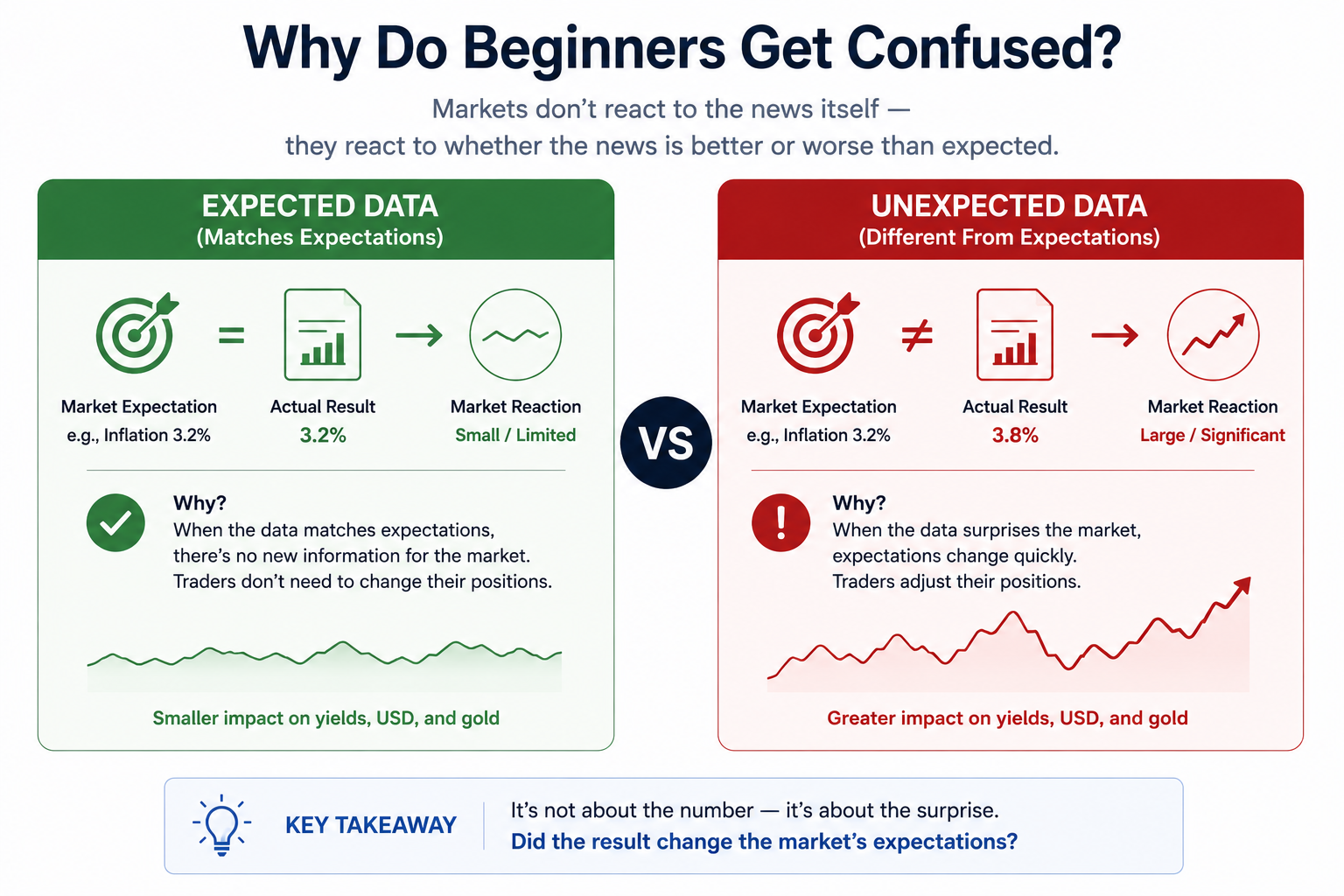
One of the biggest misconceptions in gold trading is believing that good news is always bullish and bad news is always bearish.
Financial markets don't react to the news itself—they react to whether the news was better or worse than expected.
For example, imagine inflation is expected to be 3.2%.
- If the actual result is 3.2%, the market may barely move because traders were already expecting it.
- If the result comes in at 3.8%, expectations change quickly, often leading to larger movements across bond yields, the US dollar and gold.
This is why experienced traders don't ask, "What was the number?"
Instead, they ask:
"Did the result change the market's expectations?"
Learning to think this way helps you avoid emotional decisions and better understand why gold sometimes moves in unexpected directions.
 ## Common Mistake
Many new traders believe:
"High inflation always means higher gold prices."
Not necessarily.
Markets react to expectations, not just economic data.
Sometimes a strong inflation report causes gold to rise.
Sometimes it causes gold to fall.
Understanding the broader market context is far more important than focusing on a single headline.
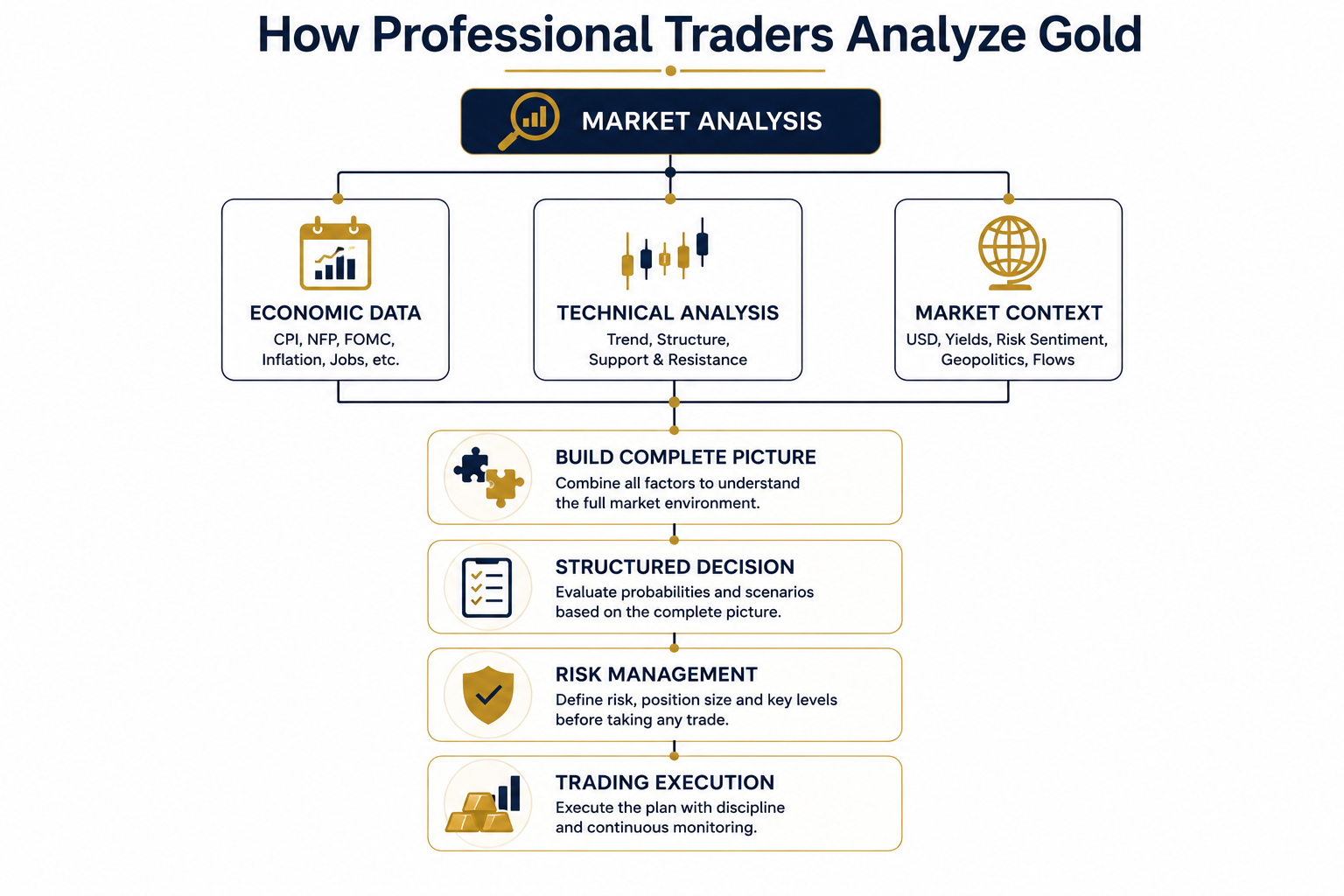
What Professional Traders Watch
Instead of asking:
"Was today's inflation high?"
Professionals usually ask:
- Was it higher or lower than expected?
- How did bond yields react?
- Did the US dollar confirm the move?
- Did expectations for future interest rates change?
Looking at these relationships provides a much clearer picture of the market.
 ---
---
How GoldCompass AI Helps
Following inflation, bond yields, the US dollar, economic events and market structure across multiple websites can quickly become overwhelming.
GoldCompass AI brings these important market factors into one structured workspace, making it easier to understand the broader market environment before making your own trading decisions.
Key Takeaway
Gold prices are influenced by a combination of economic conditions, financial markets and investor expectations.
Instead of focusing on a single news headline, learn to view the market as a connected system.
The better you understand those connections, the easier it becomes to interpret what the market is doing.
Disclaimer
GoldCompass AI provides educational market analysis tools for informational purposes only. This content is not financial or investment advice and should not be considered a recommendation to buy or sell any financial instrument. Trading involves risk, and all decisions remain the responsibility of the user.