What Are Real Yields?
If you've been trading gold for a while, you've probably heard analysts say:
"Gold is falling because real yields are rising."
But what exactly are real yields?
Many traders understand inflation.
Many understand interest rates.
However, fewer realize that the market often pays more attention to the relationship between the two.
That relationship is called the real yield.
Think of it this way.
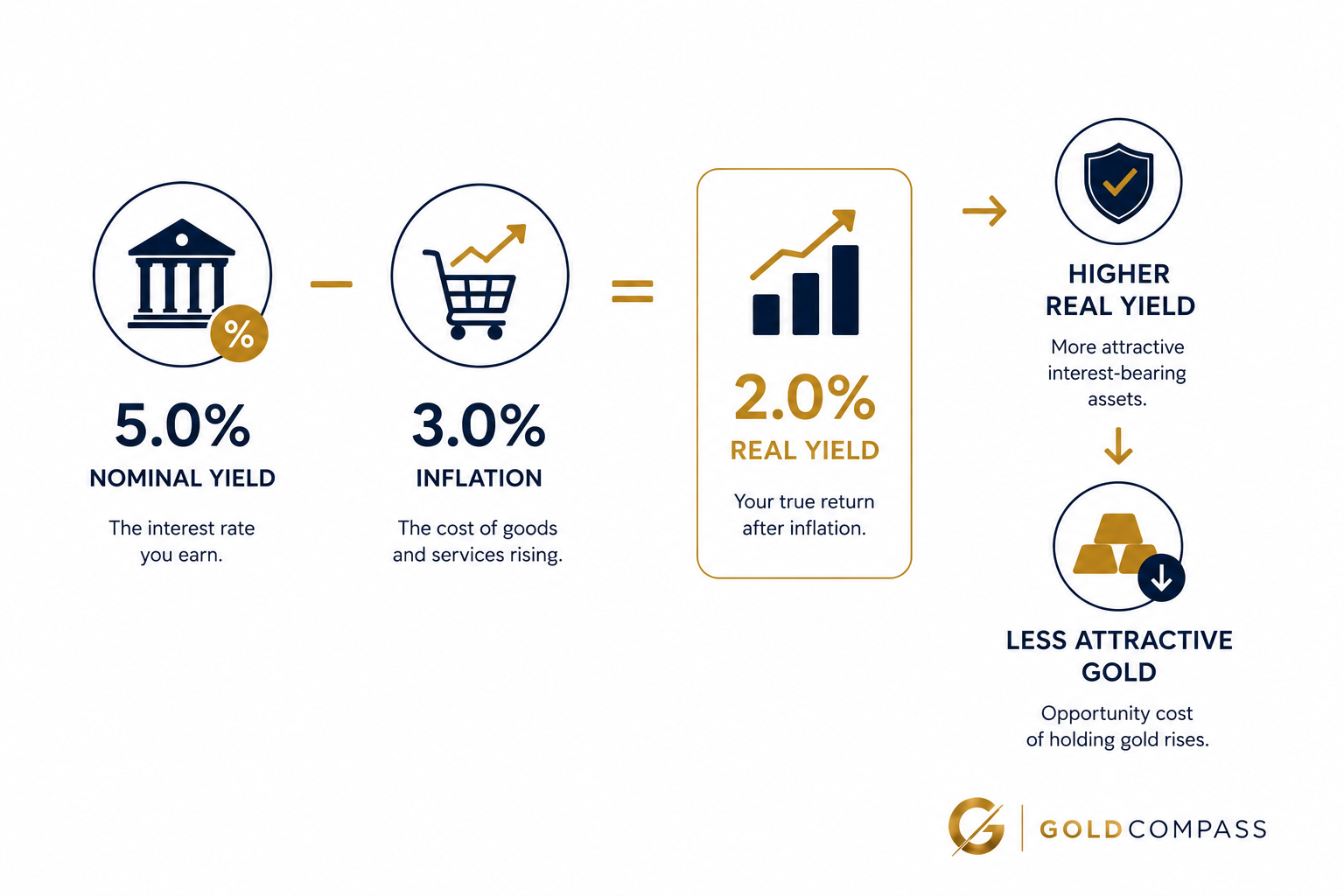
Suppose your savings account pays 5% interest, but inflation is running at 3%.
Although you earn 5%, your purchasing power only increases by about 2%.
That remaining return is called your real yield.
This simple concept plays an important role in financial markets because it reflects the true return investors receive after inflation.
For gold traders, real yields matter because gold does not generate interest. When real yields become more attractive, some investors may prefer interest-bearing assets instead of holding gold.
Understanding real yields is one of the biggest steps toward understanding why gold behaves differently under seemingly similar economic conditions.
 ## Why Do Real Yields Matter?
Imagine you have two investment choices.
The first is gold, which doesn't pay interest.
The second is a government bond that offers a return after accounting for inflation.
Which one would you choose?
This simple comparison is why real yields matter.
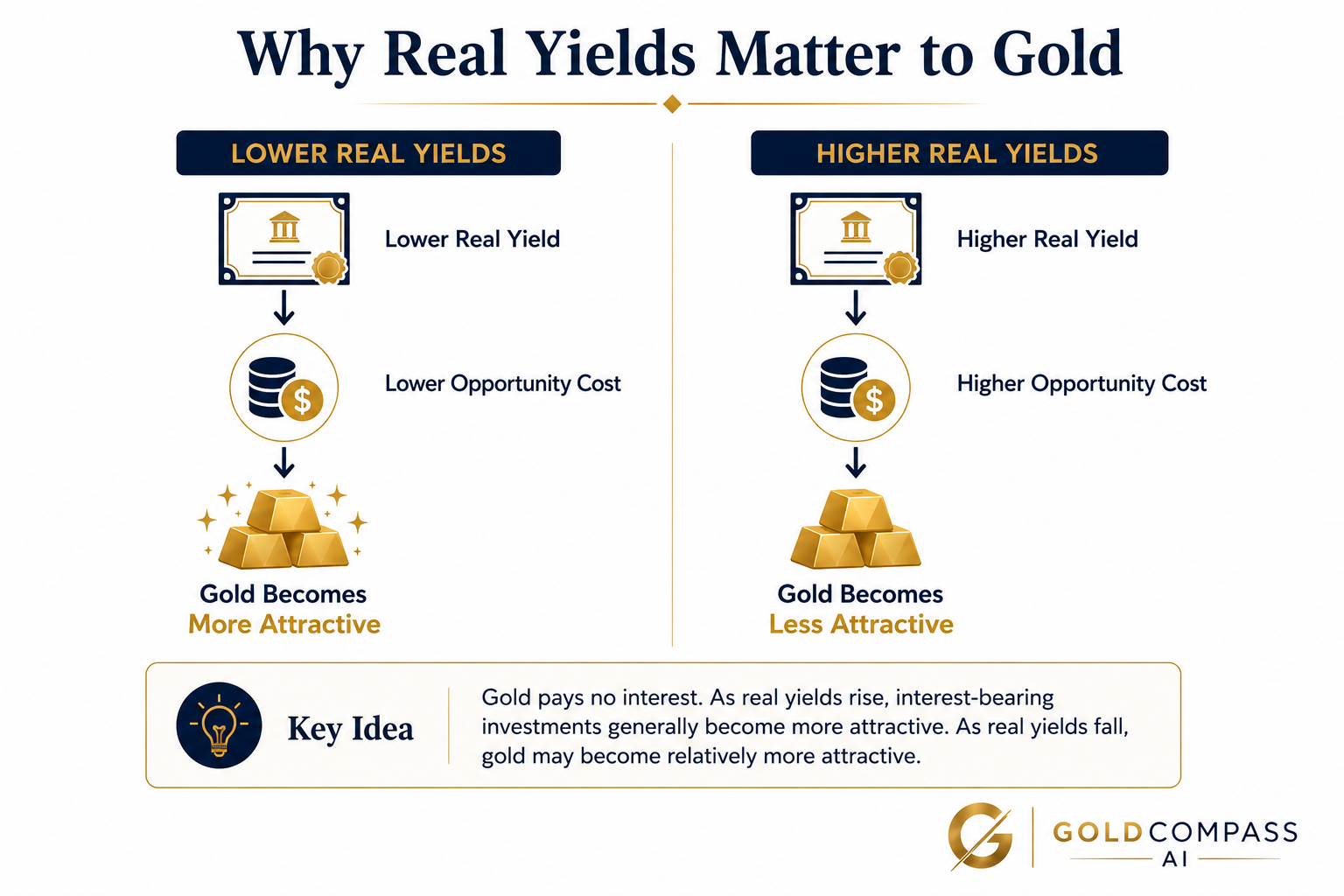
When real yields are low, the opportunity cost of holding gold is also low. Investors aren't giving up much income by owning gold, so it can become relatively more attractive.
When real yields rise, interest-bearing investments become more rewarding. As a result, some investors may shift part of their money away from gold and into assets that generate income.
This doesn't mean gold will always fall when real yields rise or always rise when they fall. Financial markets are influenced by many factors working together.
However, real yields have historically been one of the strongest macroeconomic indicators for understanding the environment in which gold is trading.
For this reason, professional traders don't look at inflation or interest rates in isolation. They monitor how those two variables combine to create real yields, helping them better understand the broader market before making a trading decision.
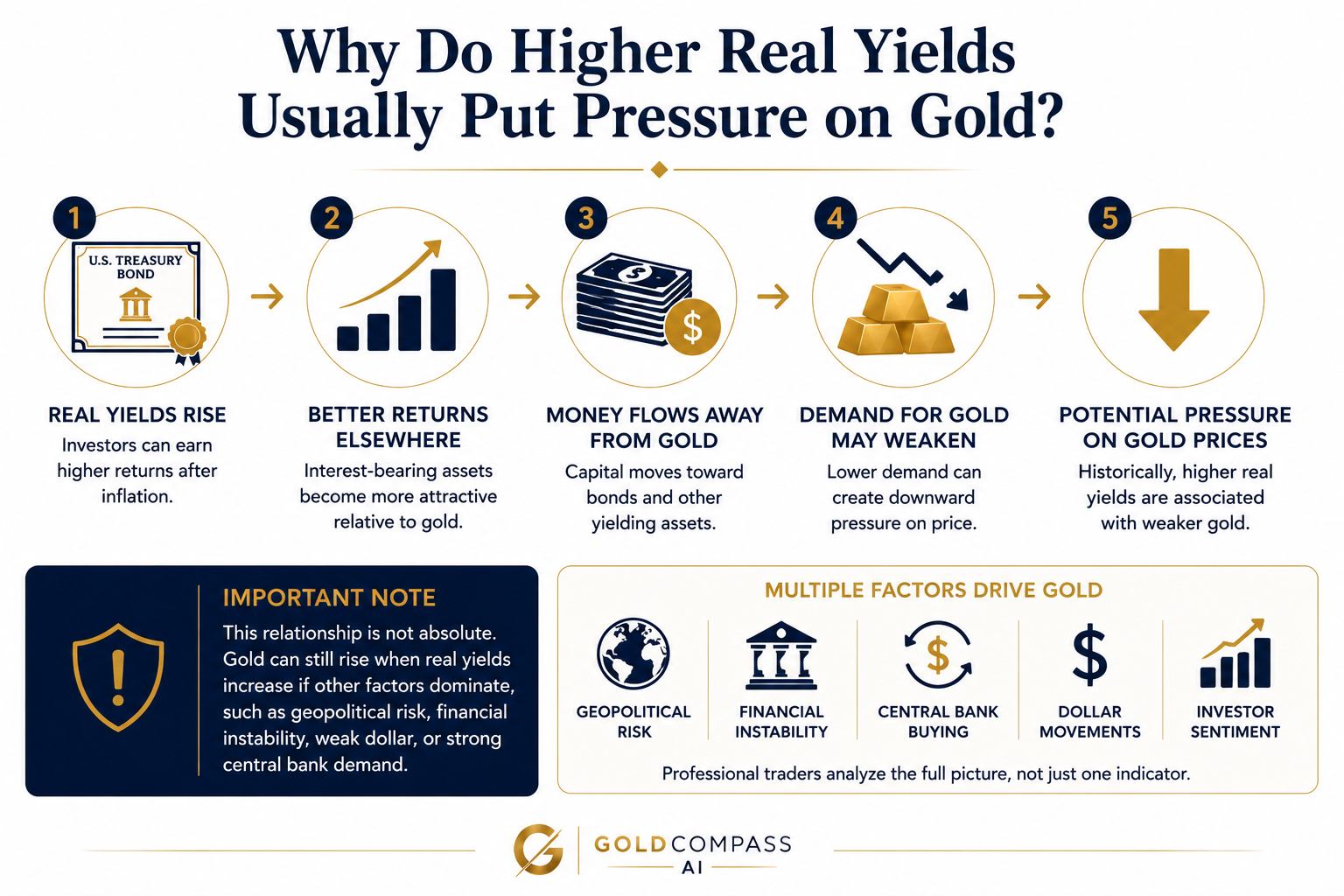
 ### ## Why Do Higher Real Yields Usually Put Pressure on Gold?
Let's look at a simple example.
Imagine a government bond offers a real return of 4% after inflation.
Now compare that with gold.
Gold doesn't pay interest or dividends. Its value depends entirely on future price appreciation.
For many investors, a guaranteed real return becomes an attractive alternative. As money flows into interest-bearing assets, demand for gold may weaken.
This is why rising real yields often create pressure on gold prices.
However, this relationship is not absolute.
There are periods when gold rises even as real yields increase. Geopolitical tensions, financial instability, central bank buying or a weakening US dollar can all influence the market at the same time.
Professional traders don't treat real yields as a standalone signal. Instead, they combine them with other market drivers to understand the broader picture.
Think of real yields as one of the most important pieces of the puzzle—not the entire puzzle.
Understanding this principle helps explain why experienced traders rarely make decisions based on a single economic indicator. They look for confirmation from multiple sources before forming a market view.
 ## Real-World Example
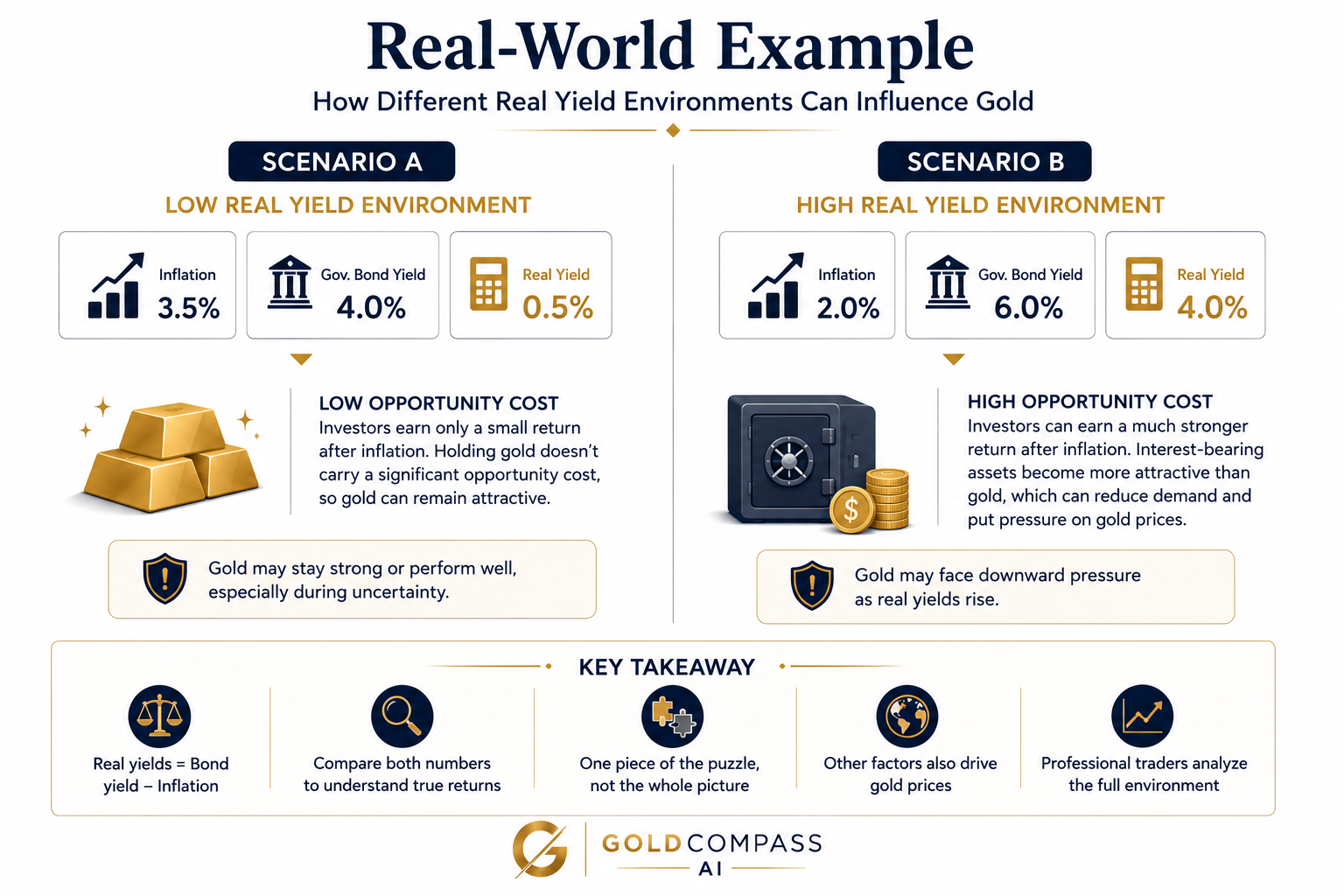
Imagine two different market environments.
Scenario A
- Inflation: 3.5%
- Government Bond Yield: 4.0%
- Real Yield: 0.5%
Investors earn only a small return after inflation.
In this environment, holding gold doesn't carry a significant opportunity cost. As a result, gold may remain attractive, especially if investors are concerned about economic uncertainty or financial market risks.
Scenario B
- Inflation: 2.0%
- Government Bond Yield: 6.0%
- Real Yield: 4.0%
Now investors can earn a much stronger return after inflation.
For many investors, interest-bearing assets become more attractive than holding gold. This can reduce demand for gold and create downward pressure on its price.
These examples show why professional traders don't focus only on inflation or interest rates.
They compare both numbers together to understand the real return available in the market.
That comparison often provides a clearer picture of the environment in which gold is trading.
Remember, this is only one part of the analysis. Gold prices are also influenced by the US dollar, central bank activity, geopolitical developments and overall market sentiment.
Understanding how these factors work together is far more valuable than relying on any single indicator.
 ## Common Misconception
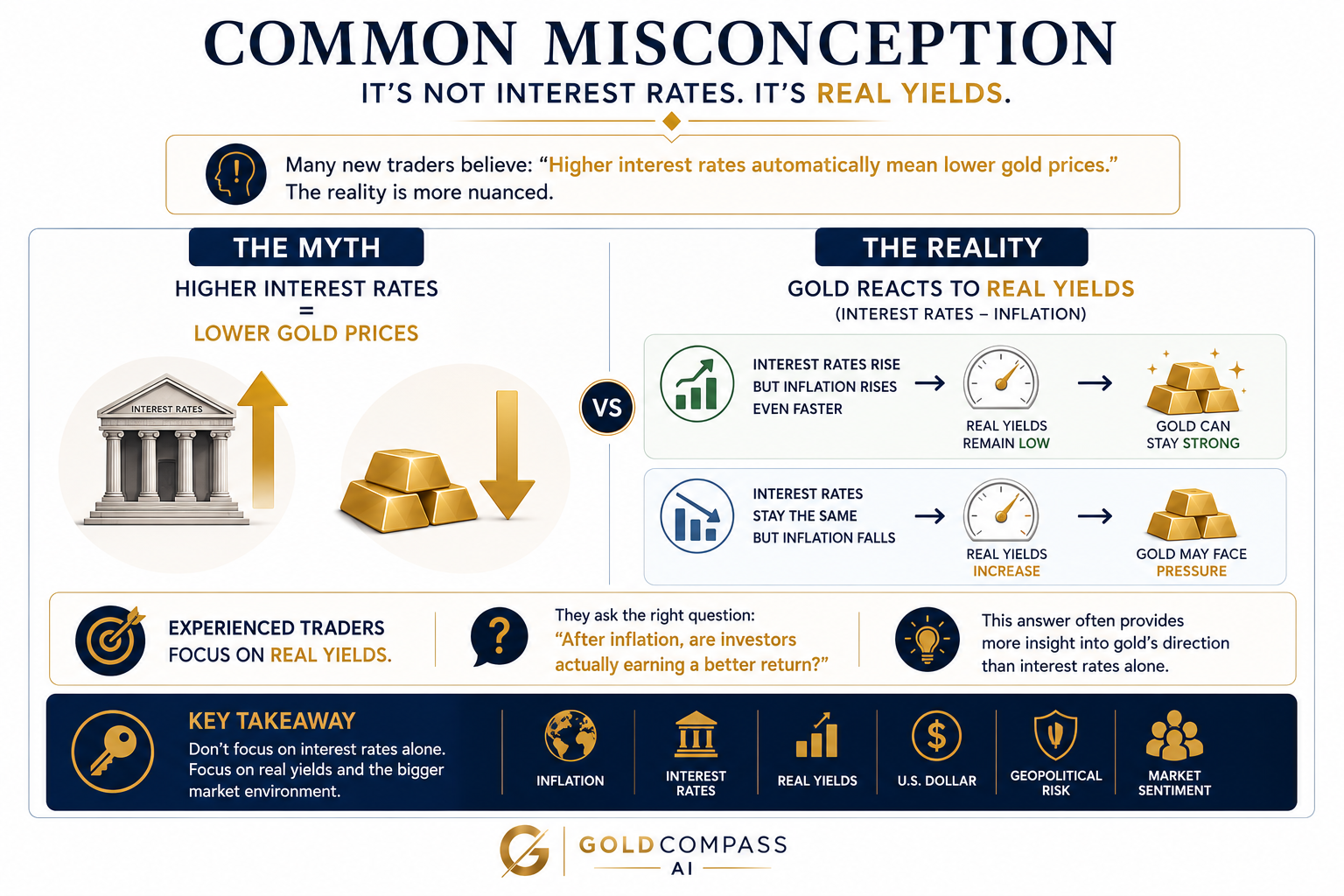
One of the most common mistakes among new gold traders is believing that higher interest rates automatically mean lower gold prices.
The reality is more nuanced.
Gold doesn't react to interest rates alone—it responds to the overall market environment.
For example, interest rates may be rising, but if inflation is increasing even faster, real yields can remain low. In that case, gold may continue to perform well despite higher nominal interest rates.
On the other hand, interest rates may remain unchanged while inflation falls. Real yields can still increase, making interest-bearing assets relatively more attractive than gold.
This is why experienced traders focus on real yields, not just interest rates.
They ask a different question:
"After inflation, are investors actually earning a better return?"
That answer often provides more insight into gold's direction than looking at interest rates by themselves.
Understanding this distinction helps you avoid one of the most common misconceptions in macro trading and gives you a more complete view of how the gold market works.
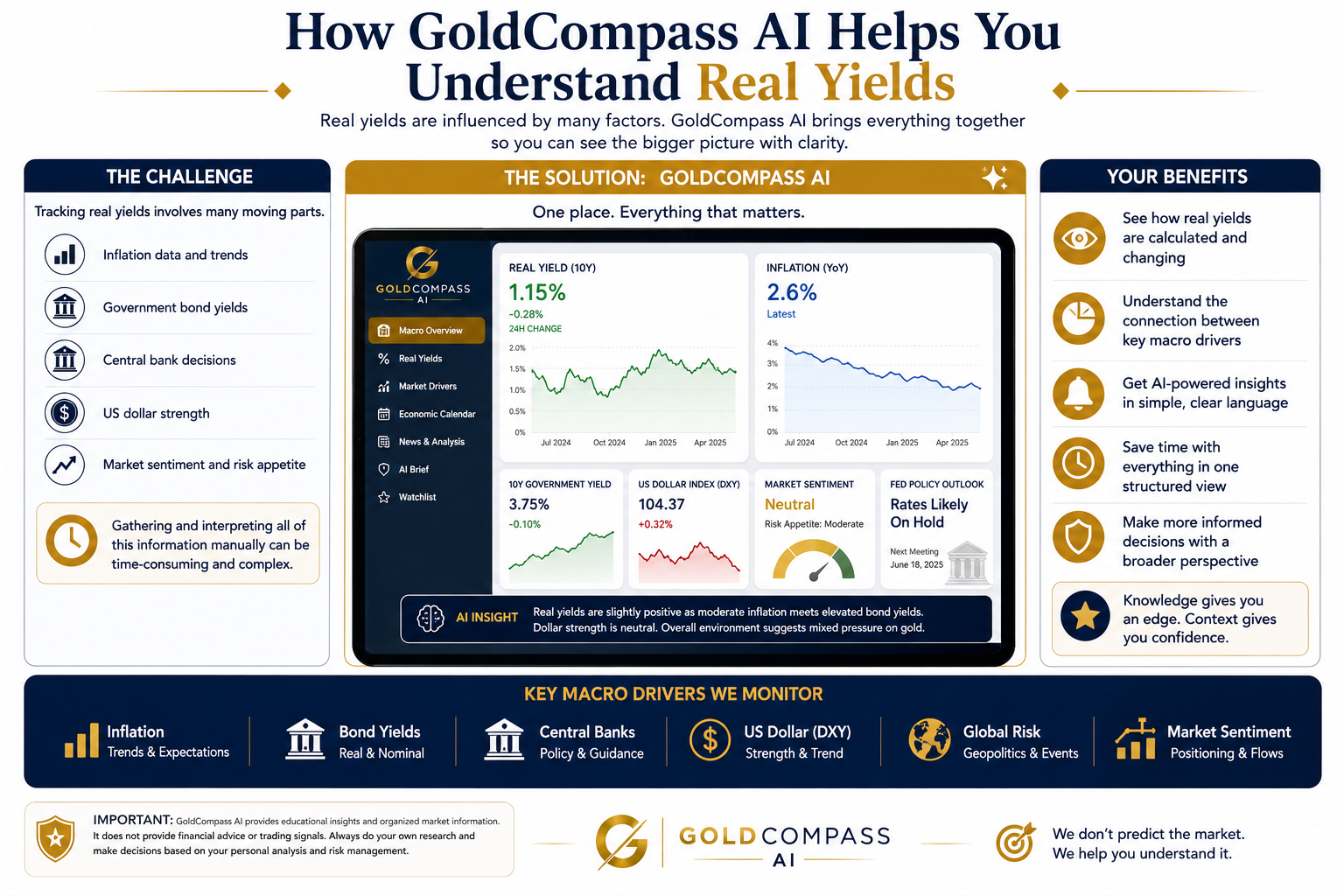
 ## How GoldCompass AI Helps You Understand Real Yields
Tracking real yields isn't as simple as watching a single number.
Professional traders monitor inflation, government bond yields, central bank decisions, the US dollar and market sentiment together before drawing conclusions.
For many traders, gathering and interpreting all of this information manually can be time-consuming.
GoldCompass AI helps simplify that process by organizing key macroeconomic information into one structured view.
Instead of switching between multiple websites and economic releases, you can quickly understand the broader market environment and see how different macro drivers fit together.
GoldCompass AI is designed to support your market analysis—not to make trading decisions for you.
It provides educational insights and organized market context, allowing you to make more informed decisions based on a clearer understanding of the factors that influence gold.
The goal is not to predict every price movement. The goal is to help you understand why the market is moving and provide a more complete picture before you evaluate your own trading opportunities.