
Retail Sales Explained: What Consumer Spending Can Tell Gold Traders
Households purchase groceries.
Families buy vehicles.
Consumers shop online.
Businesses sell products every day.
Collectively, these transactions provide valuable information about the health of the economy.
The Retail Sales report measures part of this activity.
For economists, it offers insight into consumer demand.
For investors, it helps evaluate economic momentum.
For gold traders, it becomes another piece of the broader macroeconomic picture.
Retail Sales does not predict gold prices by itself.
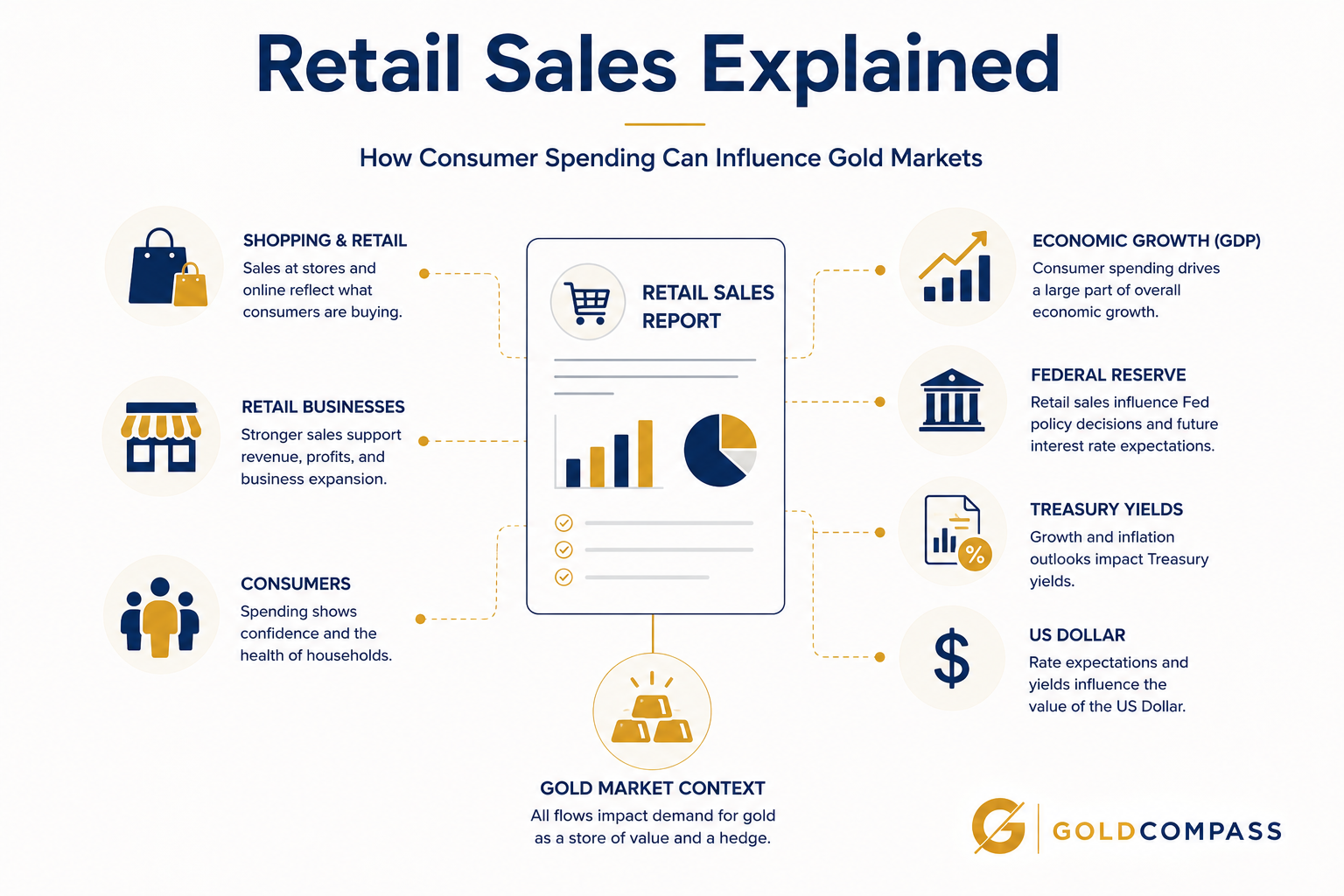
Instead, it can influence expectations about economic growth, inflation, and future monetary policy.
1. What Is the Retail Sales Report?
Retail Sales measures the value of goods sold by retailers during a given month.
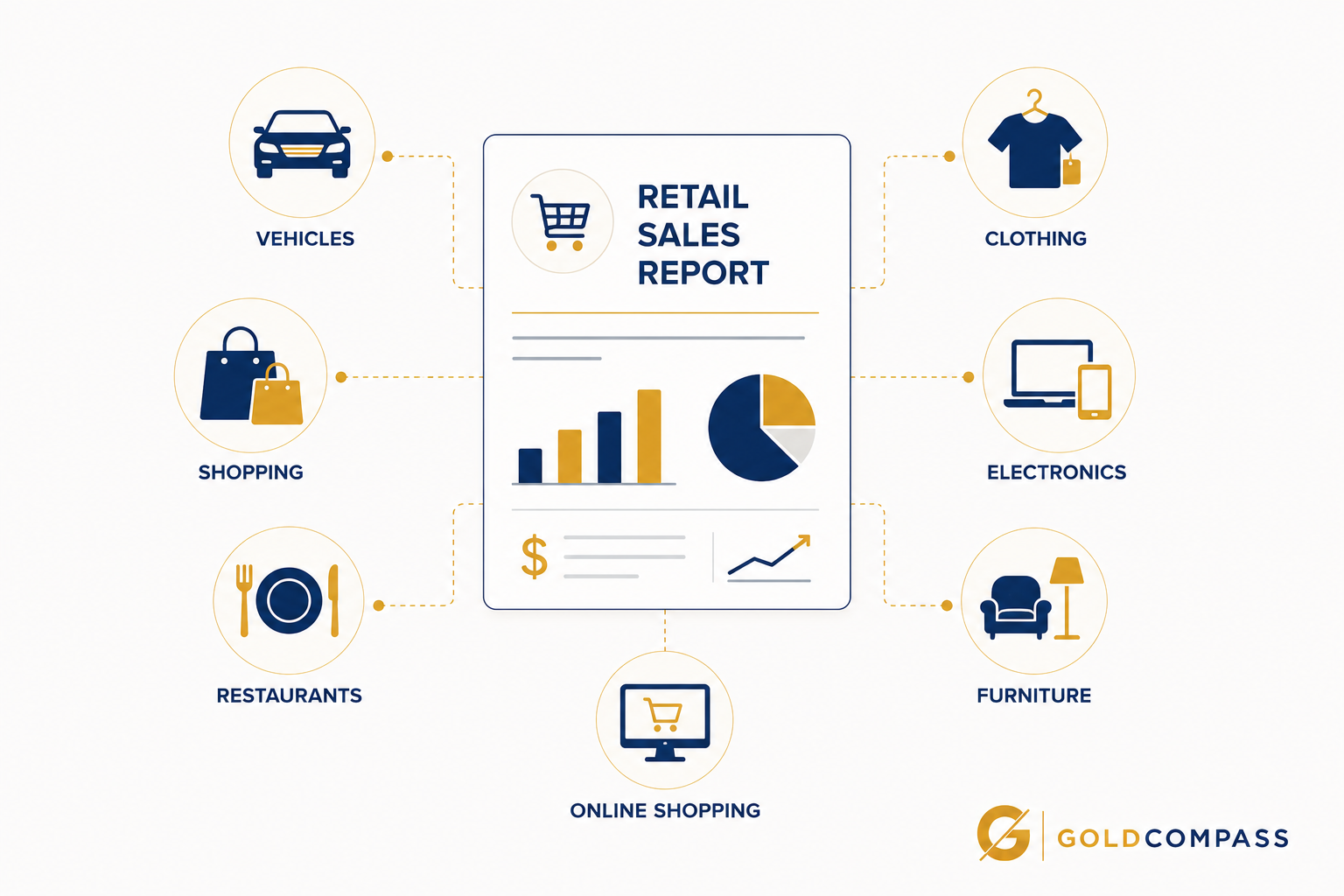
The report reflects spending across many categories, including:
- Motor vehicles
- Clothing
- Electronics
- Restaurants
- Furniture
- Sporting goods
- Department stores
- Online retailers
Because household consumption represents a significant share of economic activity, changes in Retail Sales receive considerable attention from financial markets.
2. Why Consumer Spending Matters
Consumers are one of the largest contributors to economic activity.
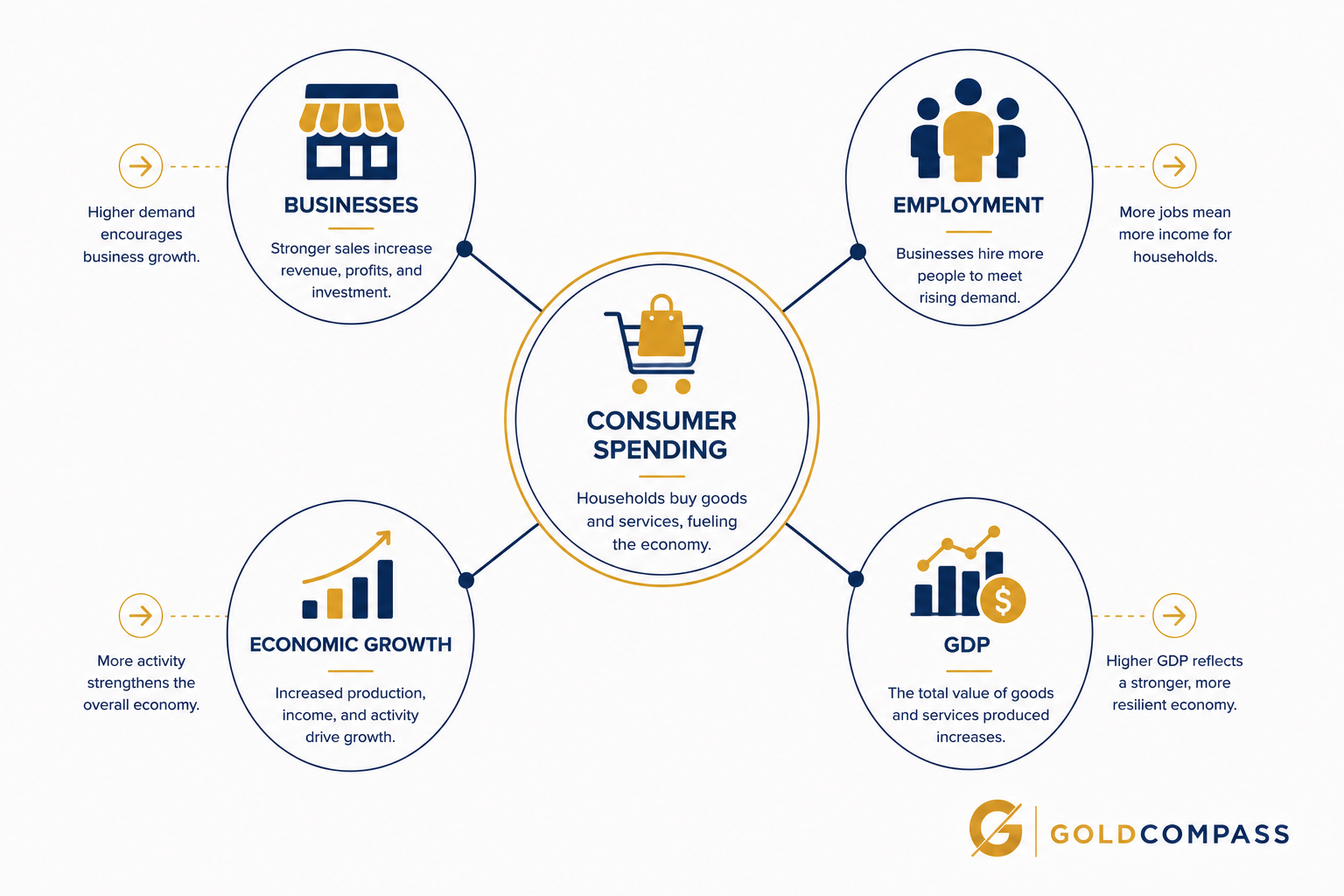
When households spend confidently, businesses often experience stronger sales.
Businesses may then increase production, hire additional employees, and invest for future growth.
When spending slows significantly, economic momentum may weaken.
This makes Retail Sales an important indicator of current economic activity.
However, strong spending alone does not determine the future direction of financial markets.
Markets still compare the report with expectations and evaluate it within the broader macroeconomic environment.
3. Retail Sales and GDP
Retail Sales and GDP are related, but they are not the same measurement.
Retail Sales focuses on consumer purchases.
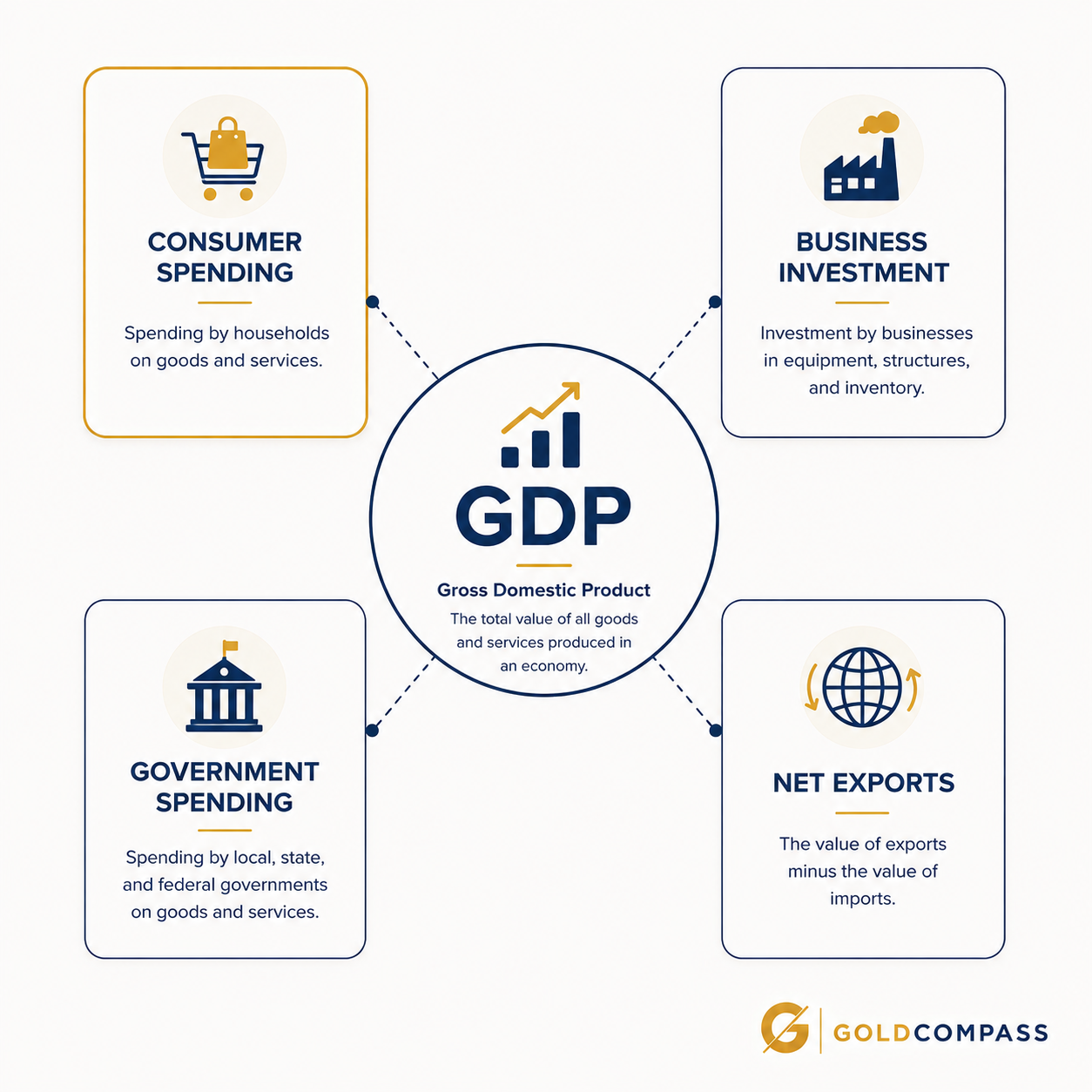
GDP measures total economic output across the economy.
Strong Retail Sales can support stronger GDP growth, but GDP also includes business investment, government spending, and net exports.
Retail Sales therefore provides an early glimpse into one important part of economic activity rather than the entire economy.
4. Headline Retail Sales vs. Core Retail Sales
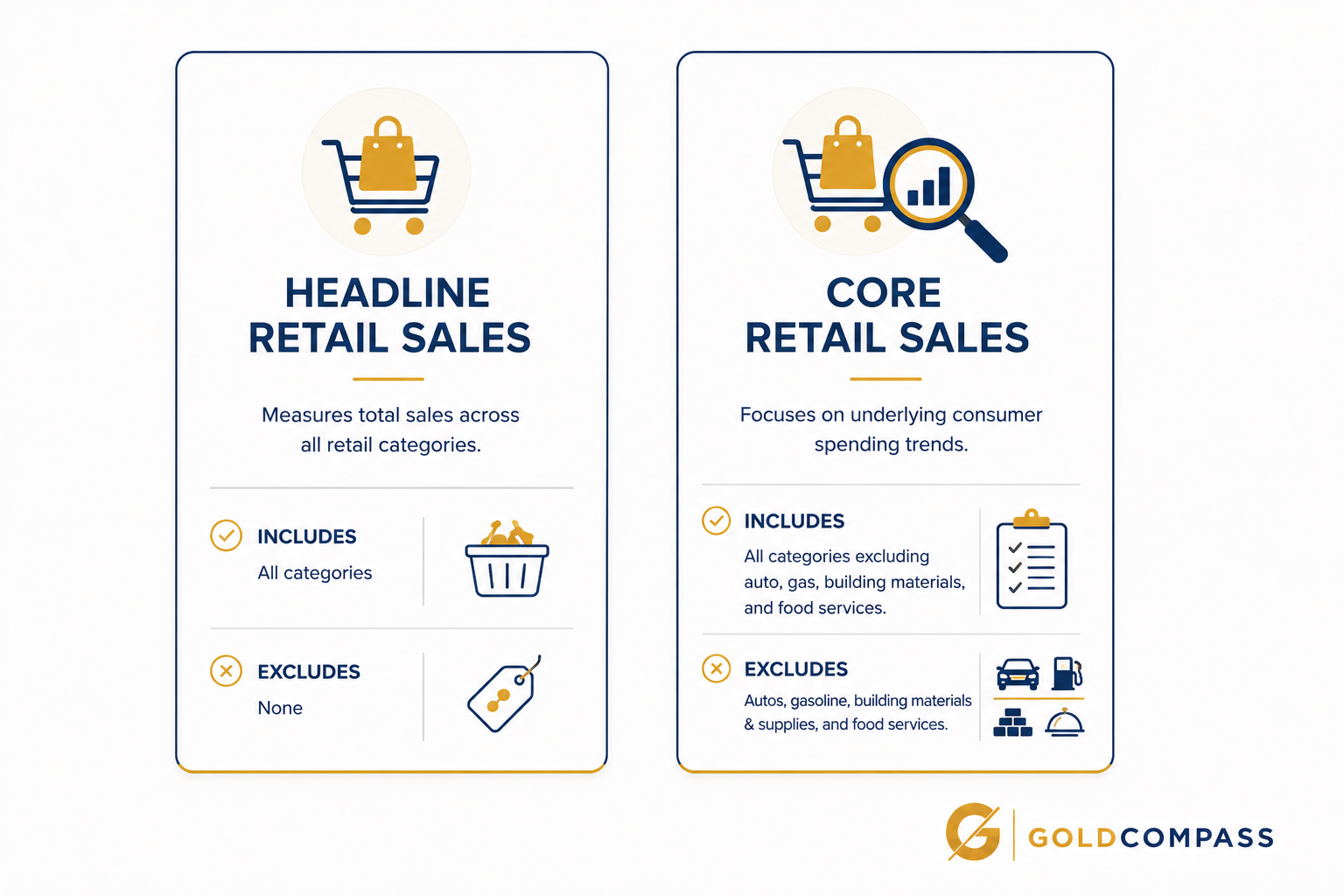
Financial news often discusses both the headline Retail Sales figure and a version that excludes certain categories.
Removing highly volatile components can help economists evaluate underlying consumer spending trends.
As with many economic reports, investors often examine more than one number before forming conclusions.
Looking only at the headline figure may overlook important details.
5. Previous, Forecast, and Actual Still Matter
The same framework introduced in earlier articles applies here.
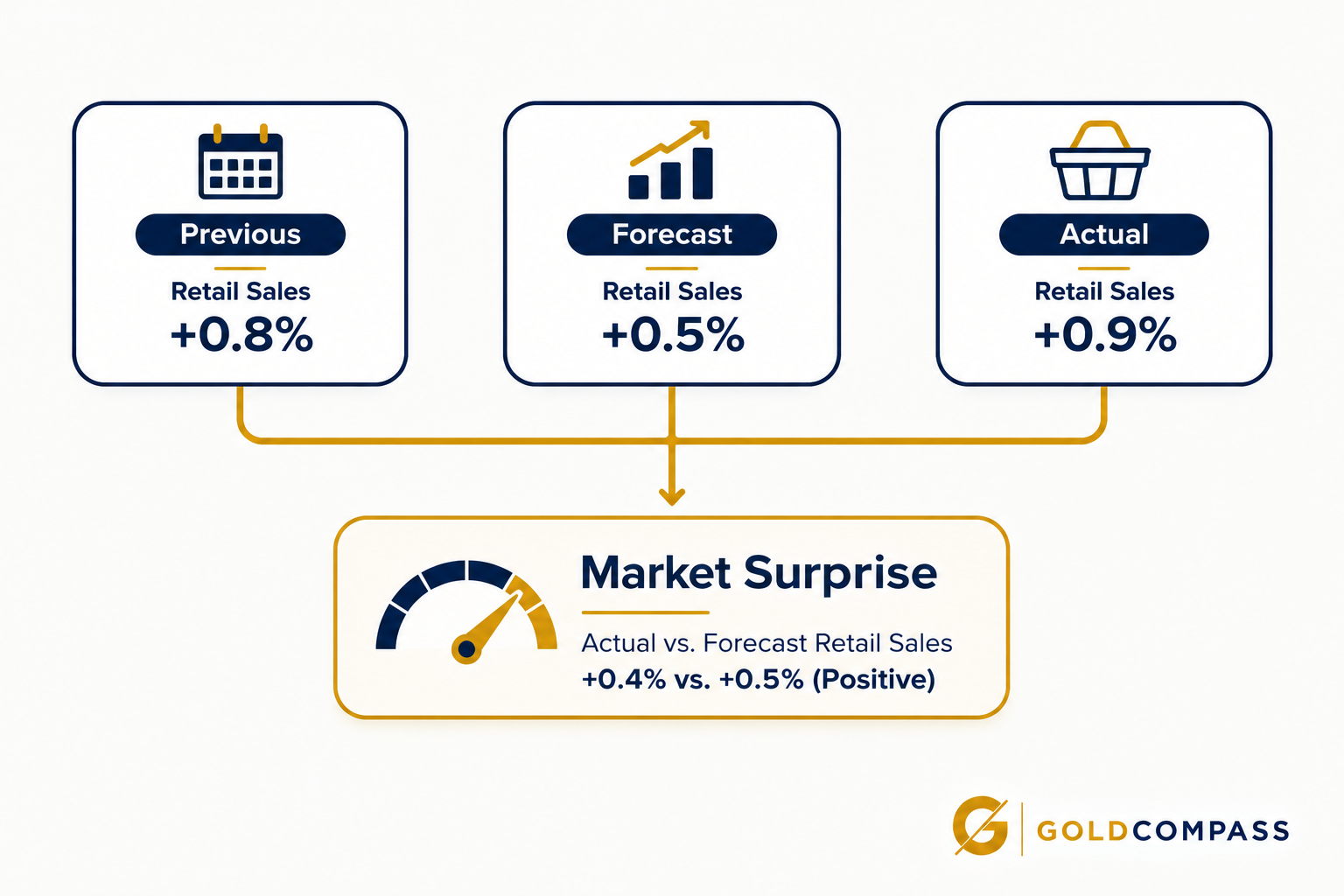
Markets compare the new Retail Sales result with expectations.
Imagine economists forecast monthly Retail Sales growth of 0.4%.
If the report arrives at approximately 0.4%, markets receive relatively little unexpected information.
If the report is much stronger or weaker than expected, investors may reconsider the outlook for consumer demand and economic growth.
The size of the surprise is often more important than the headline number itself.
6. How Retail Sales Can Influence Gold
Retail Sales does not directly determine the price of gold.
Instead, it contributes to the market's assessment of economic conditions.
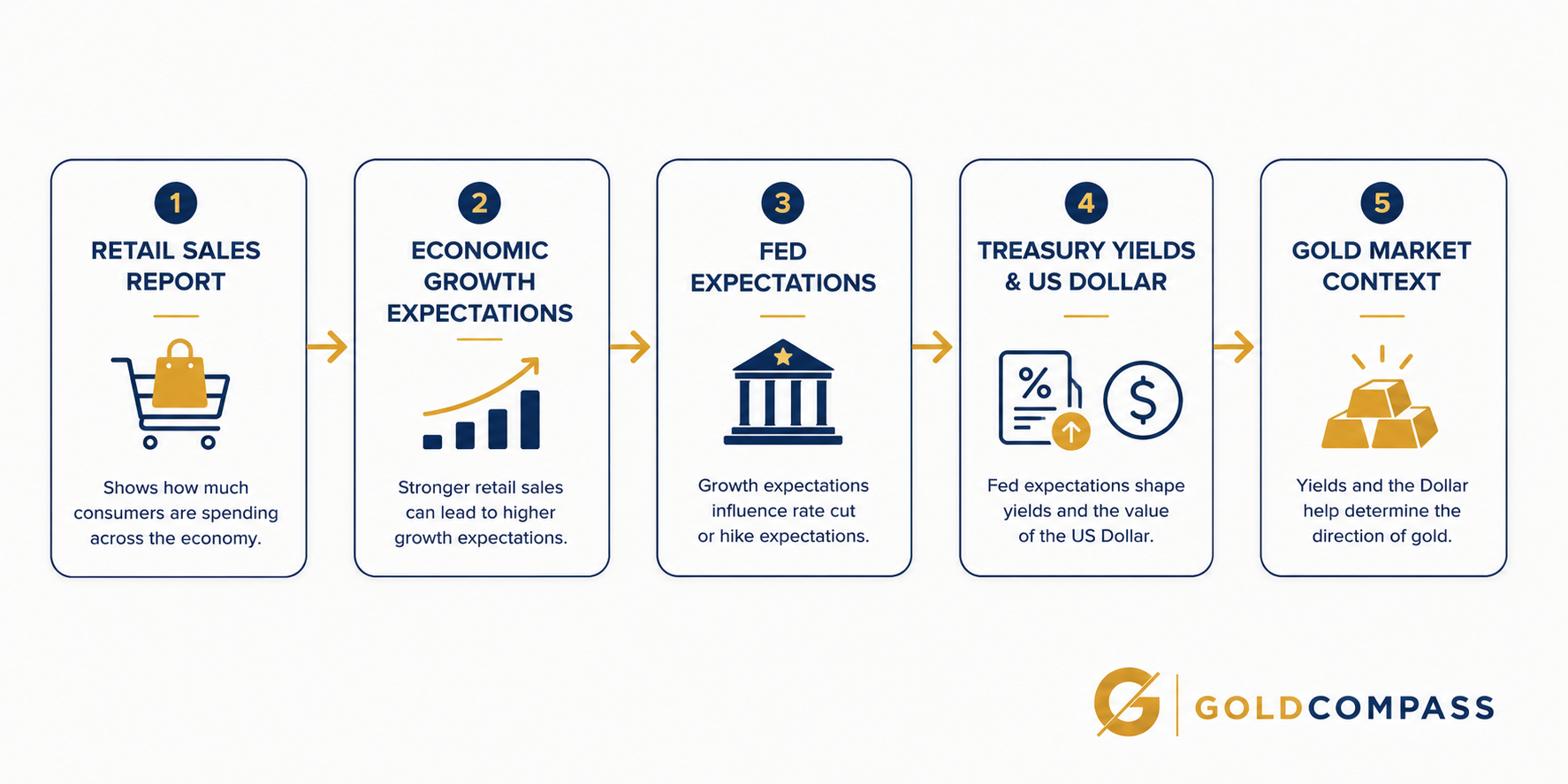
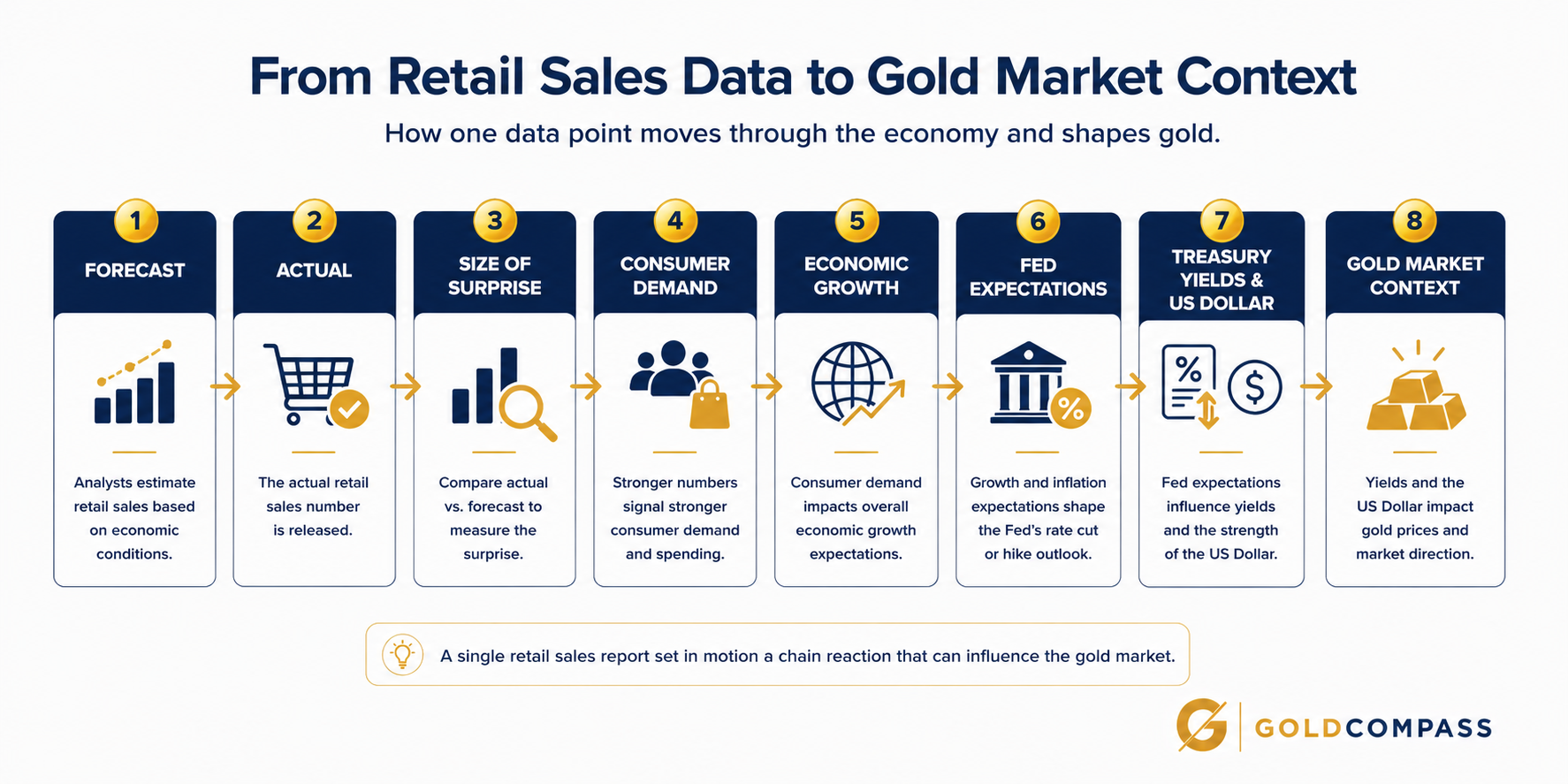
Suppose Retail Sales significantly exceed expectations.
Investors may conclude that consumer demand remains stronger than anticipated.
That could influence expectations about future economic growth.
Those expectations may affect Federal Reserve policy expectations.
Treasury yields may respond.
The US Dollar may respond.
Gold then trades within that evolving financial environment.
The same process works in reverse if consumer spending weakens unexpectedly.
7. Strong Spending Is Not Always Bullish
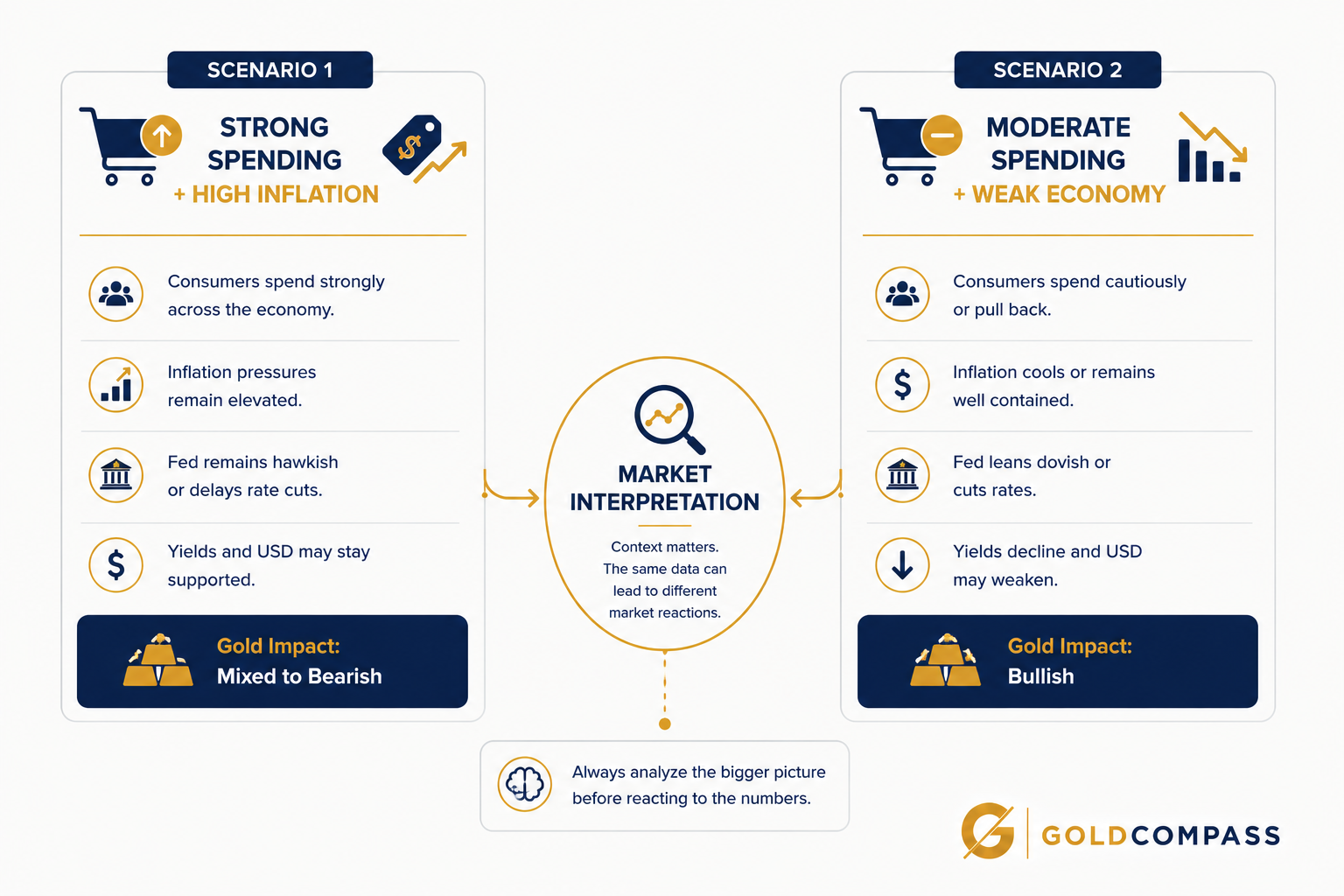
Many investors assume stronger consumer spending is automatically positive for financial markets.
Reality is more nuanced.
Suppose spending is exceptionally strong while inflation remains elevated.
Markets may conclude that inflation could remain persistent.
Expectations for future monetary policy could change.
Now imagine spending is modest but better than feared during an economic slowdown.
The interpretation may differ completely.
Economic data must always be evaluated within the broader macroeconomic environment.
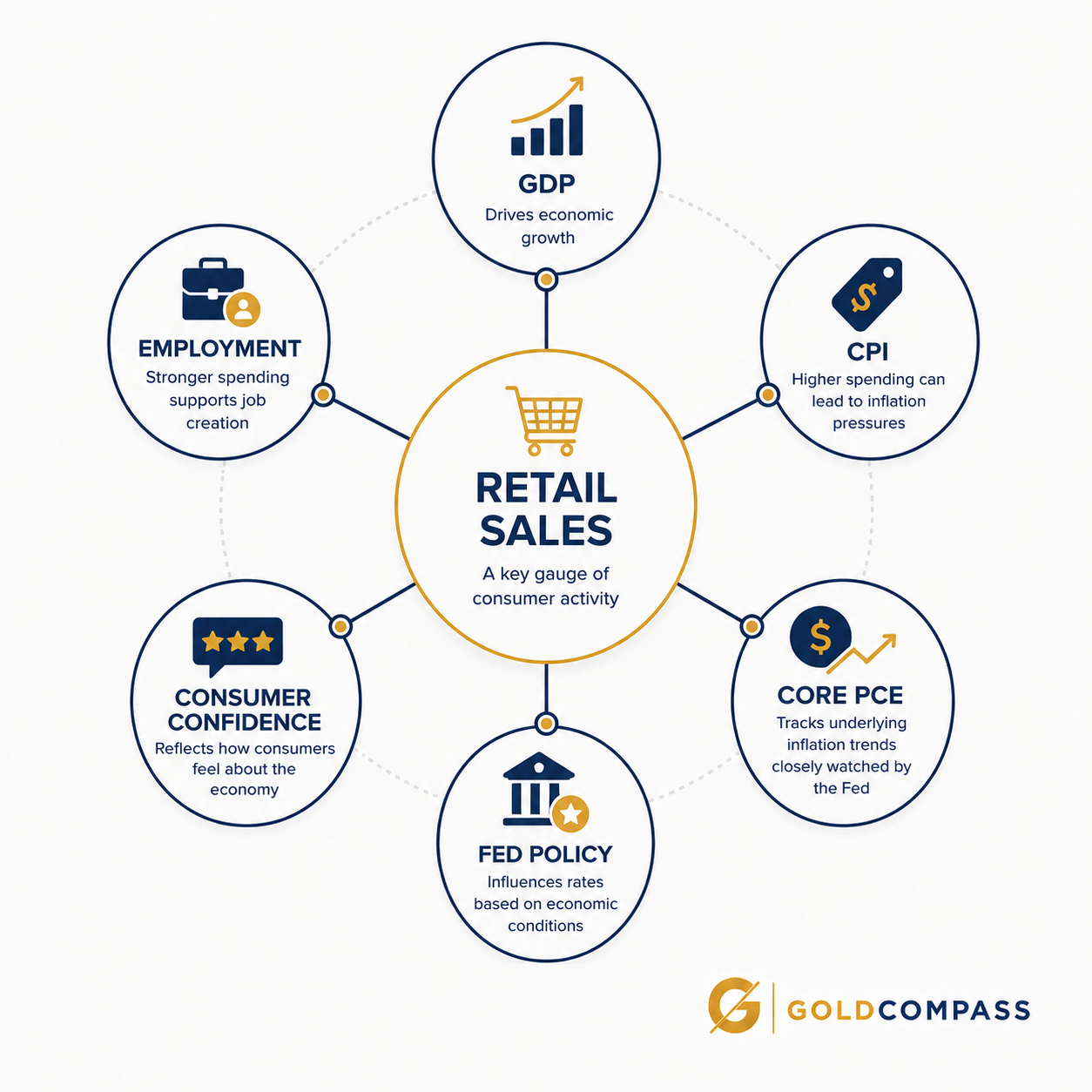
8. Retail Sales Rarely Stand Alone
Professional investors rarely evaluate Retail Sales in isolation.
They often compare it with:
- GDP
- Employment data
- CPI
- Core PCE
- Consumer Confidence
- Manufacturing data
- Federal Reserve communication
Together, these reports help create a more complete picture of economic conditions.
One report may confirm another—or challenge it.
That is why understanding the relationships between indicators is often more valuable than focusing on a single headline.
9. Seasonal Effects Matter
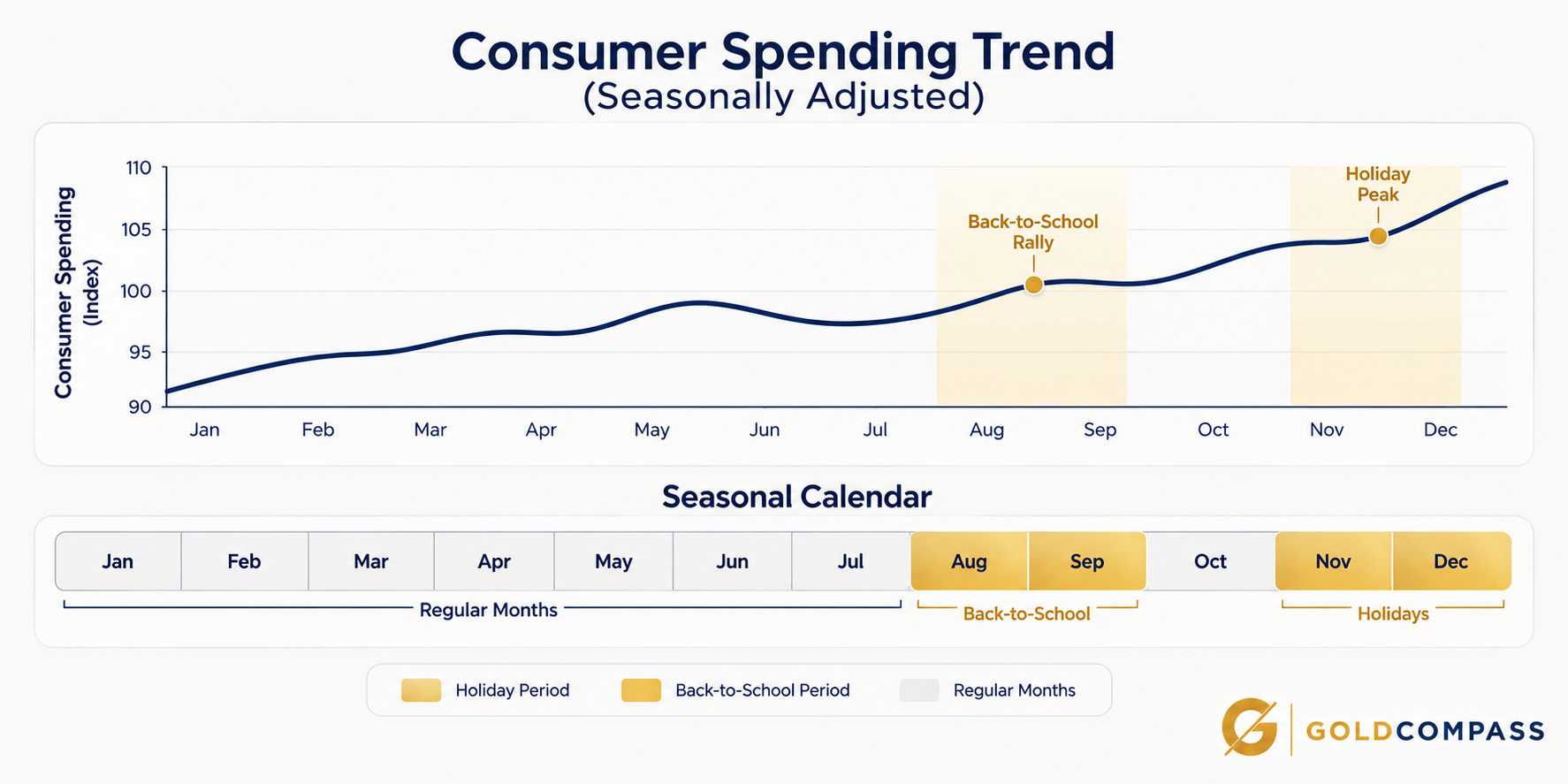
Consumer spending changes throughout the year.
Holiday shopping seasons, back-to-school purchases, and other recurring events can influence monthly Retail Sales.
Statistical adjustments attempt to account for predictable seasonal patterns.
Nevertheless, investors usually avoid drawing major conclusions from a single monthly report.
Looking at several months of data often provides a more reliable view of the underlying trend.
10. How to Read a Retail Sales Release
When Retail Sales appears on the economic calendar, start by reviewing the Forecast.
Compare the Actual result with expectations.
Evaluate whether the difference is meaningful.
Then consider whether consumer spending supports or challenges the current economic narrative.
Observe Treasury yields.
Observe the US Dollar.
Finally, evaluate gold within that broader macroeconomic context.
Retail Sales is most useful when interpreted as part of the overall economic picture rather than as an isolated signal.
Key Takeaways
- Retail Sales measures consumer spending at retailers.
- Consumer spending represents an important part of overall economic activity.
- Retail Sales contributes to the market's assessment of economic momentum.
- Markets compare the Actual result with the Forecast rather than evaluating the headline number alone.
- Retail Sales can influence Federal Reserve expectations through changing perceptions of economic strength.
- Treasury yields and the US Dollar often help reveal how markets interpret the report.
- Retail Sales should be analyzed alongside GDP, inflation, employment, and other macroeconomic indicators.
- Seasonal effects make long-term trends more informative than individual monthly reports.
- Retail Sales provides economic context rather than a guaranteed directional signal for gold.
Frequently Asked Questions
What is the Retail Sales report?
Retail Sales measures the monthly value of goods sold by retailers and provides insight into consumer spending activity.
Why does Retail Sales matter for gold?
Consumer spending can influence expectations about economic growth and Federal Reserve policy, which may affect Treasury yields, the US Dollar, and gold.
Is stronger Retail Sales always bearish for gold?
No. Strong spending influences the broader macroeconomic environment, but gold's reaction depends on inflation, monetary policy expectations, financial conditions, and other economic indicators.
What is Core Retail Sales?
Core Retail Sales excludes certain volatile categories to help analysts evaluate underlying consumer spending trends.
Does Retail Sales measure the entire economy?
No. Retail Sales measures consumer purchases, while GDP provides a broader measure of total economic activity.
Why do markets compare Forecast and Actual?
Markets react primarily to surprises. A result close to expectations often introduces less new information than a significantly unexpected outcome.
Should Retail Sales be analyzed by itself?
No. Professional investors typically evaluate Retail Sales alongside GDP, employment, inflation, consumer confidence, and other economic reports.