
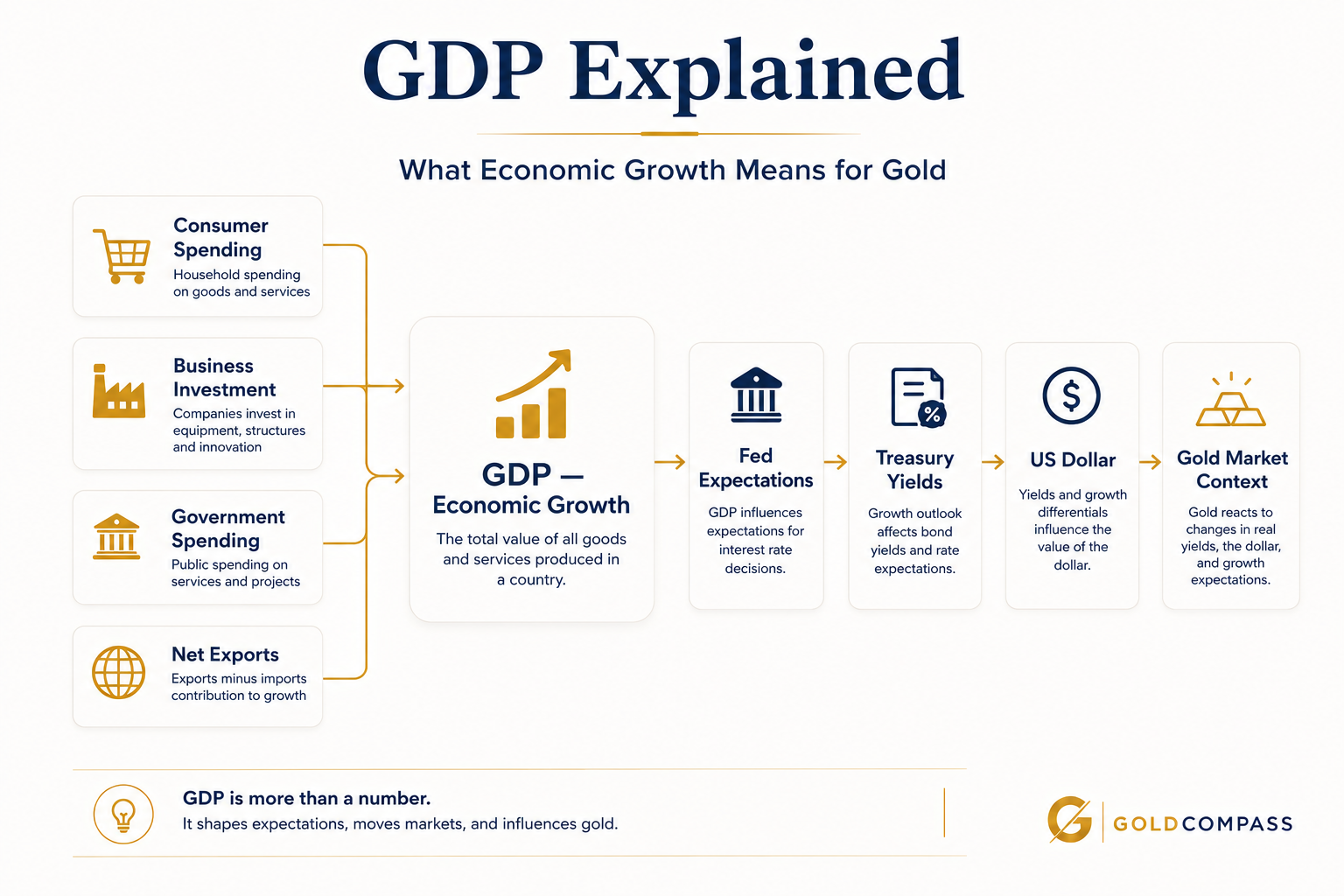
GDP Explained: What Economic Growth Means for Gold
After identifying important events on the economic calendar, the next step is understanding what those reports actually tell us about the economy.
One of the broadest measures is Gross Domestic Product, or GDP.
GDP is often described as the economy's report card.
When GDP grows, economic activity is expanding.
When GDP weakens, economic activity is slowing.
But for gold traders, knowing whether GDP increased or decreased is only the beginning.
The more useful question is:
Does the new growth information change expectations about inflation, interest rates, Federal Reserve policy, Treasury yields, or the US Dollar?
That is where GDP becomes relevant to gold.
1. What Is GDP?
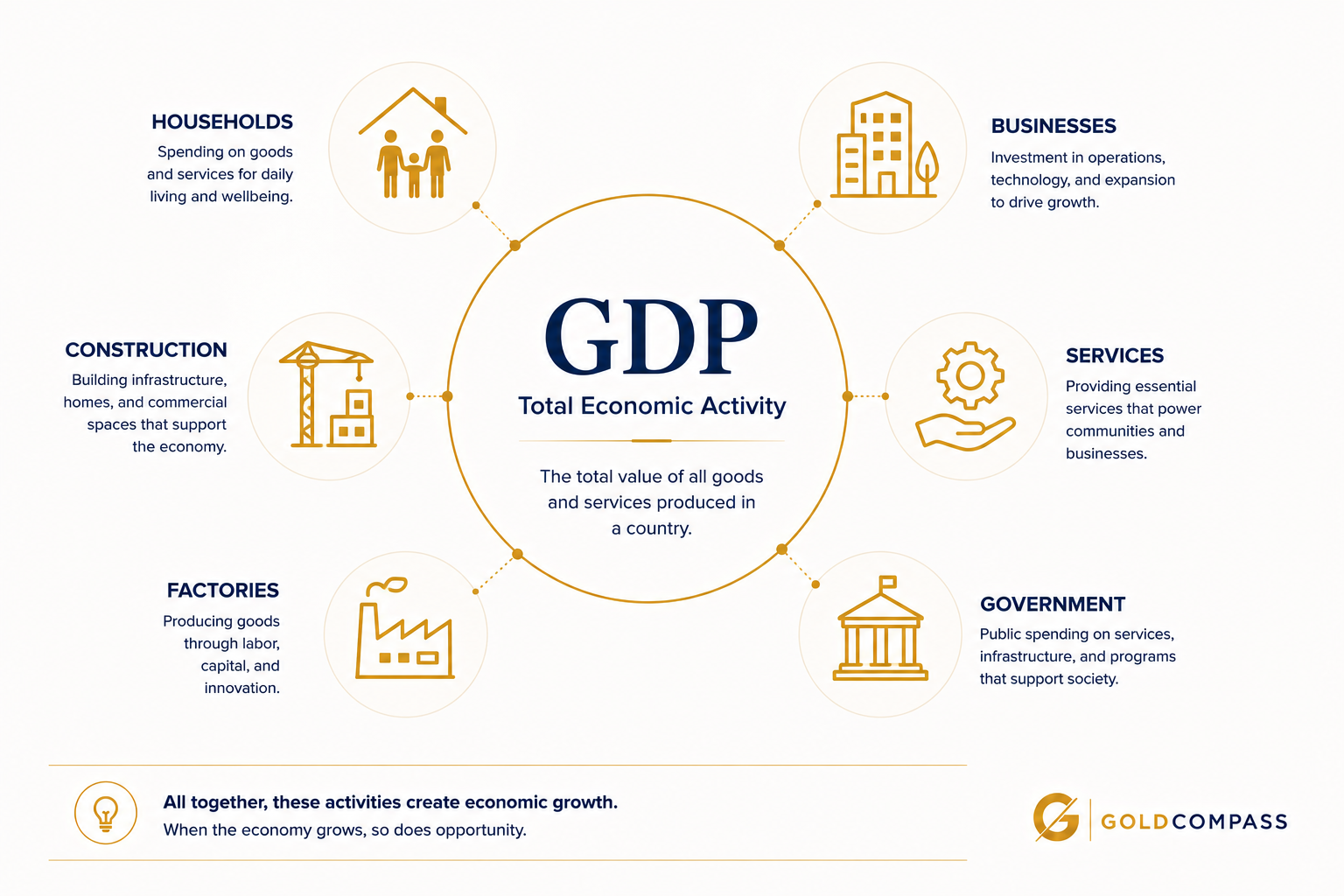
GDP measures the value of final goods and services produced within an economy over a specific period.
In simple terms, it attempts to answer:
How much economic activity is taking place?
A growing economy usually produces more goods and services, supports more business activity, and generates more income.
A slowing economy shows weaker expansion.
GDP therefore provides a broad view of economic health rather than measuring one specific area such as inflation or employment.
2. What Makes Up GDP?
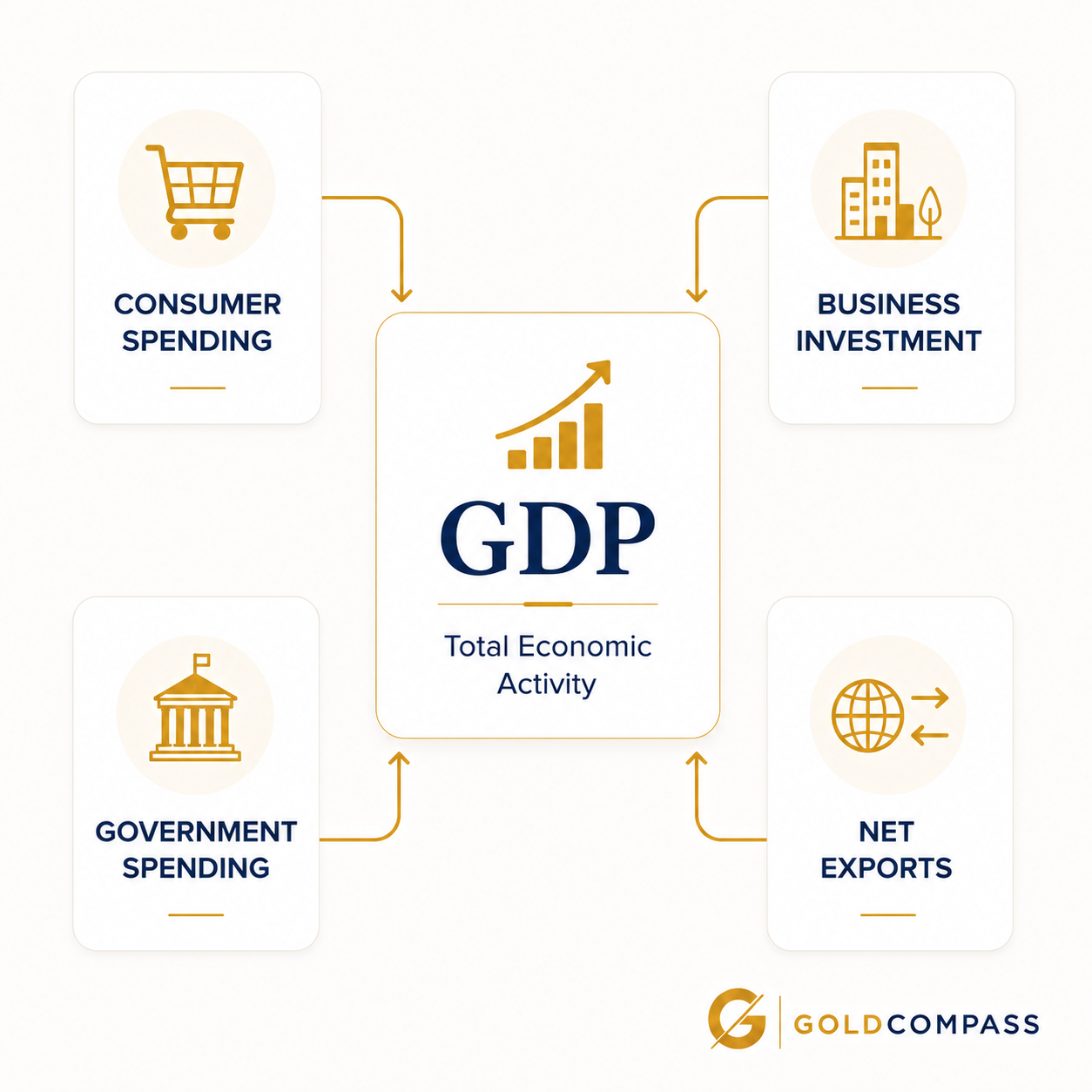
GDP is built from several major parts of the economy.
Consumer Spending
Households purchase goods and services such as food, transportation, healthcare, entertainment, and housing-related services.
Because consumer activity represents a large part of the US economy, changes in household spending can significantly affect economic growth.
Business Investment
Companies invest in equipment, technology, buildings, inventories, and other resources intended to support future production.
Government Spending
Government purchases and investment also contribute to economic activity.
Net Exports
Exports add to domestic production, while imports are accounted for separately because they were produced outside the domestic economy.
Together, these components create a broader picture of economic activity.
3. Real GDP vs. Nominal GDP
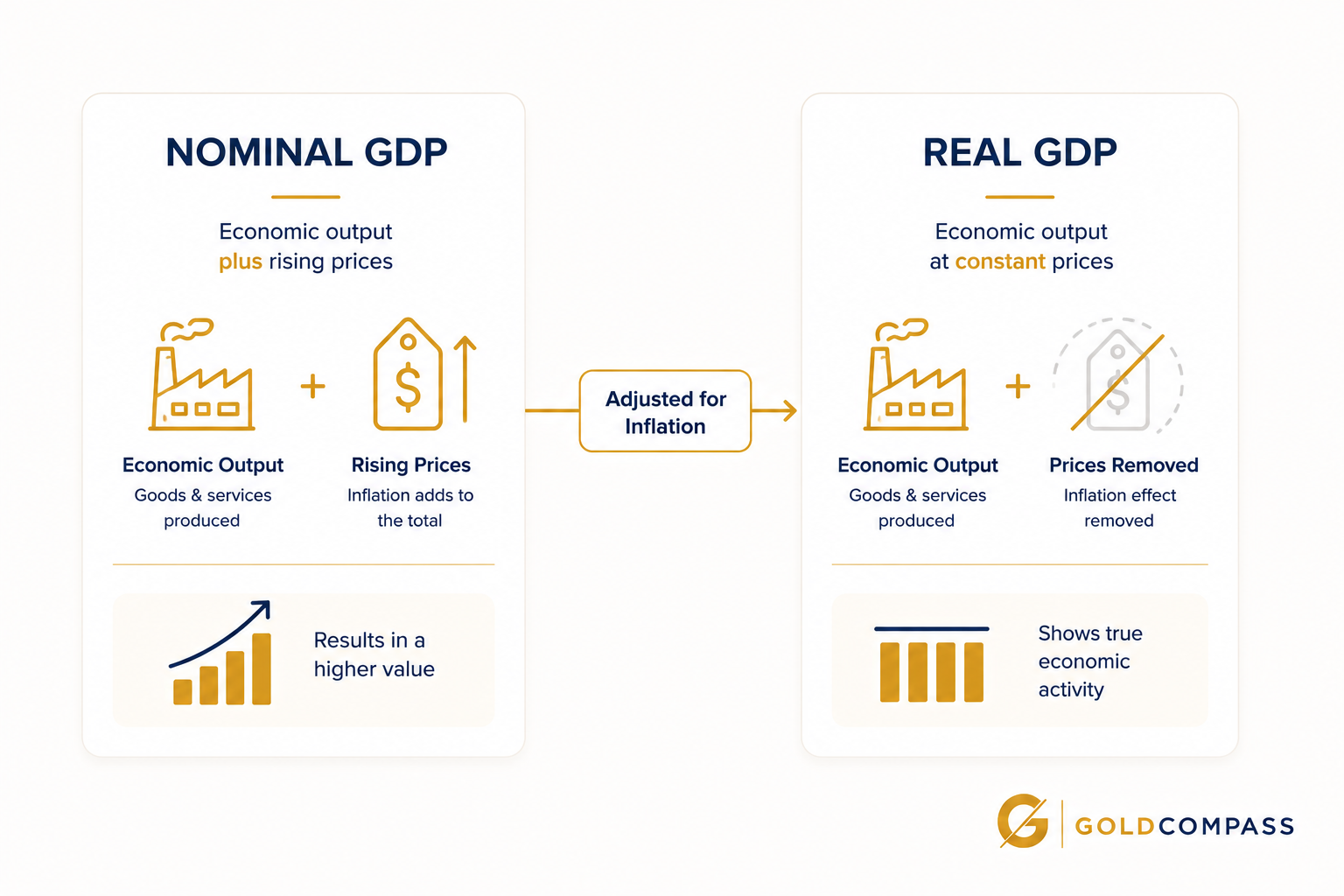
You may encounter both Nominal GDP and Real GDP.
The difference matters because prices change over time.
Nominal GDP measures economic output using current prices.
If prices rise significantly, nominal GDP can increase even without an equally large increase in actual production.
Real GDP adjusts for changes in prices.
That makes Real GDP more useful when the objective is to understand whether the economy is genuinely producing more goods and services.
When financial markets discuss economic growth, Real GDP growth is usually particularly important.
4. Why Strong Economic Growth Can Matter for Gold
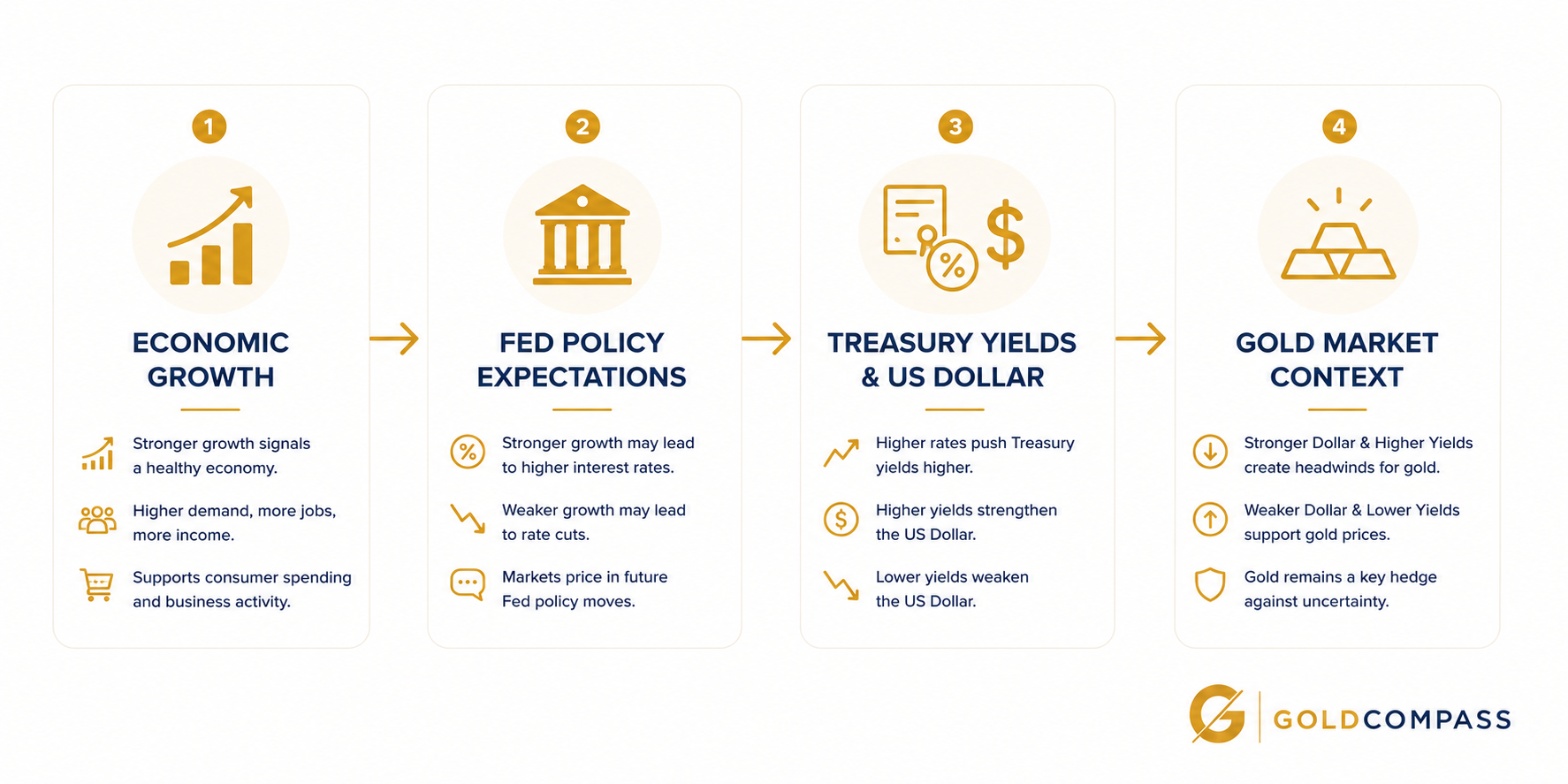
Suppose GDP growth is significantly stronger than markets expected.
Investors may conclude that the economy can tolerate higher interest rates for longer.
Expectations for rapid Federal Reserve easing could decrease.
Treasury yields may respond.
The US Dollar may respond.
Gold then trades within this changing financial environment.
This does not mean strong GDP automatically causes gold to fall.
It means stronger-than-expected growth can change some of the variables that influence gold.
The important chain is:
Economic Growth → Policy Expectations → Financial Conditions → Gold Market Context
5. What Happens When Growth Disappoints?
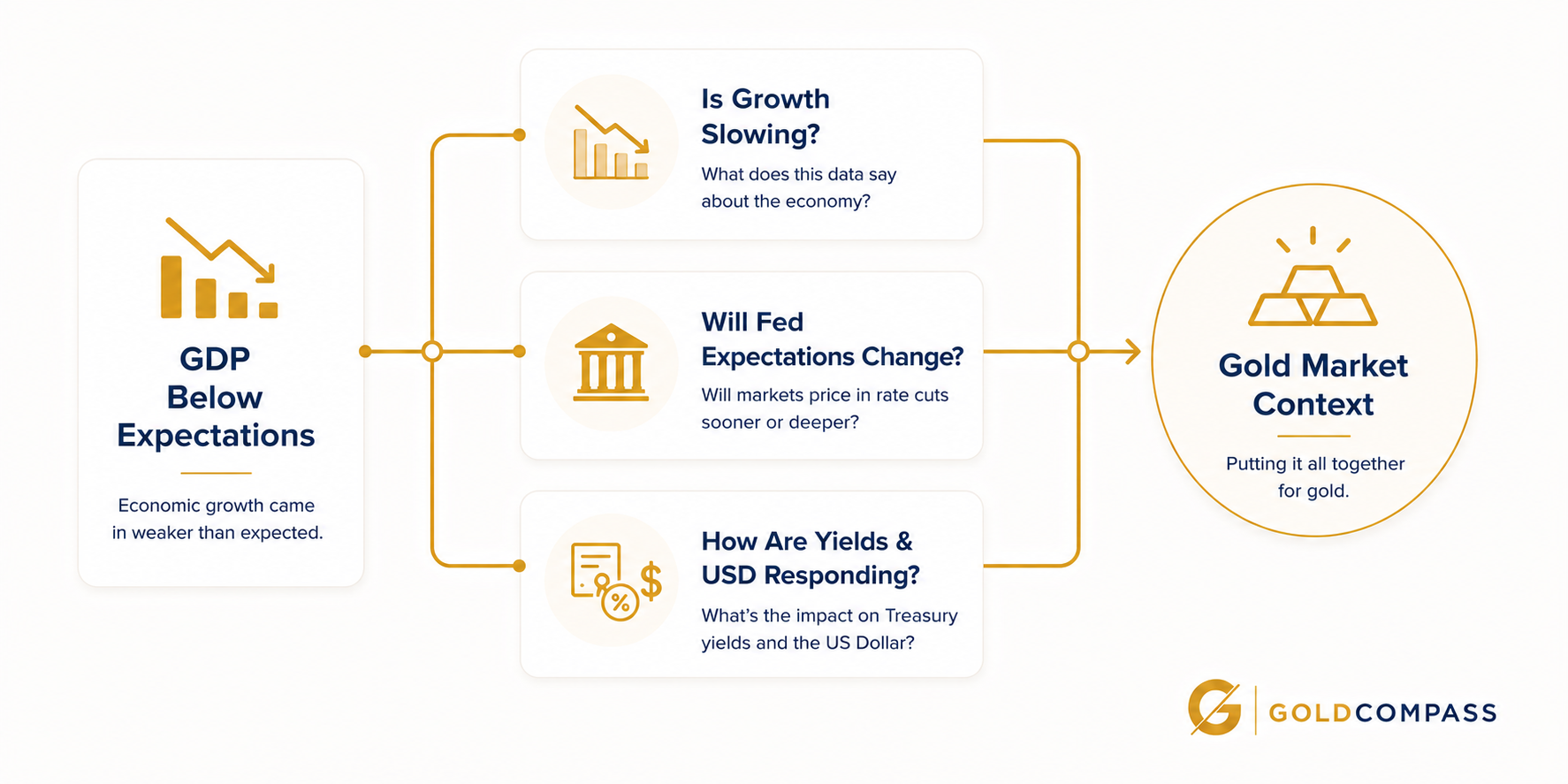
Now imagine GDP comes in significantly below expectations.
Markets may begin questioning the strength of the economy.
If weaker growth becomes part of a broader slowdown, investors might reconsider future interest-rate expectations.
Treasury yields could respond to that changing outlook.
The US Dollar could also react.
Gold may then respond to those changes.
But weak GDP is not automatically bullish for gold.
If weaker growth occurs alongside severe market stress, falling inflation, unusual currency movements, or changing liquidity conditions, several forces may affect gold simultaneously.
Context remains essential.
6. Actual GDP vs. Expected GDP
As with other economic releases, GDP should be interpreted relative to expectations.
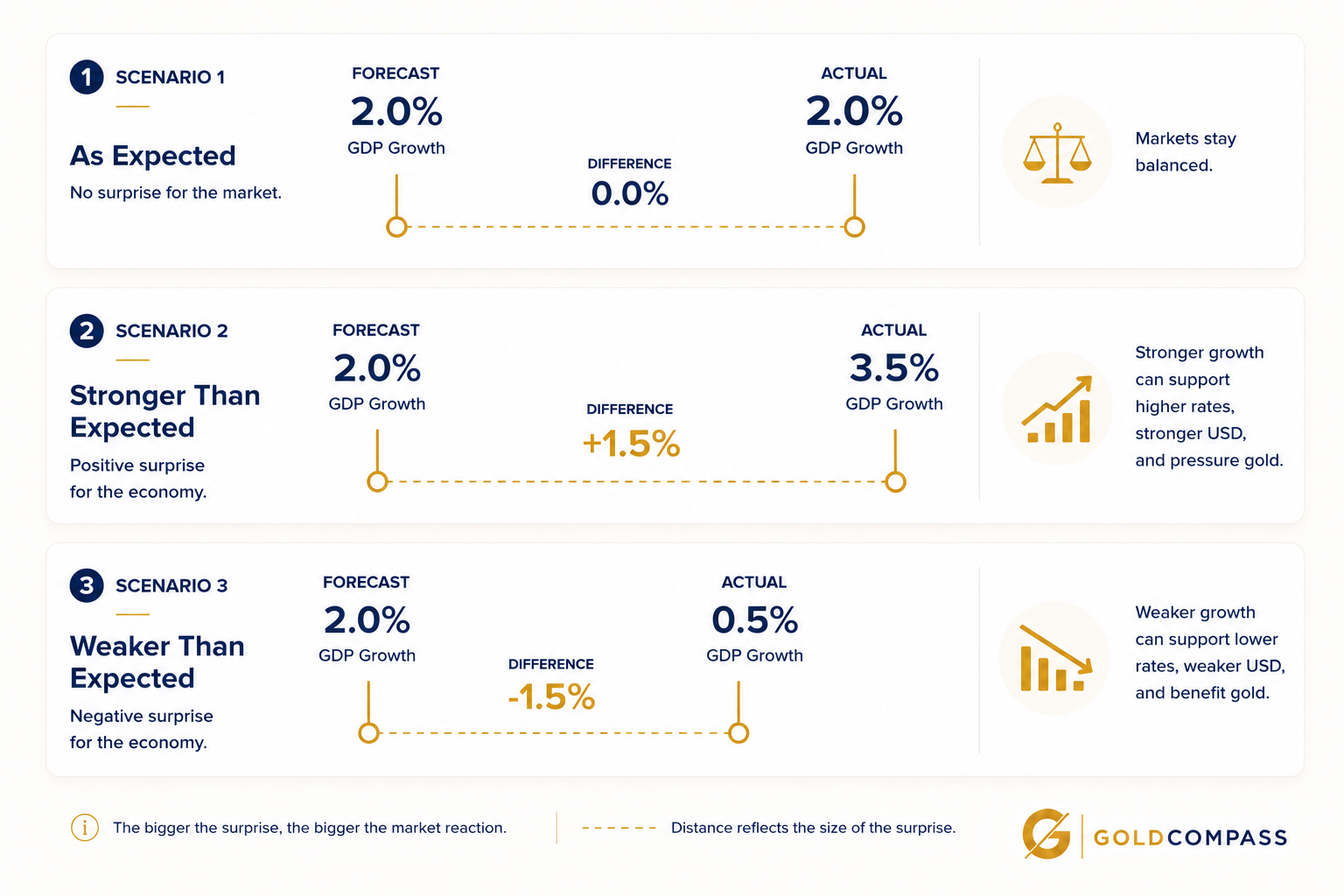
Imagine markets expect annualized quarterly growth of 2.0%.
If GDP arrives at approximately 2.0%, the report broadly confirms expectations.
If it arrives at 3.5%, growth is considerably stronger than expected.
If it arrives at 0.5%, growth is considerably weaker than expected.
The headline number alone therefore does not tell the full story.
A 2% growth rate can be interpreted very differently depending on whether markets expected 0.5%, 2%, or 4%.
The same principle from the previous articles applies:
Expectation gives the number context.
7. Why GDP Can Be Confusing in the United States
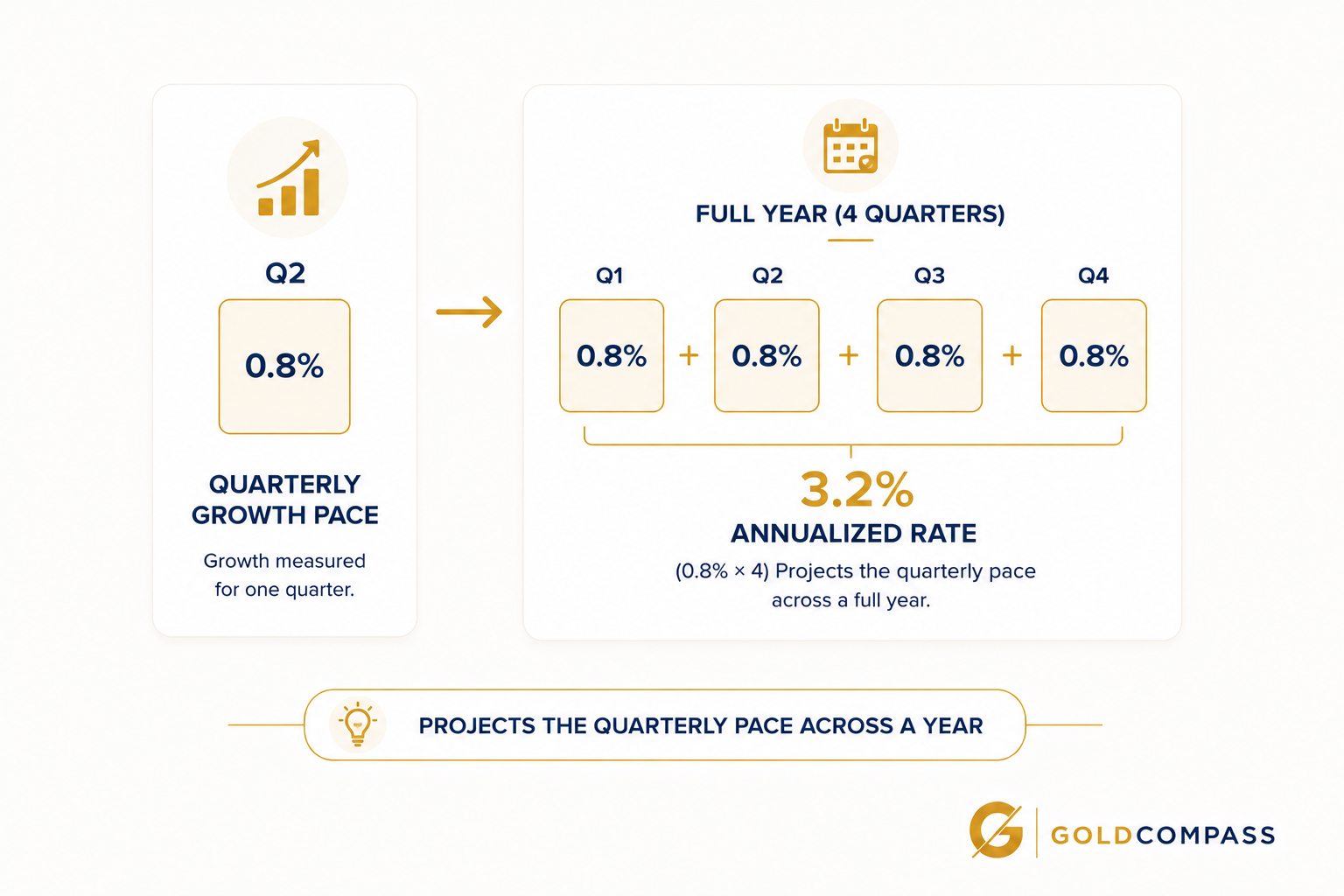
US GDP growth is commonly reported at an annualized quarterly rate.
This can make the headline percentage look larger than expected to someone unfamiliar with the calculation.
An annualized rate estimates what the year's growth would look like if the quarter's pace continued for a full year.
It does not mean the economy literally grew by that entire percentage during one quarter.
Understanding how the number is presented prevents misreading the report.
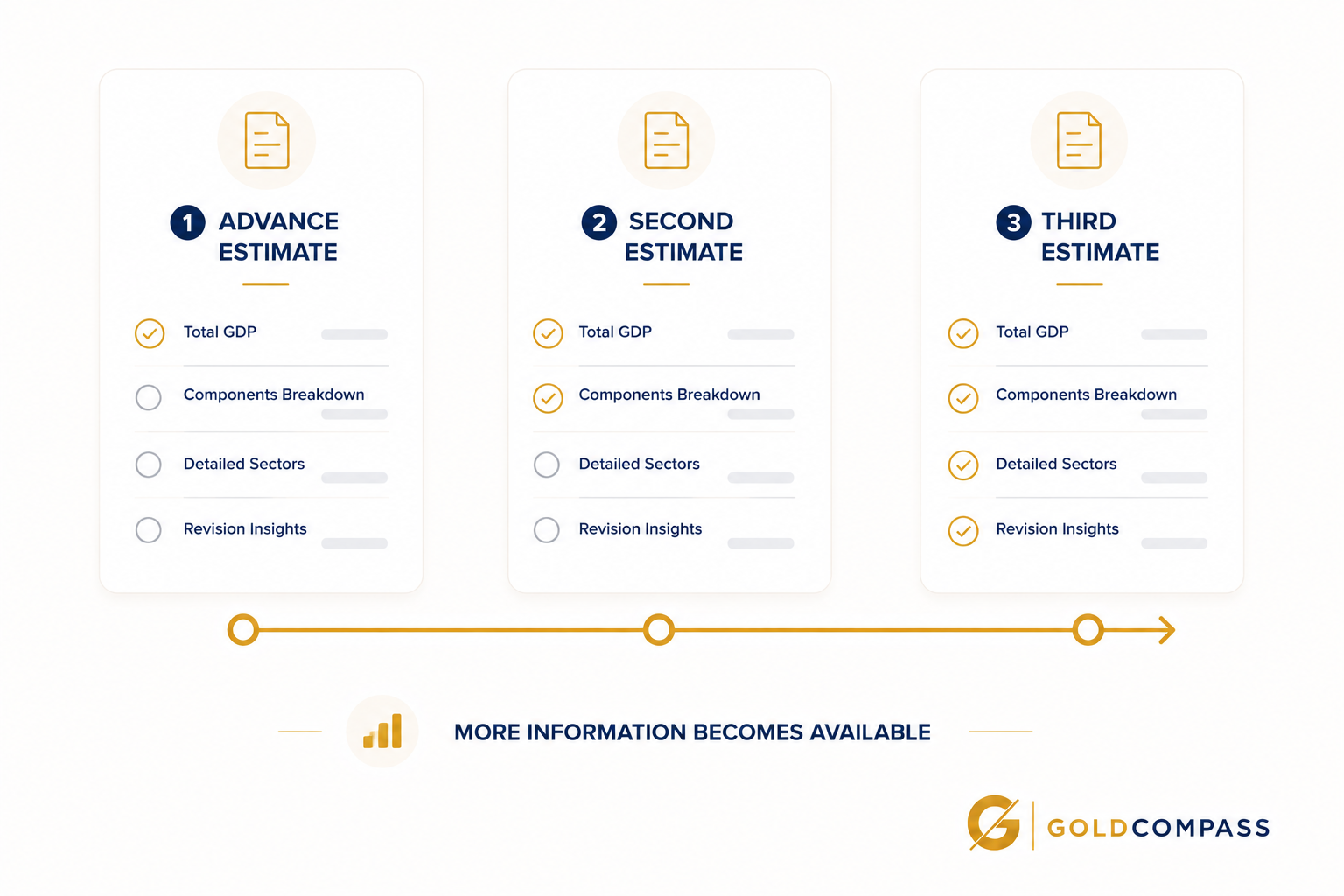
8. Advance, Second, and Third GDP Estimates
GDP is not reported only once.
The initial calculation is based on incomplete information and is updated as more data becomes available.
In the United States, traders may encounter an Advance Estimate, followed by later estimates incorporating additional information.
The first estimate often receives the most attention because it introduces the largest amount of new information.
Later revisions can still matter, particularly when they significantly change the previous picture of economic growth.
This is another reminder that economic data is not always final when first published.
9. GDP and Inflation Must Be Read Together
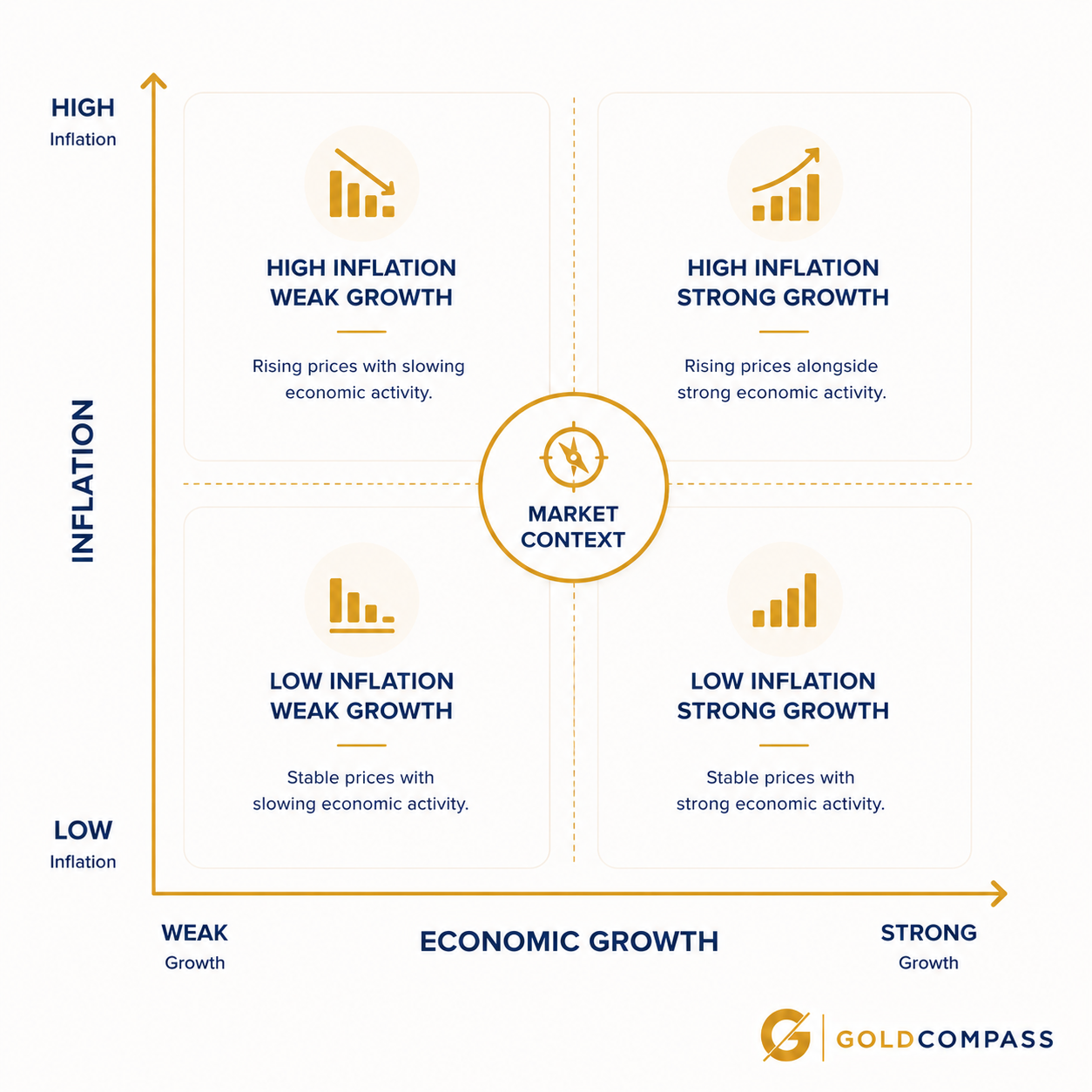
Strong growth means something different when inflation is low than when inflation is already elevated.
Imagine the economy is growing strongly while inflation remains persistent.
Markets may become more concerned that restrictive monetary policy will need to remain in place.
Now imagine growth is weakening while inflation is also declining.
The monetary-policy implications may be very different.
A third possibility is more difficult: growth weakens while inflation remains elevated.
That combination creates a more complicated environment for policymakers and financial markets.
GDP therefore becomes much more informative when analyzed alongside inflation.
10. GDP and Employment Are Connected
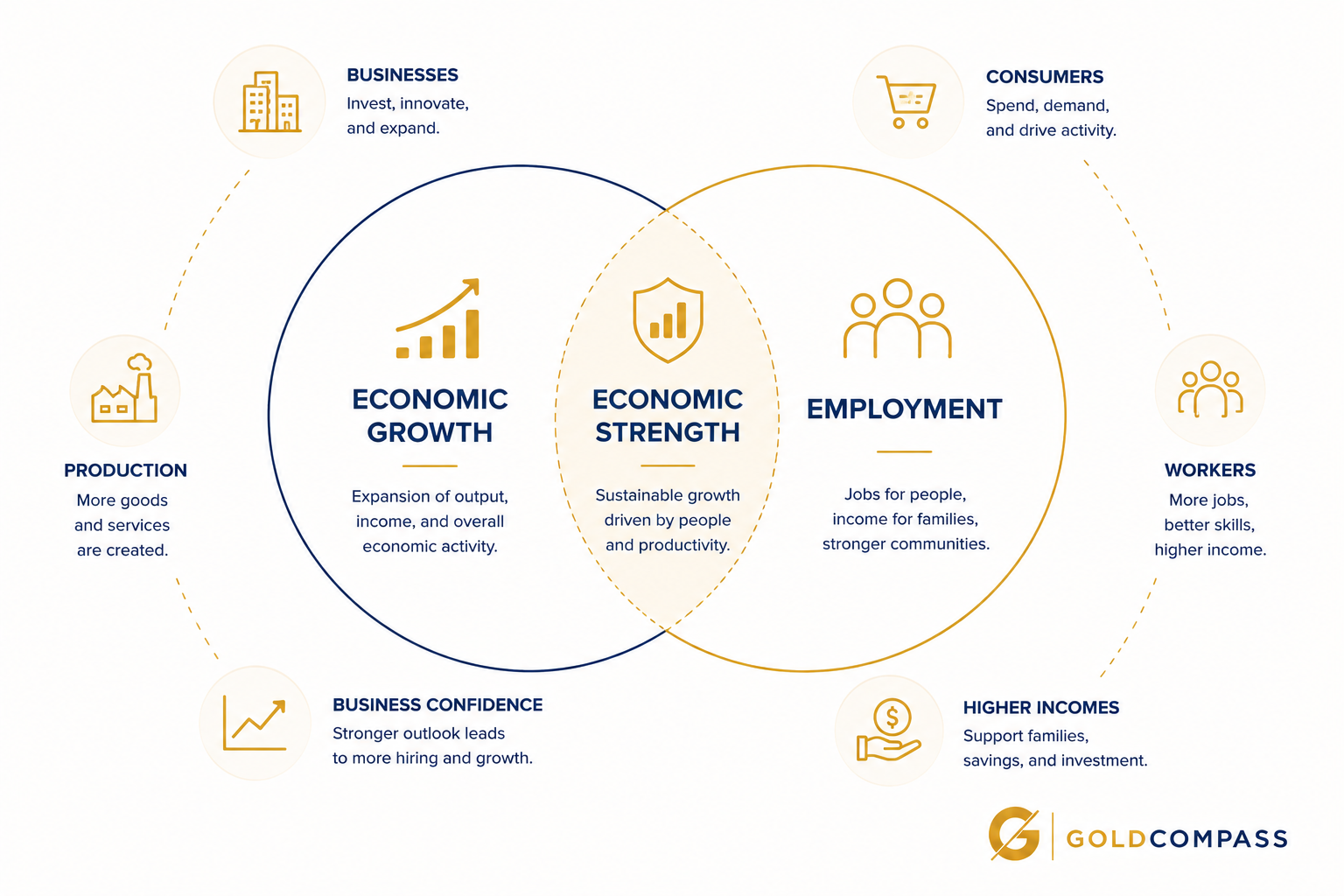
Economic growth and employment often influence each other.
When businesses experience strong demand, they may expand production and hire additional workers.
When economic activity slows significantly, hiring may weaken.
But the relationship is not instantaneous.
Employment can remain strong even while other parts of the economy begin slowing.
Similarly, GDP can recover before labor-market conditions fully improve.
That is why professional macro analysis does not rely on GDP or employment alone.
The objective is to determine whether several indicators are beginning to tell the same story.
11. When GDP Matters More Than Usual
The importance of GDP changes with the market environment.
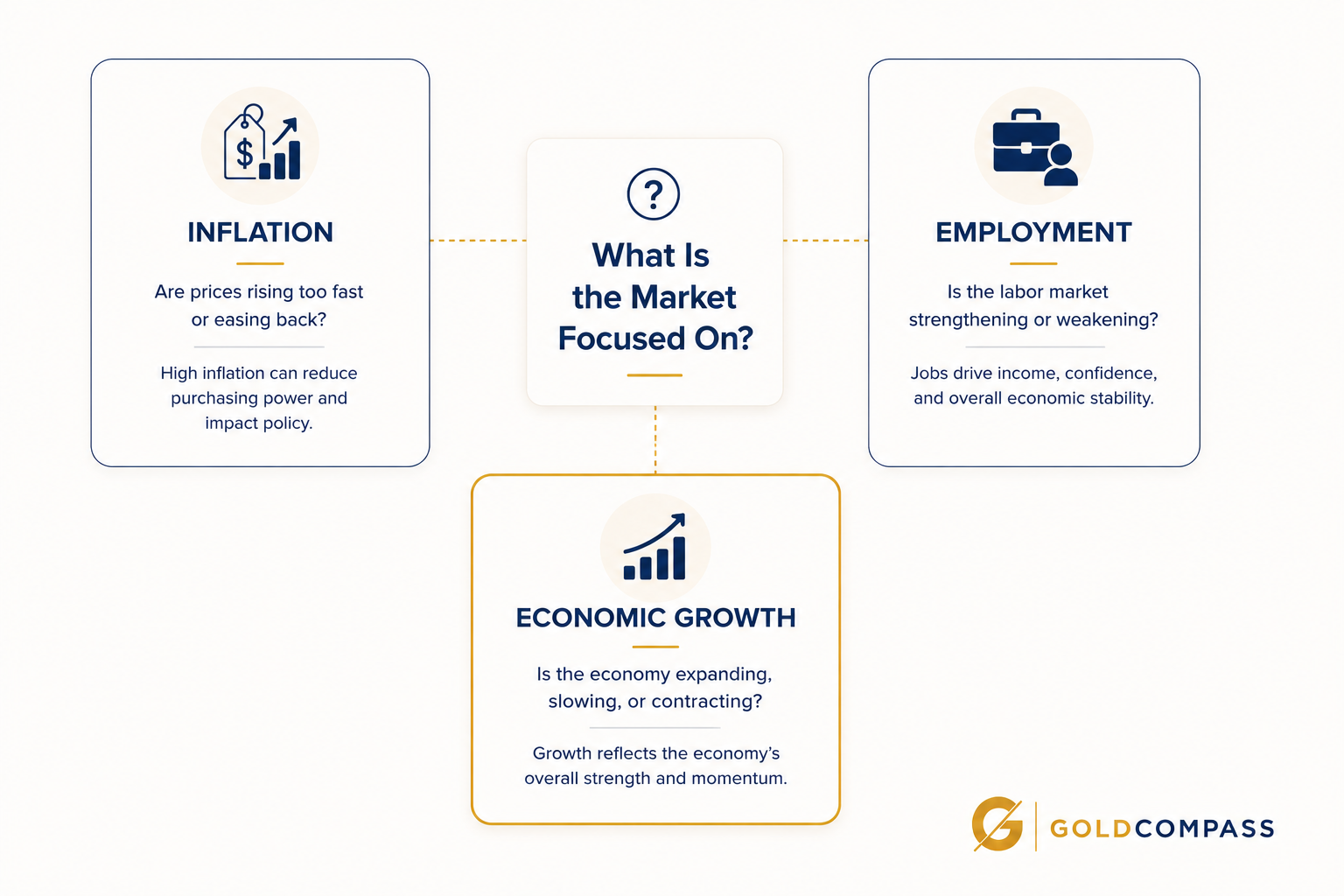
If investors are intensely focused on recession risk, growth data may receive significantly more attention.
If inflation is the dominant concern, an inflation report may matter more.
If markets are focused on employment deterioration, labor data may dominate.
This means economic indicators do not operate within a fixed hierarchy.
Their importance changes according to the question the market is currently trying to answer.
For GDP, that question is often:
How strong or weak is the economy becoming?
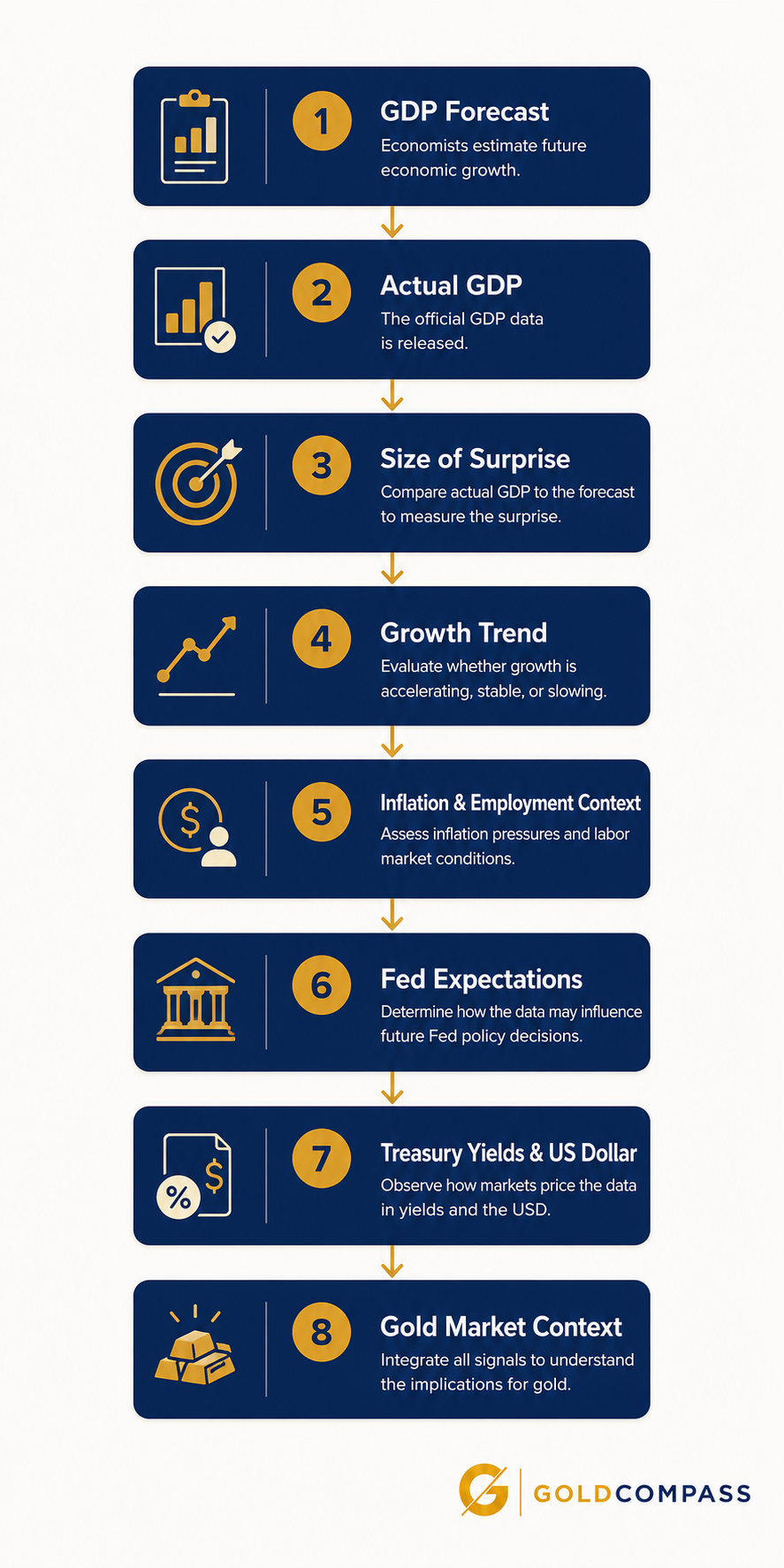
12. A Better Way to Read a GDP Release
When GDP appears on the economic calendar, avoid reducing the report to "strong growth" or "weak growth."
Start by checking what markets expected.
Compare the Actual result with the Forecast.
Determine whether the difference is meaningful.
Then ask whether the report confirms or challenges the existing economic trend.
Consider the inflation environment.
Consider employment conditions.
Watch whether Federal Reserve expectations change.
Observe Treasury yields.
Observe the US Dollar.
Finally, evaluate how gold behaves within the resulting market context.
This approach makes GDP part of a broader analytical framework instead of treating it as an isolated trading signal.
Key Takeaways
- GDP measures broad economic activity within an economy.
- Real GDP adjusts for price changes and provides a clearer view of actual economic growth.
- Consumer spending, business investment, government spending, and net exports are major components of GDP.
- GDP should be compared with market expectations rather than interpreted from the headline number alone.
- Stronger growth can influence expectations about Federal Reserve policy, Treasury yields, and the US Dollar.
- Weaker growth can also change monetary-policy expectations, but it does not automatically mean gold will rise.
- US quarterly GDP figures are commonly presented at annualized rates.
- Initial GDP estimates can later be revised as additional information becomes available.
- GDP becomes more meaningful when analyzed alongside inflation and employment.
- The importance of GDP changes depending on what financial markets are currently focused on.
- GDP provides market context; it does not provide a guaranteed directional signal for gold.
Frequently Asked Questions
What does GDP stand for?
GDP stands for Gross Domestic Product. It measures the value of final goods and services produced within an economy during a specific period.
Is higher GDP always good for the economy?
Economic growth generally indicates expanding activity, but very rapid growth can have different implications depending on inflation, labor conditions, and other economic factors.
Does strong GDP make gold fall?
Not necessarily. Stronger-than-expected GDP can influence Federal Reserve expectations, Treasury yields, and the US Dollar, but gold's final reaction depends on the broader market environment.
Does weak GDP make gold rise?
Not automatically. Weaker growth can affect interest-rate expectations, but gold is influenced by several factors simultaneously.
What is Real GDP?
Real GDP adjusts economic output for changes in prices, making it easier to distinguish actual changes in production from increases caused primarily by inflation.
Why is US GDP sometimes described as annualized?
US quarterly GDP growth is commonly converted into an annualized rate that estimates what growth would look like if that quarter's pace continued for a full year.
Why can GDP be revised?
Early GDP estimates are calculated before all underlying information is available. Later estimates incorporate additional data and can revise the original result.
Is GDP more important than CPI or NFP?
There is no permanent ranking. The importance of each report depends partly on the economic issue financial markets are most focused on at that time.