
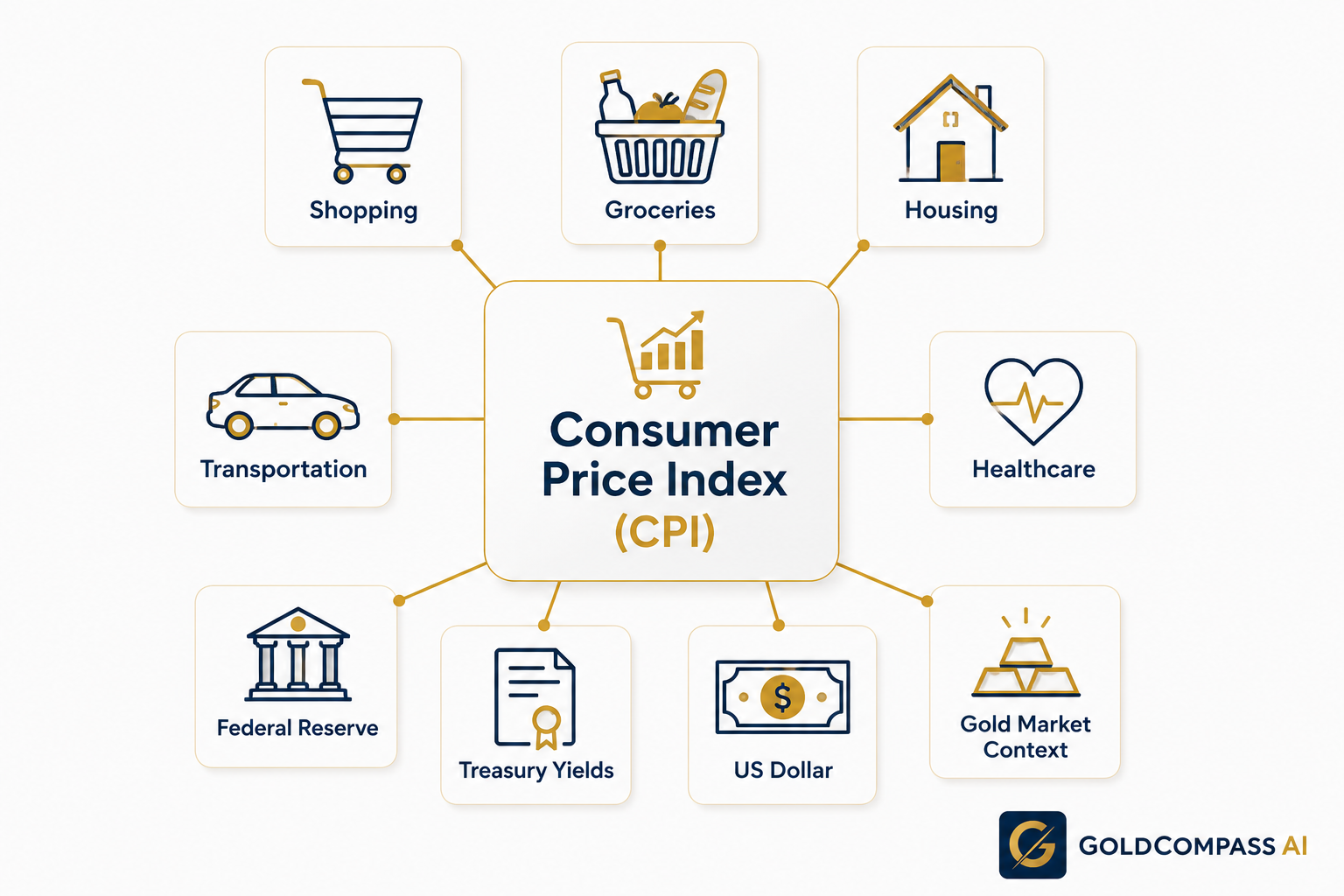
CPI Explained: How Consumer Price Index Influences Gold Prices
Introduction
Inflation is one of the most powerful forces affecting financial markets.
Among all inflation indicators, the Consumer Price Index (CPI) receives the most attention because it provides one of the earliest monthly measurements of changes in consumer prices.
For gold traders, CPI is more than an inflation report—it is a major driver of market expectations.
What Is CPI?
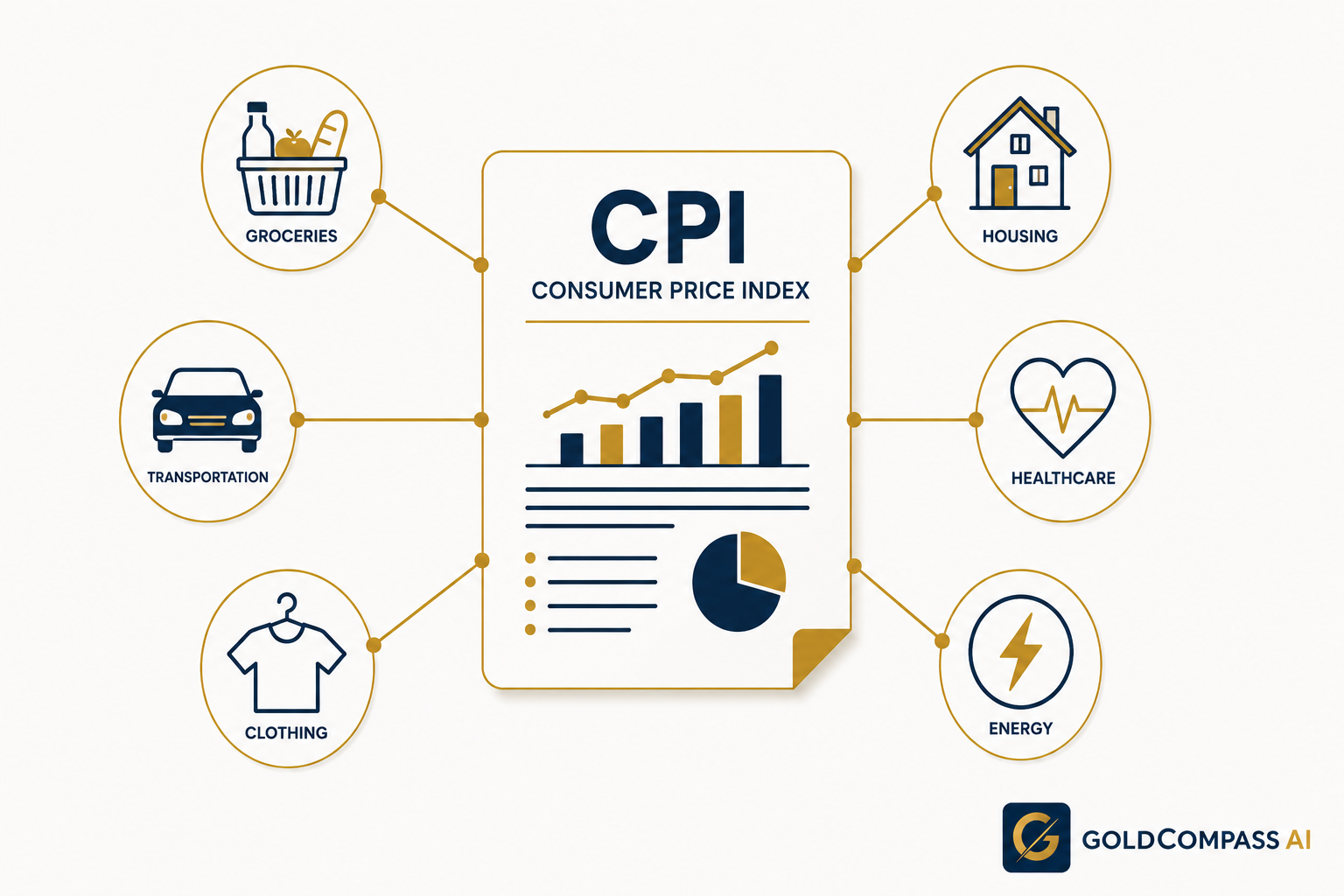
The Consumer Price Index measures the average change over time in prices paid by consumers for a broad basket of goods and services.
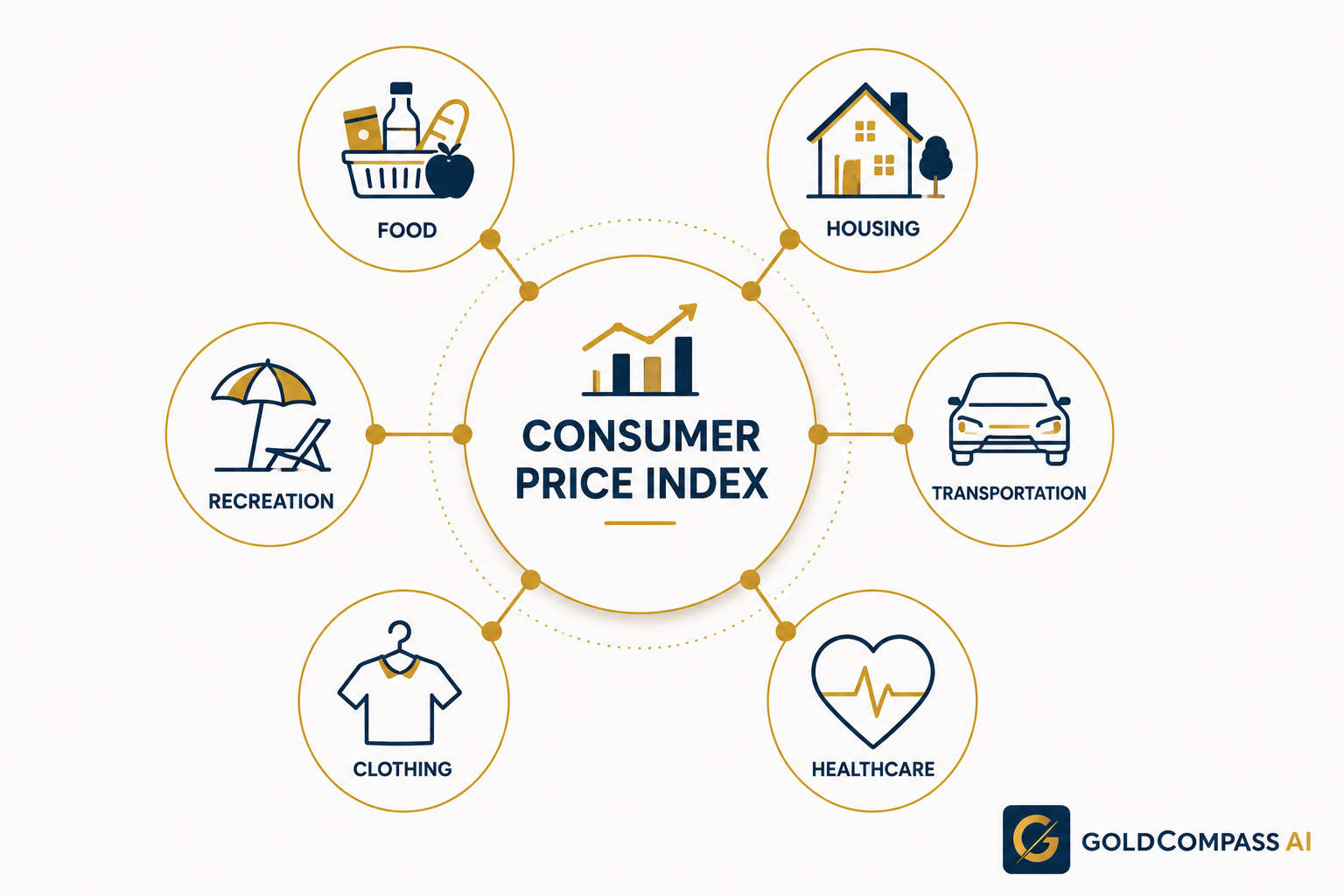
Rather than tracking a single product, CPI combines prices from many categories to estimate how the overall cost of living changes from month to month and year to year.
Because consumers purchase different types of goods every day, CPI provides a broad snapshot of inflation across the economy.
Why Financial Markets Watch CPI
Inflation influences purchasing power and central bank decisions.
When inflation rises faster than expected, markets may anticipate tighter monetary policy.
When inflation slows, markets may begin pricing in future interest-rate cuts.
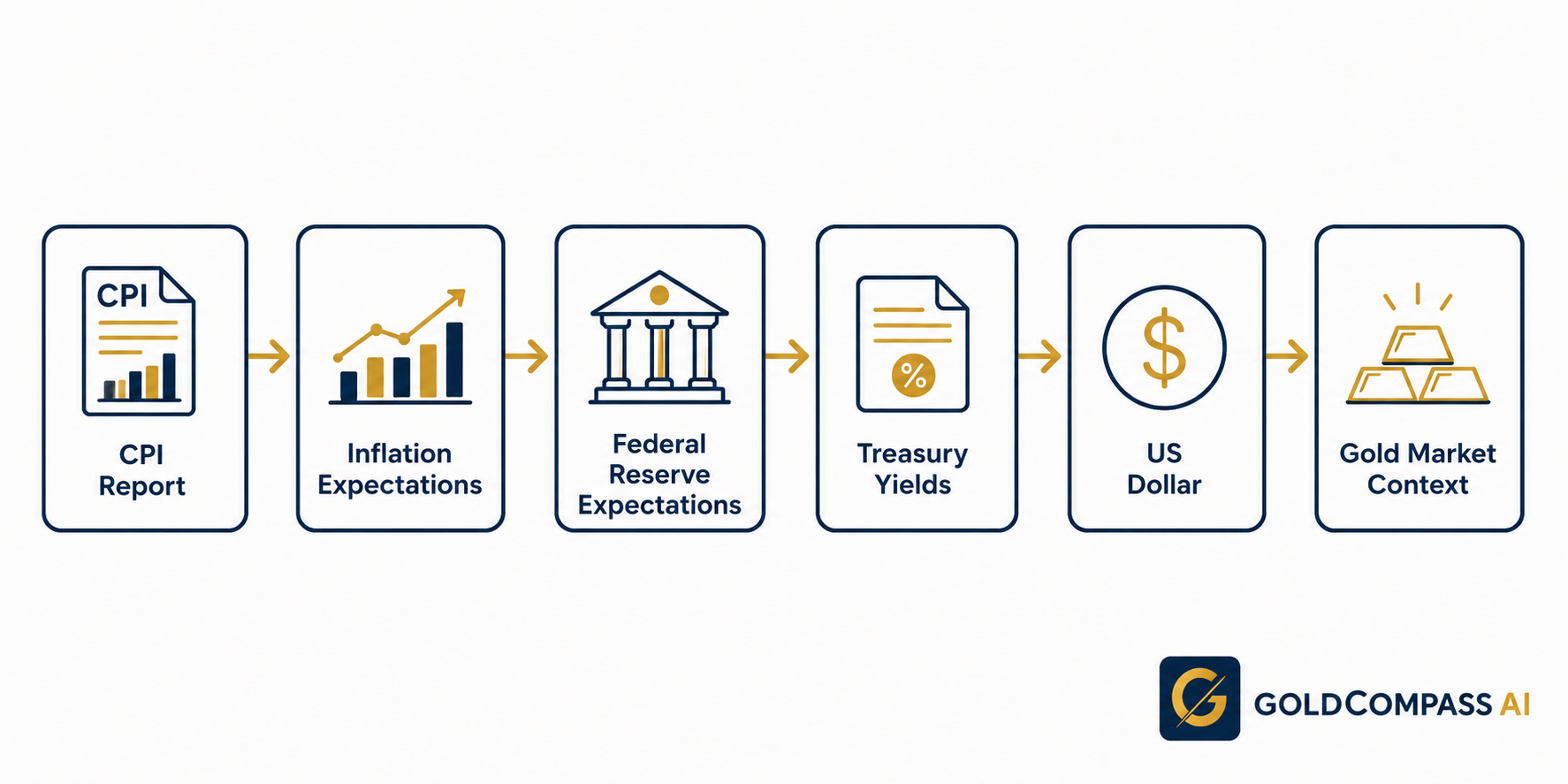
Because expectations change immediately after CPI is released, Treasury yields, the U.S. dollar, stock markets, and gold often react within seconds.
Headline CPI vs Core CPI
Not every price movement reflects long-term inflation.
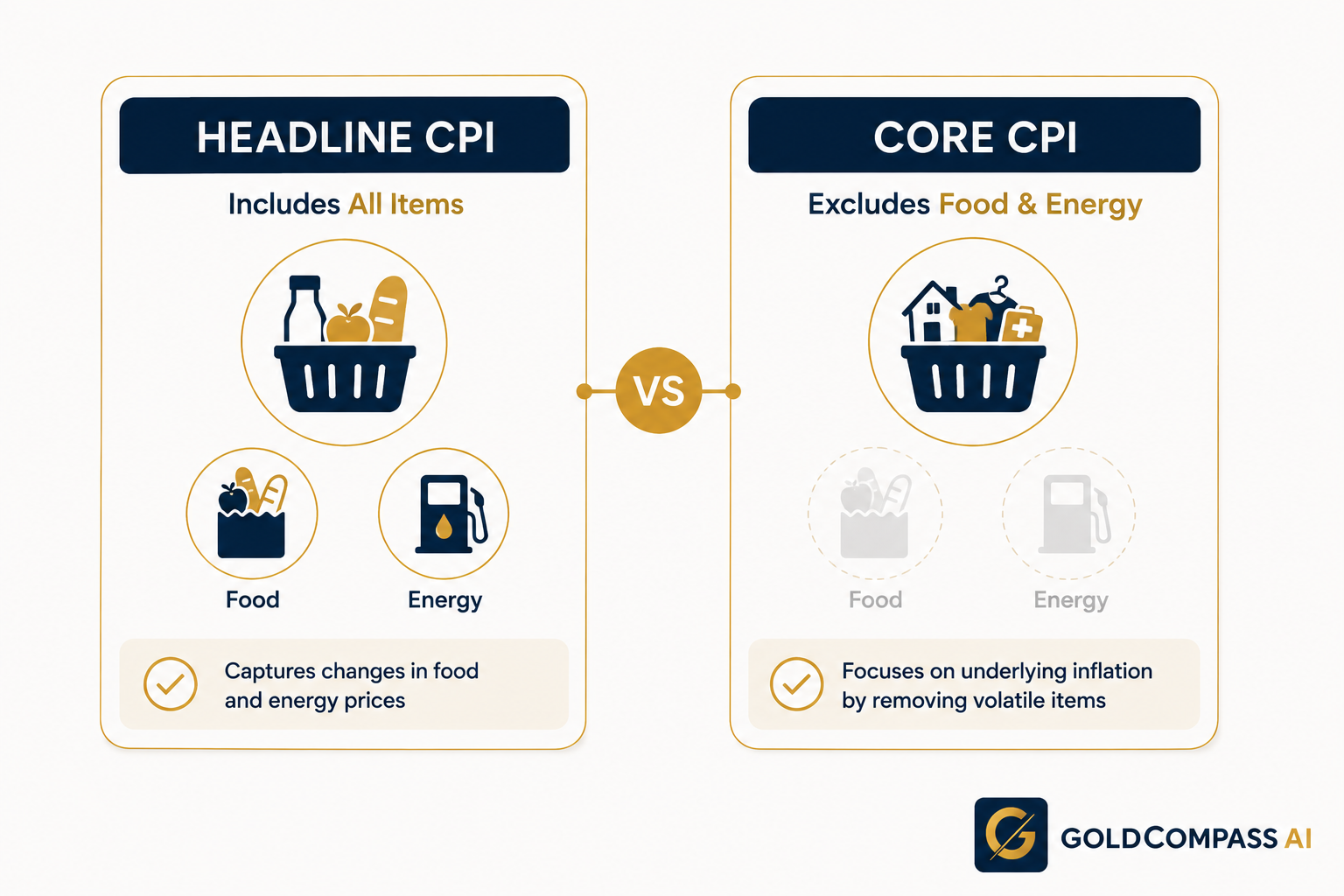
Headline CPI includes all consumer prices, including food and energy.
Core CPI excludes food and energy because these categories can experience temporary price swings caused by weather, geopolitical events, or seasonal factors.
For this reason, policymakers often monitor both measures together.
Market Expectations Matter
Markets rarely react to the CPI number alone.
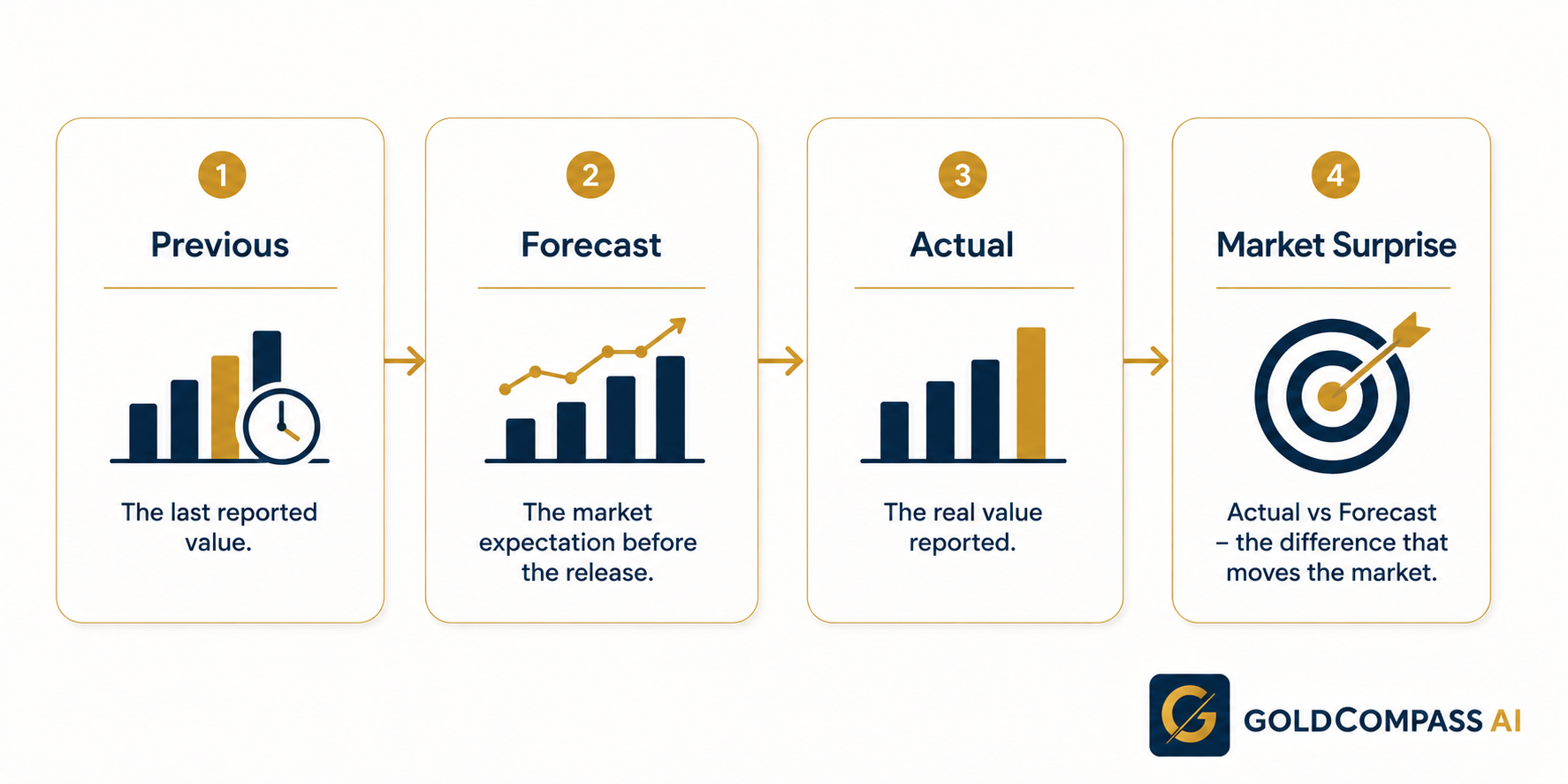
Instead, investors compare:
- Previous CPI
- Expected CPI
- Actual CPI
A report that differs significantly from expectations often creates the largest market movements.
This is why understanding expectations is usually more valuable than simply reading the headline inflation number.
How CPI Influences Gold
Gold does not react to inflation in isolation.
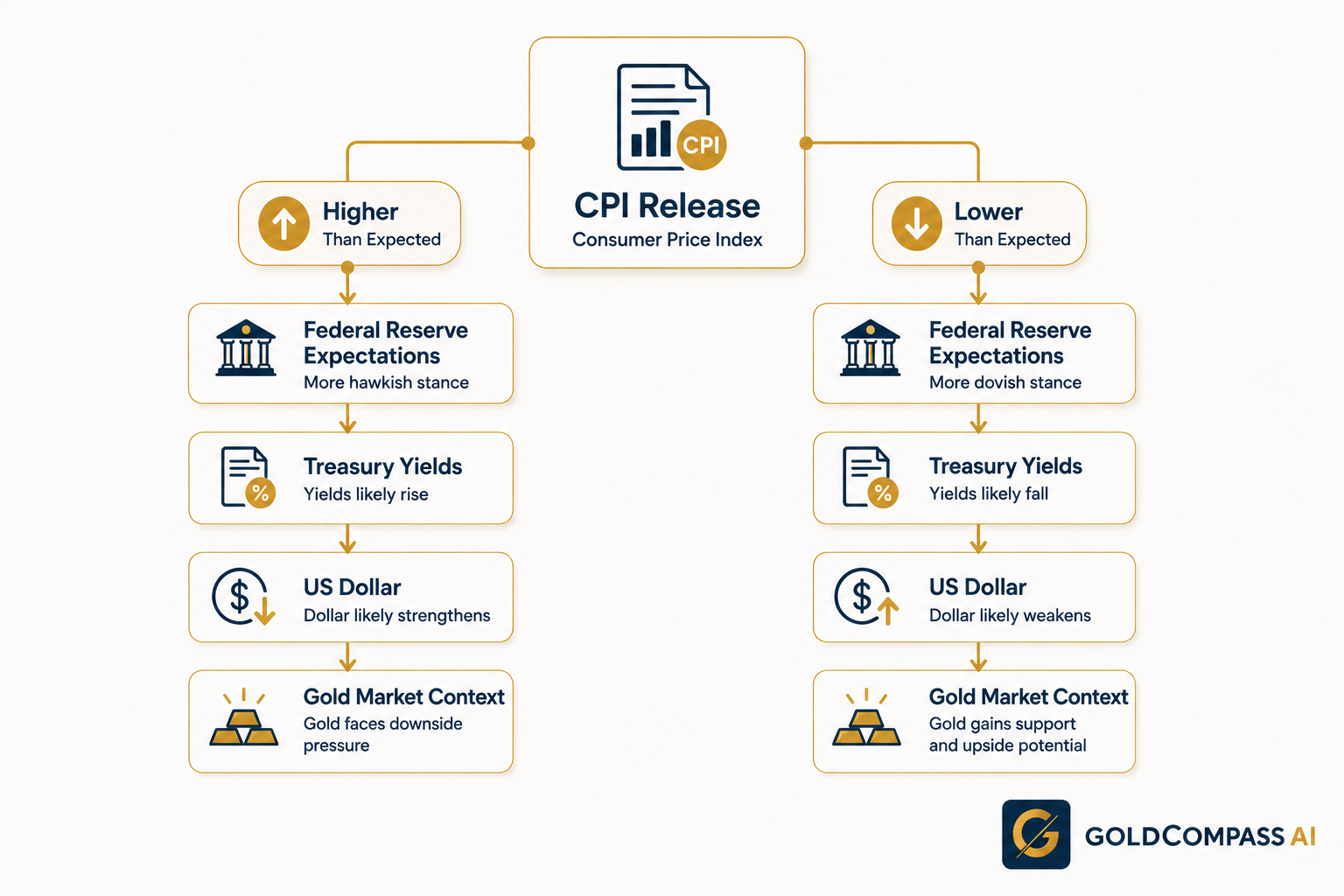
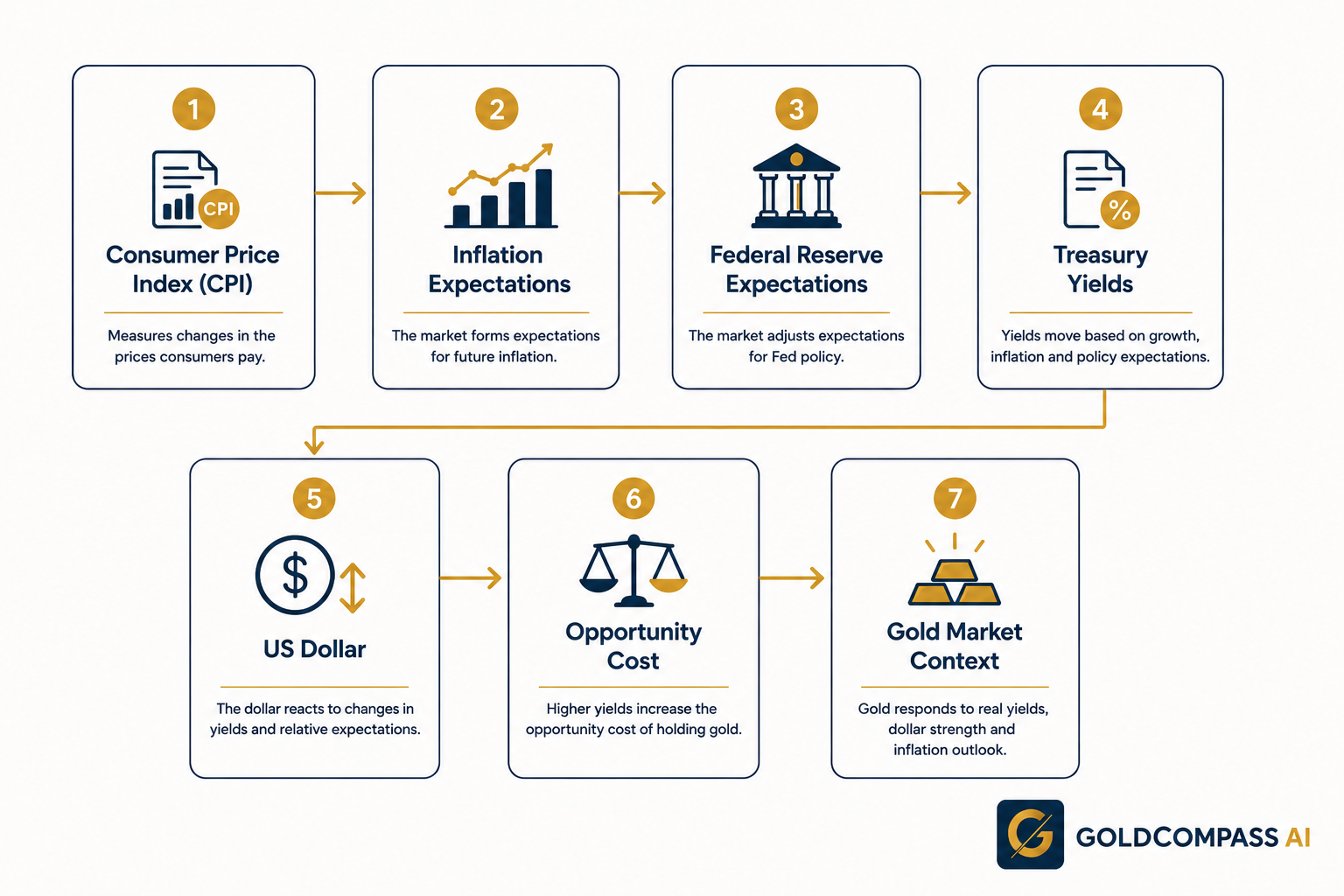
Instead, markets interpret whether inflation is running above or below expectations and how that could influence future Federal Reserve policy.
If CPI is higher than expected, investors may anticipate higher interest rates for longer. That expectation can push Treasury yields and the U.S. dollar higher, increasing the opportunity cost of holding gold.
If CPI is lower than expected, markets may begin pricing in future rate cuts. Treasury yields and the U.S. dollar may weaken, creating a more supportive environment for gold.
The reaction depends on how the CPI report changes market expectations rather than on whether inflation is simply "high" or "low."
Practical Takeaways
Before every CPI release, consider the following questions:
- What is the market expecting?
- How large would a surprise need to be?
- Are Treasury yields already moving ahead of the report?
- Is the U.S. dollar confirming the market's expectations?
- Could the report change expectations for future Federal Reserve policy?
- How might those changes affect the broader gold market?
Viewing CPI within this broader macroeconomic framework often provides more meaningful insight than focusing only on the reported inflation number.
Key Takeaways
- CPI measures changes in consumer prices across a broad basket of goods and services.
- Markets compare the actual CPI reading with expectations, not just the headline number.
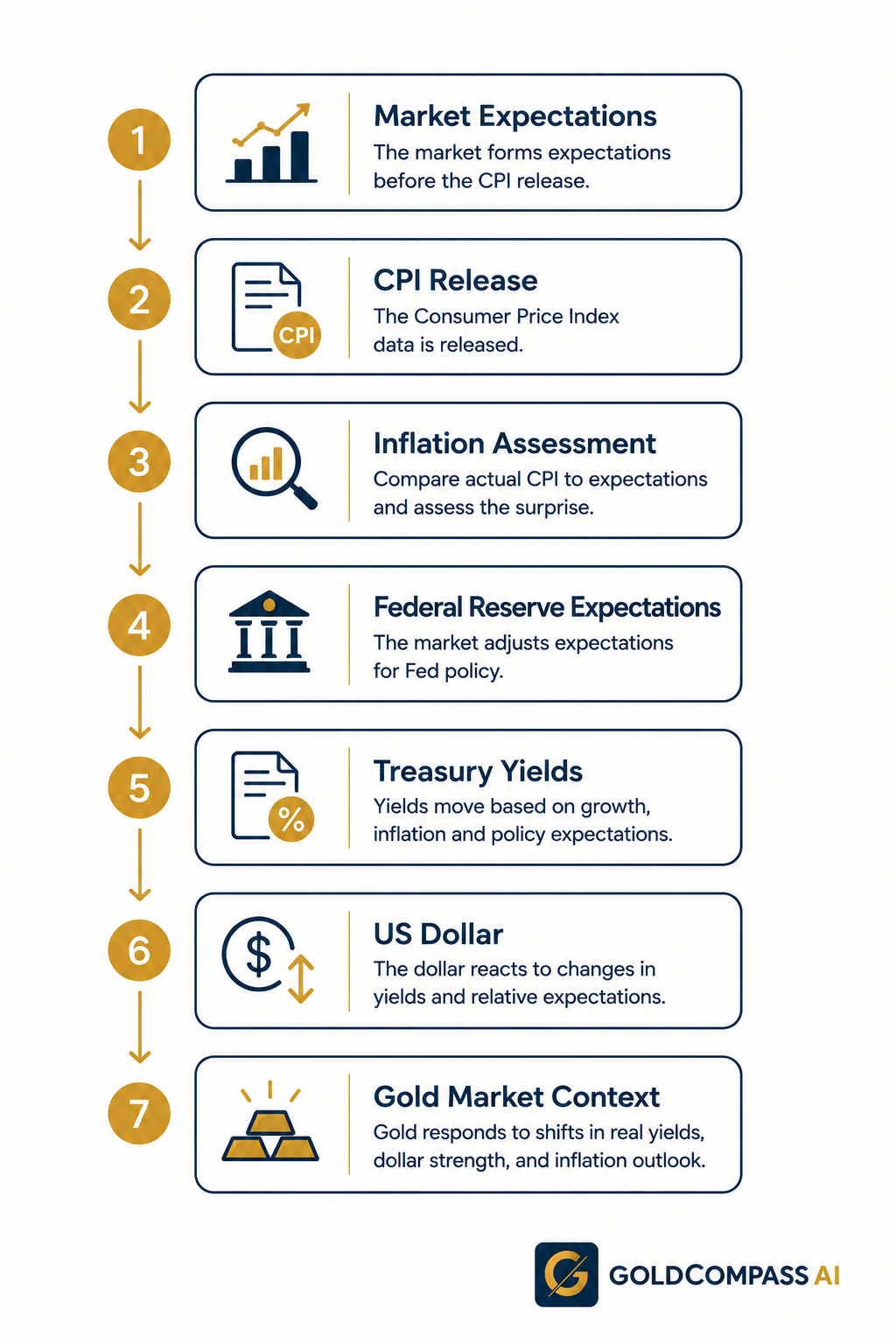
- CPI can influence Federal Reserve expectations, Treasury yields, and the U.S. dollar.
- Gold often reacts to changes in expectations rather than inflation data alone.
- Understanding the macroeconomic chain provides better context for interpreting gold price movements.
Frequently Asked Questions
What does CPI measure?
The Consumer Price Index measures the average change over time in prices paid by consumers for a representative basket of goods and services.
Why is CPI important for gold traders?
Because CPI influences inflation expectations, Federal Reserve policy expectations, Treasury yields, and the U.S. dollar, all of which can affect gold prices.
What is the difference between Headline CPI and Core CPI?
Headline CPI includes all consumer prices. Core CPI excludes food and energy prices to reduce the impact of short-term price volatility.
Does higher CPI always cause gold to rise?
No. The market's reaction depends on how CPI compares with expectations and how investors believe it will influence future monetary policy.