
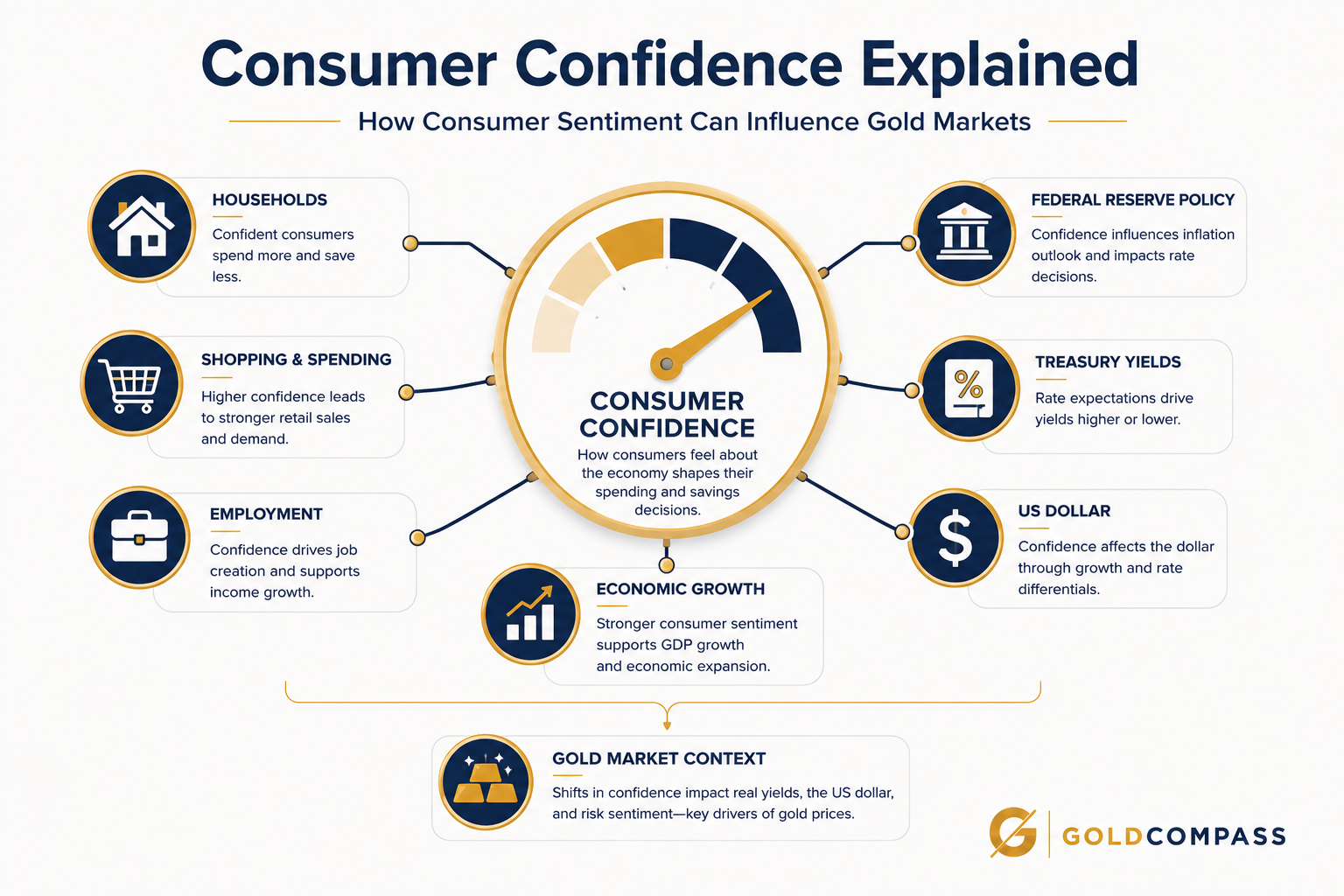
Consumer Confidence Explained: Why Sentiment Can Influence Gold
Not every important economic report measures something that has already happened.
Some reports ask a different question:
How do people feel about the economy?
That is the purpose of Consumer Confidence.
Confidence surveys measure how households view current economic conditions and what they expect in the months ahead.
Although confidence is based on opinions rather than hard economic data, markets still pay attention because expectations often influence future economic behavior.
For gold traders, Consumer Confidence is another indicator that helps build the broader macroeconomic picture.
1. What Is Consumer Confidence?
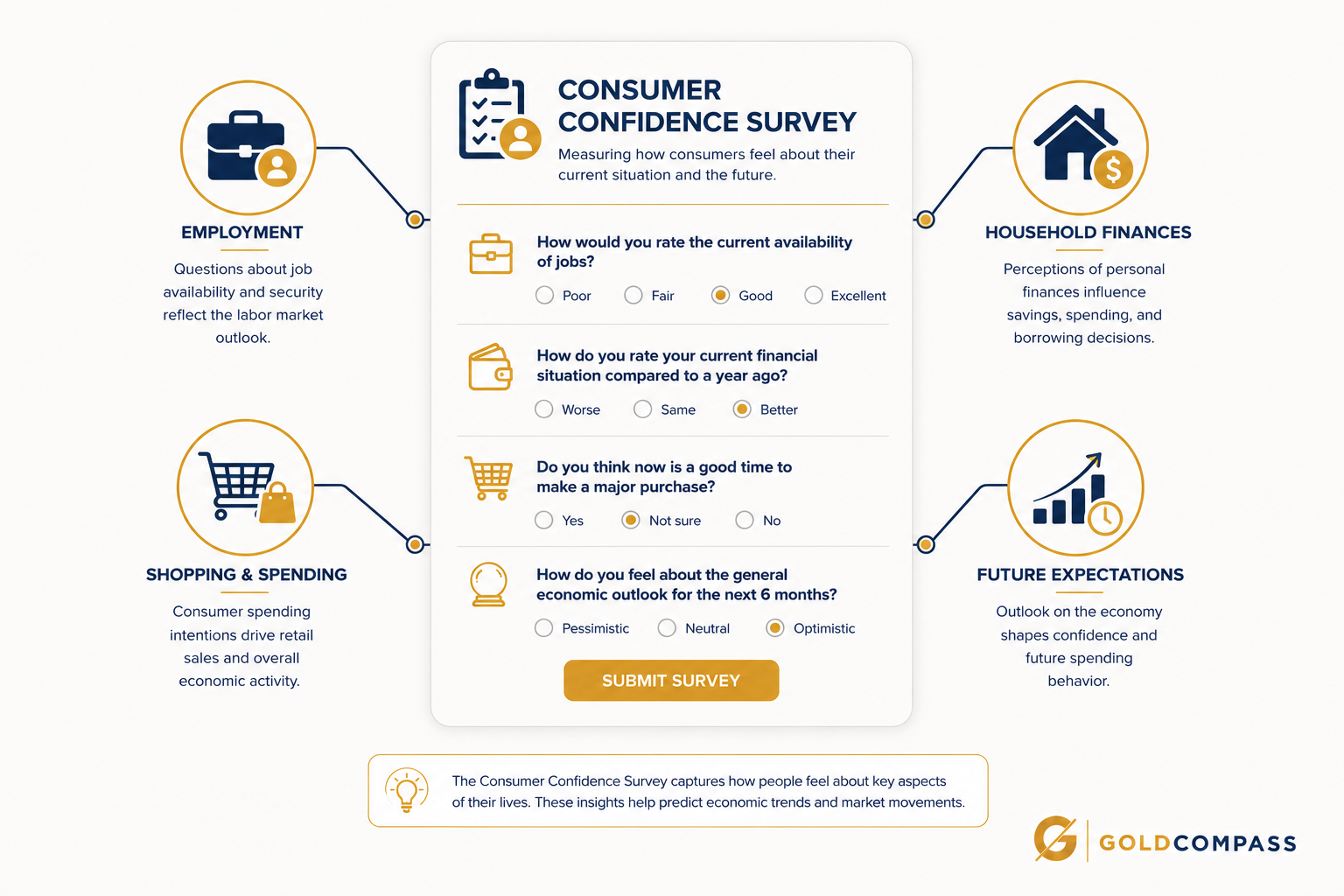
Consumer Confidence is a survey-based economic indicator that measures how optimistic or pessimistic households feel about the economy.
Participants are typically asked about topics such as:
- Current business conditions
- Employment opportunities
- Household finances
- Future income expectations
- Expectations for economic conditions
The final index summarizes how consumers collectively view the economic environment.
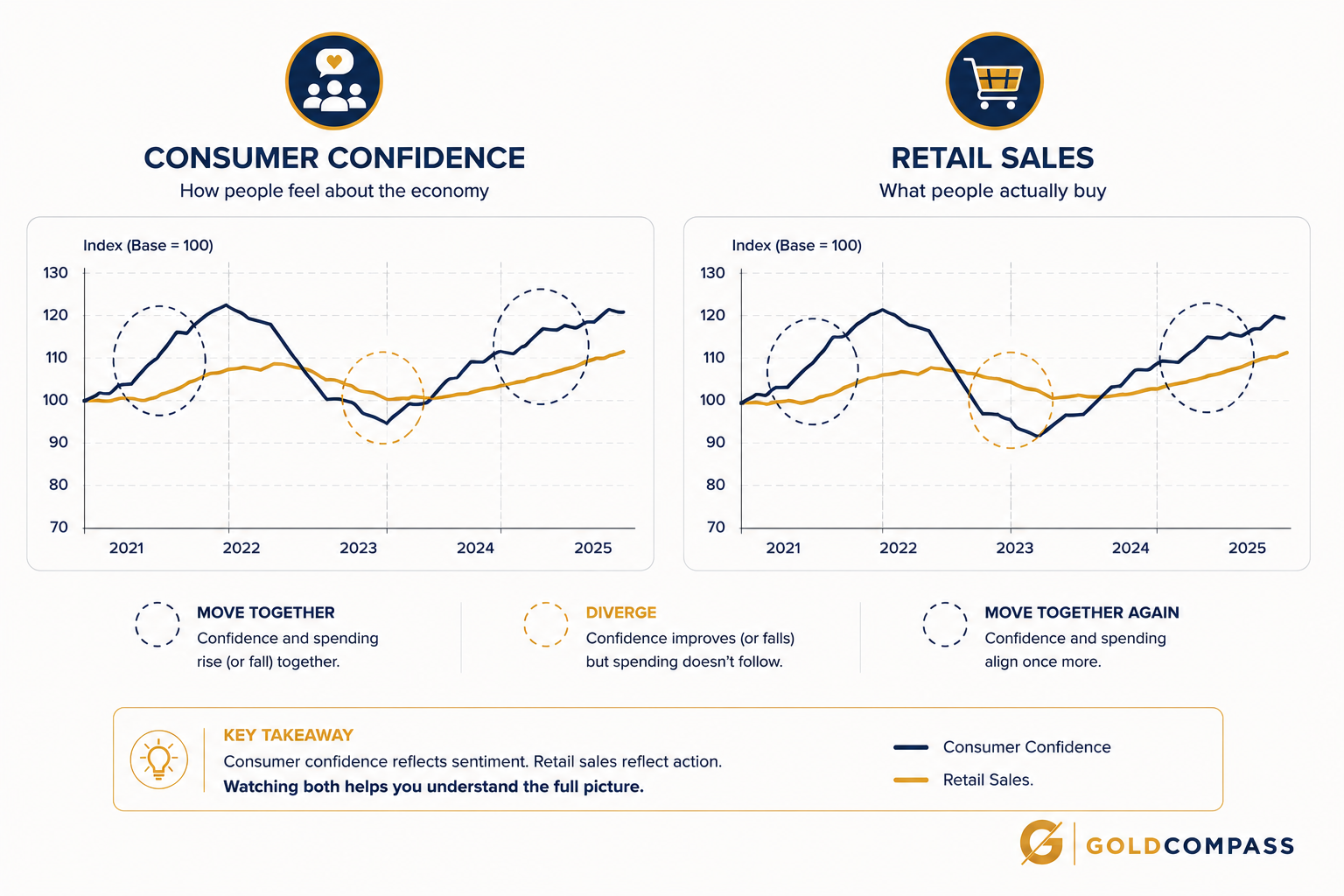
2. Confidence Is Not the Same as Spending
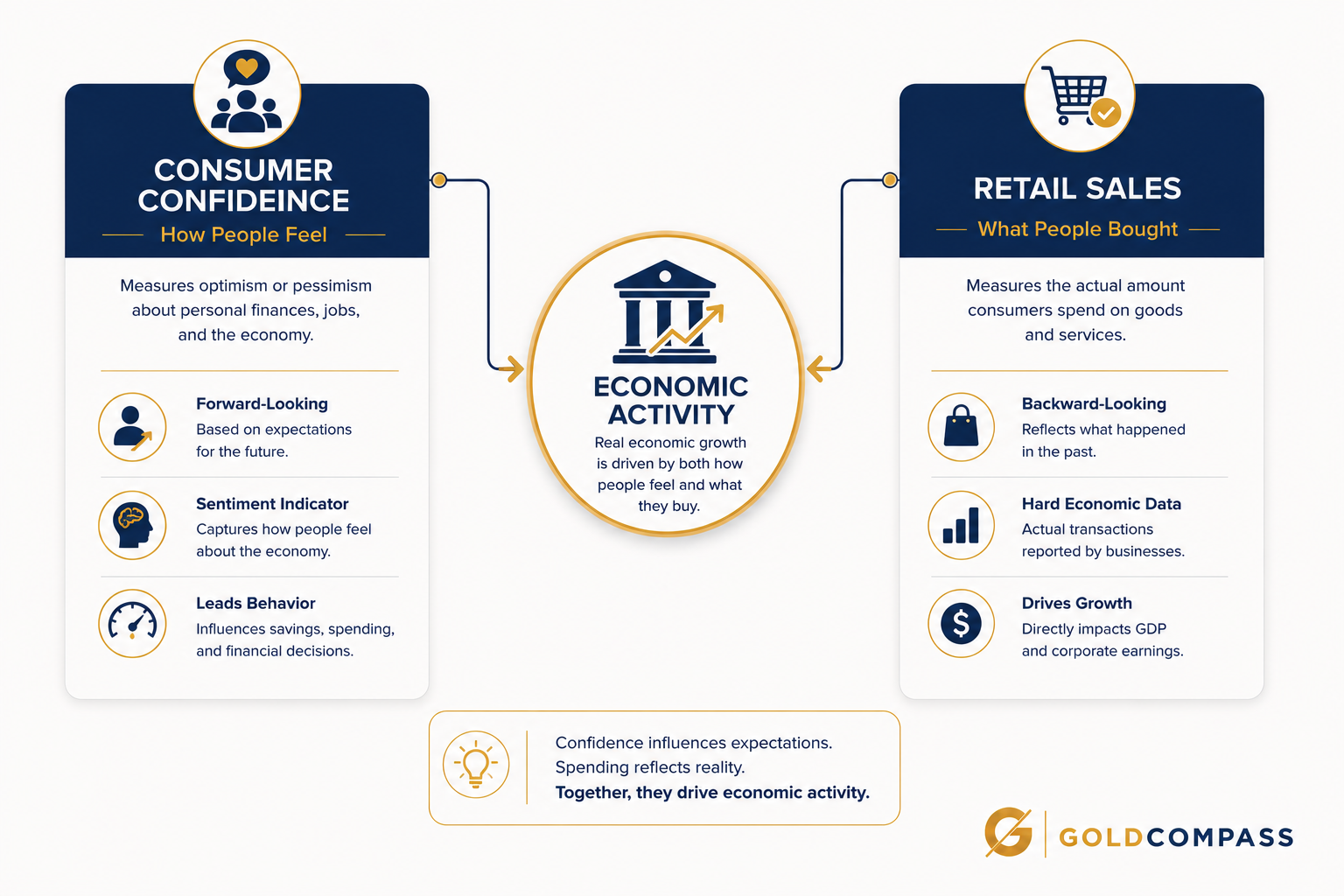
Consumers can feel optimistic without immediately increasing spending.
Likewise, spending may remain resilient even while confidence declines.
Consumer Confidence measures attitudes.
Retail Sales measures actual purchases.
The two indicators often complement each other, but they answer different questions.
Understanding that distinction prevents unnecessary confusion.
3. Why Investors Monitor Confidence
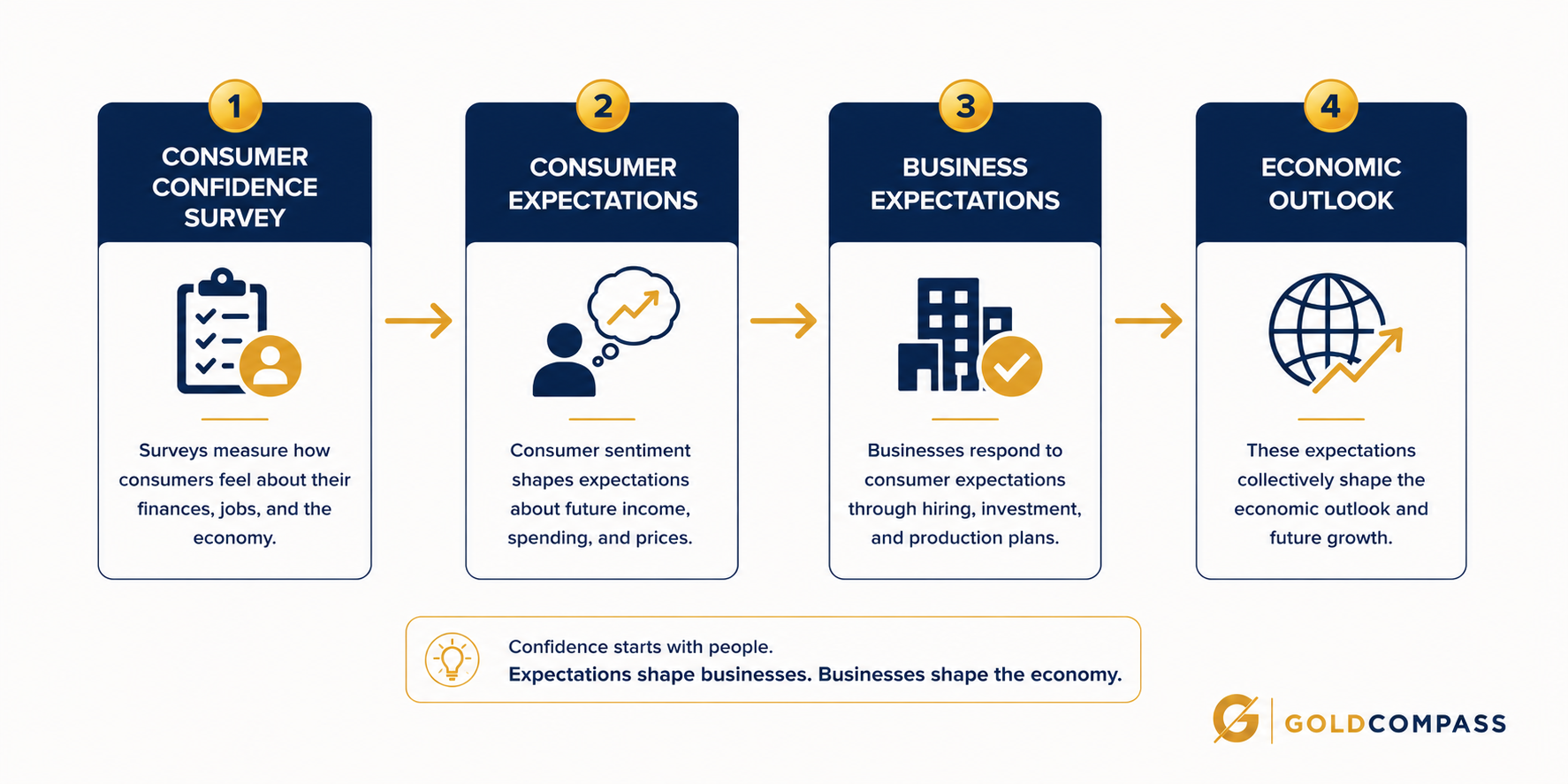
Confidence influences expectations.
If households become increasingly optimistic, businesses may anticipate stronger demand.
If households become more cautious, companies may prepare for slower activity.
Investors monitor these surveys because they may provide early signals about changes in economic momentum before they appear in hard economic data.
Confidence alone does not determine the future.
It simply provides another perspective on how the economy may evolve.
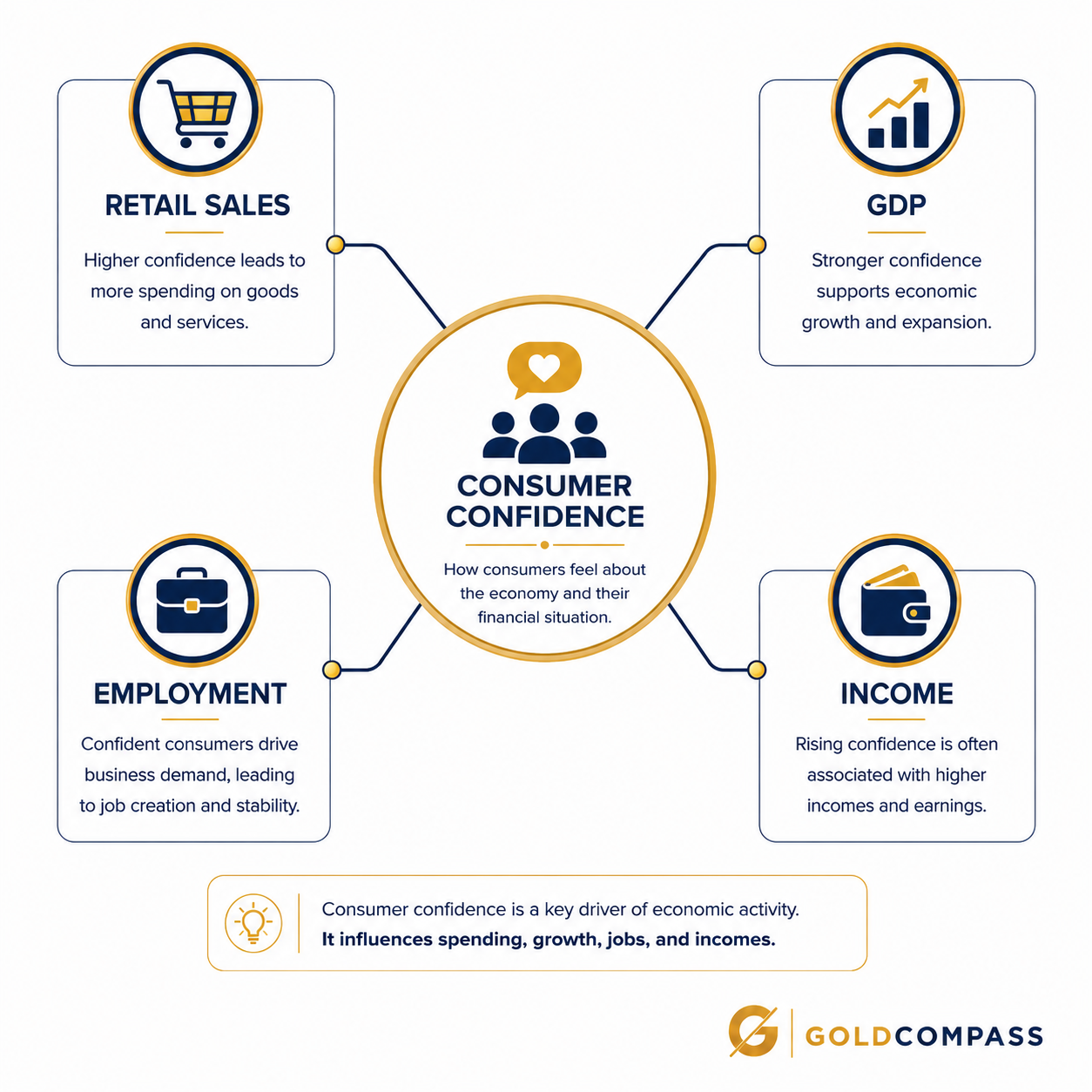
4. Consumer Confidence and Economic Growth
Household consumption represents a significant portion of economic activity.
Because of this relationship, confidence surveys are often viewed alongside:
- Retail Sales
- GDP
- Employment
- Personal Income
If confidence improves while other indicators strengthen as well, markets may see a more consistent economic story.
If confidence moves in the opposite direction from other indicators, investors often investigate further before drawing conclusions.
No single report tells the entire story.
5. Previous, Forecast, and Actual Still Apply
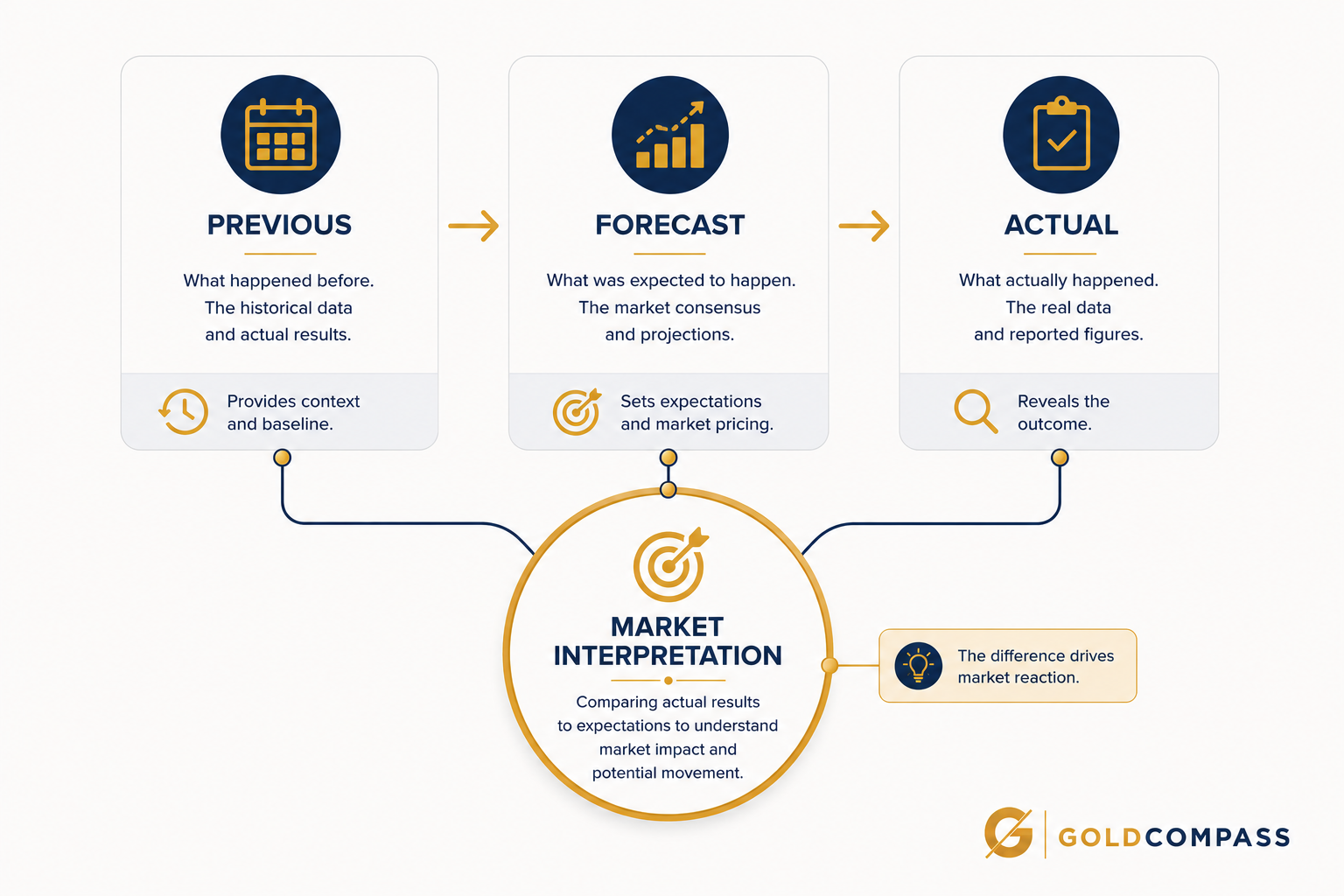
Like other scheduled economic reports, Consumer Confidence is interpreted relative to expectations.
Markets compare:
- Previous
- Forecast
- Actual
Suppose economists expect the confidence index to improve modestly.
If the published figure greatly exceeds expectations, investors receive new information about consumer sentiment.
If confidence unexpectedly weakens, markets may reassess the outlook for economic activity.
The surprise—not simply the headline—is often what attracts attention.
6. How Confidence Can Influence Gold
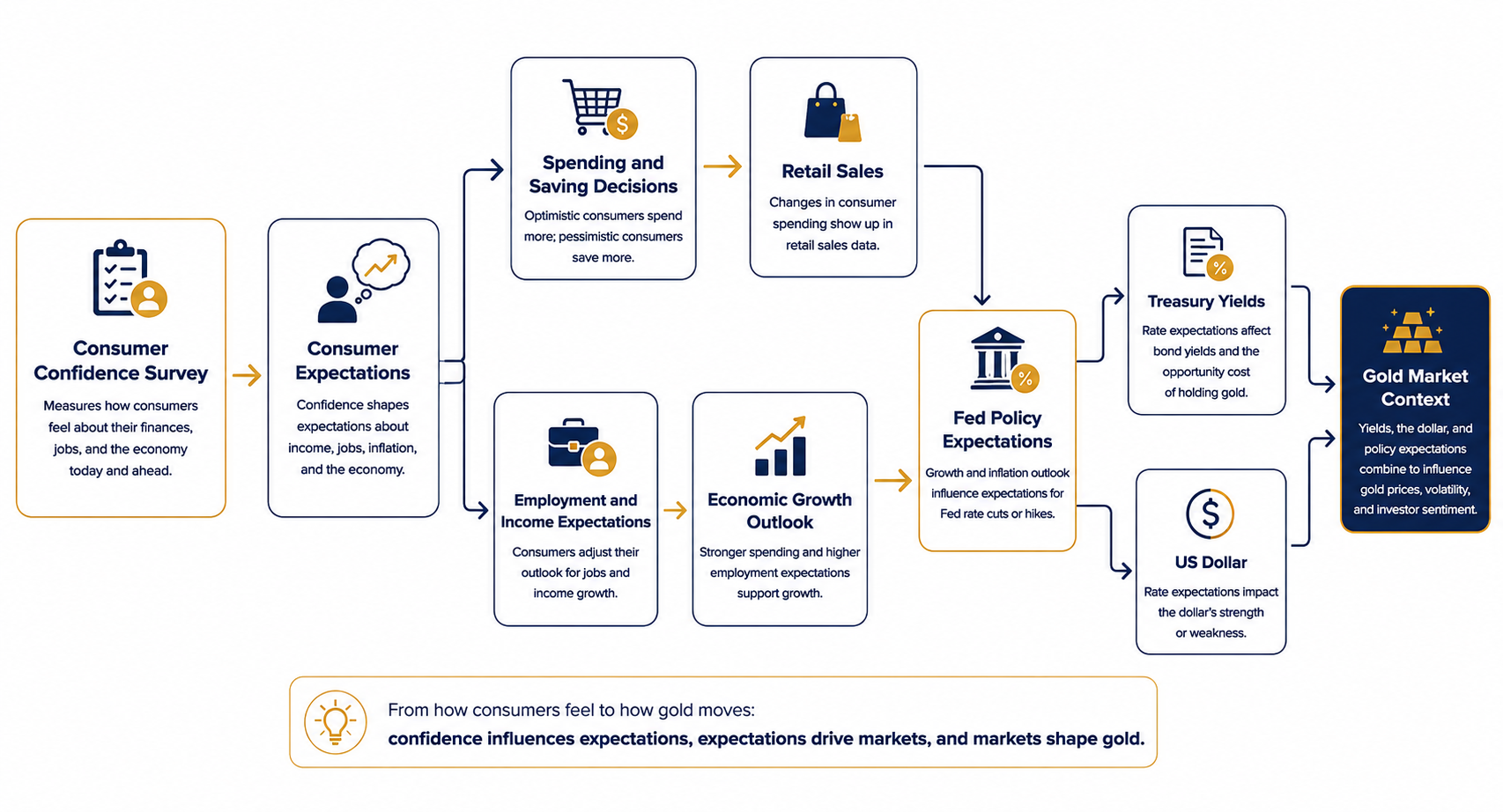
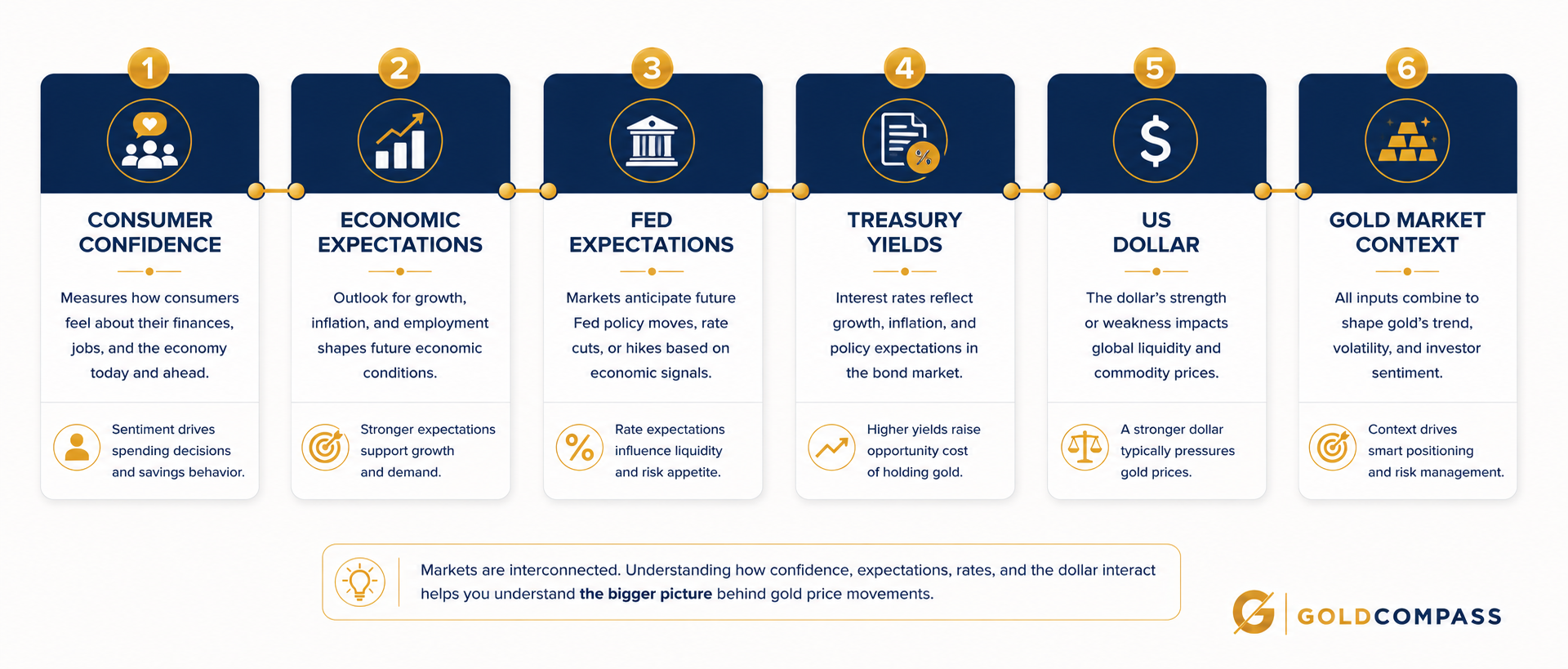
Consumer Confidence does not directly move gold.
Instead, it contributes to broader expectations about the economy.
A stronger-than-expected survey may support expectations of continued economic resilience.
A weaker-than-expected survey may increase concerns about slowing economic momentum.
Those changing expectations can influence:
- Federal Reserve expectations
- Treasury yields
- US Dollar movements
Gold then trades within that evolving macroeconomic environment.
7. Why Confidence Can Change Quickly
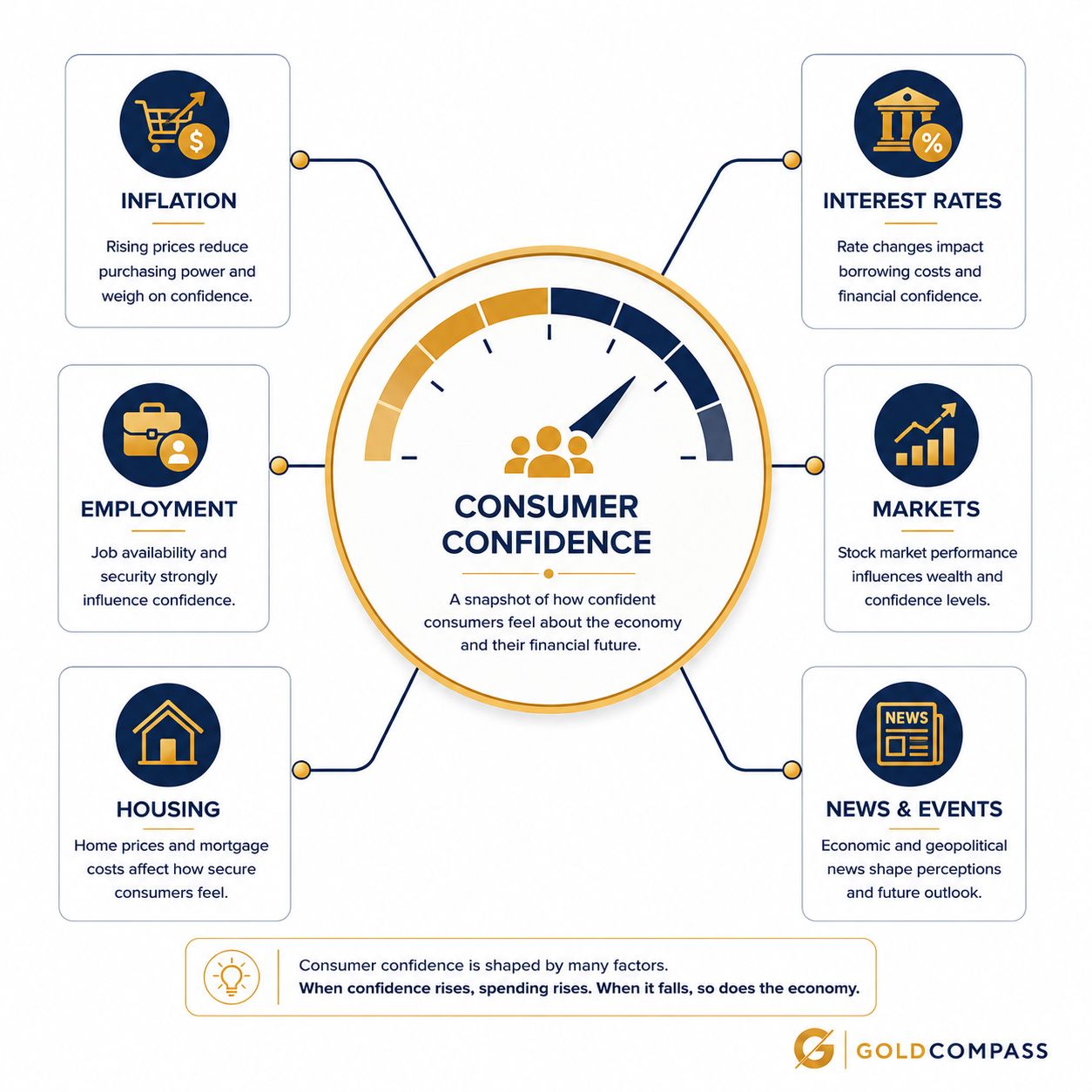
Confidence is influenced by many factors, including:
- Employment conditions
- Inflation
- Interest rates
- Financial markets
- Housing conditions
- News events
Because these factors change over time, confidence surveys also change.
One month's report should therefore be viewed as part of a longer trend rather than in isolation.
8. Confidence Does Not Always Predict Spending
There are periods when confidence falls but spending remains relatively strong.
There are also periods when confidence improves before spending accelerates.
Households may delay purchases, increase savings, or adjust spending priorities for reasons not fully captured by confidence surveys.
For this reason, professional investors usually compare Consumer Confidence with other economic indicators instead of relying on it alone.
9. Major Consumer Confidence Reports
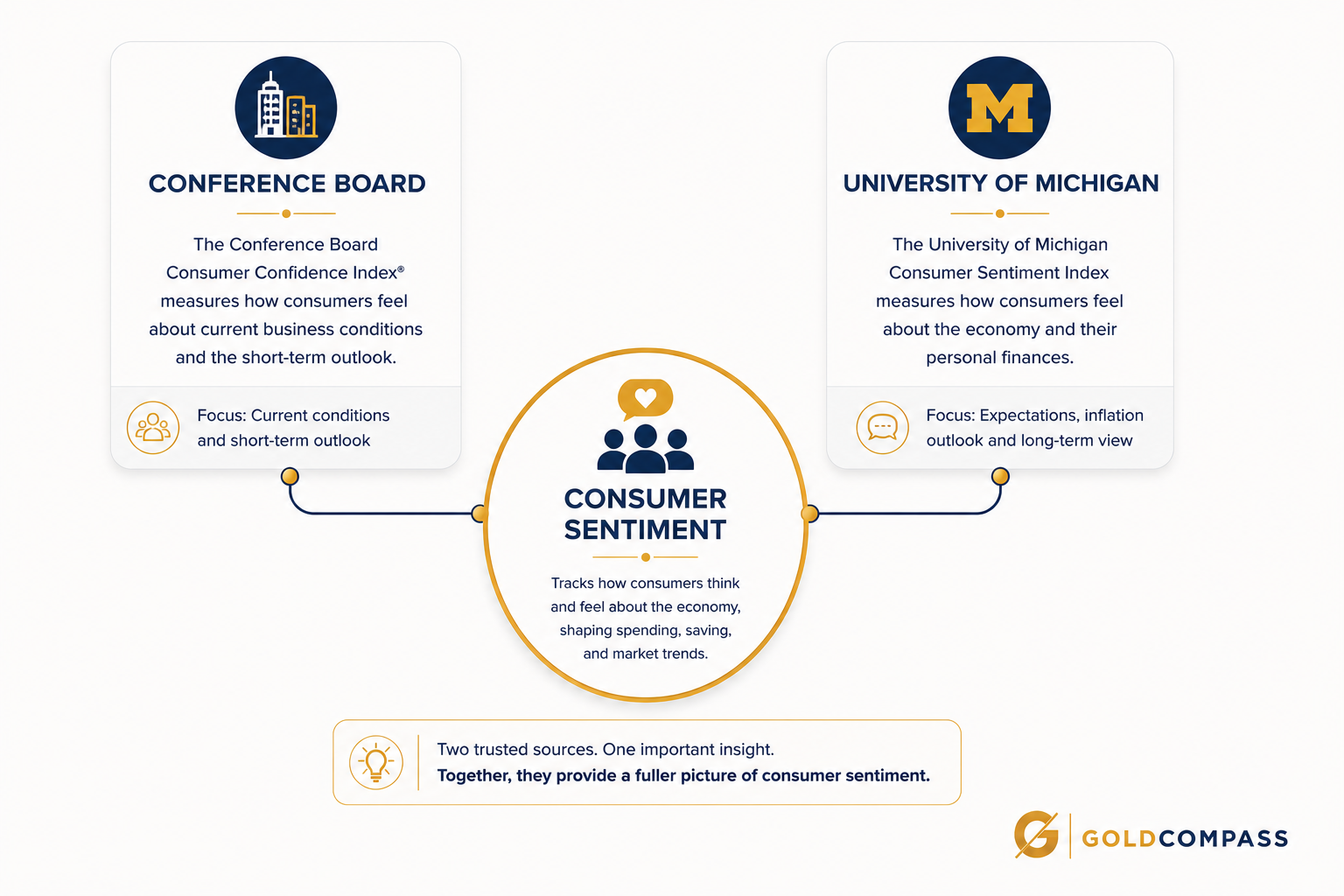
Several organizations publish confidence-related surveys.
Among the most widely followed are:
SurveyFocusConference Board Consumer ConfidenceHousehold assessment of current and future economic conditionsUniversity of Michigan Consumer SentimentConsumer attitudes toward finances, inflation, and the economy
Both reports receive market attention, although their methodologies differ.
Investors generally focus more on changes over time than on any single reading.
10. How Consumer Confidence Fits Into Macro Analysis
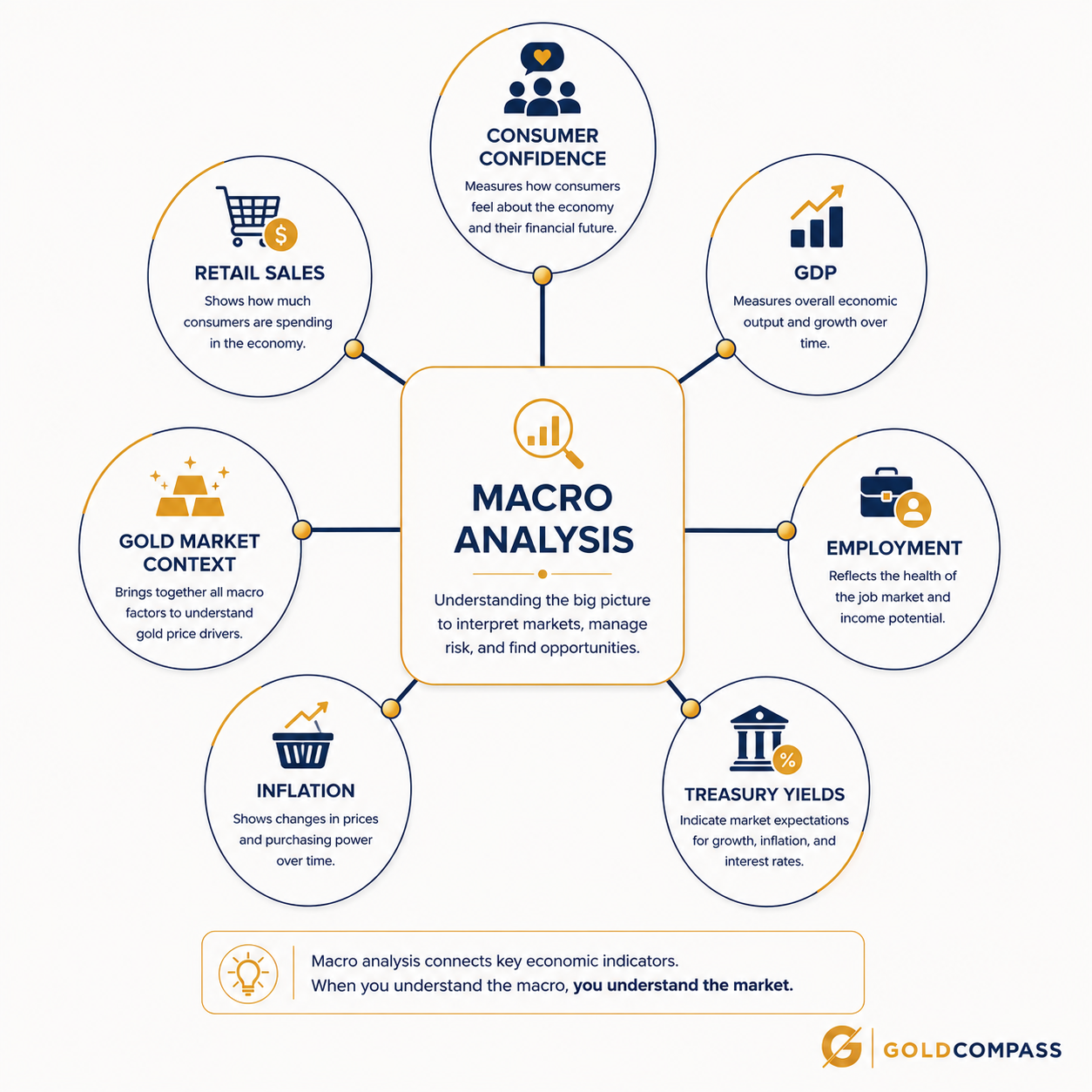
Professional macro analysis resembles assembling a puzzle.
Each report contributes one piece.
Consumer Confidence helps answer:
How do households feel?
Retail Sales answers:
What are households buying?
GDP answers:
How is the economy performing?
Employment reports answer:
What is happening in the labor market?
Inflation reports answer:
How are prices changing?
Together, these indicators provide a more complete understanding than any individual report.
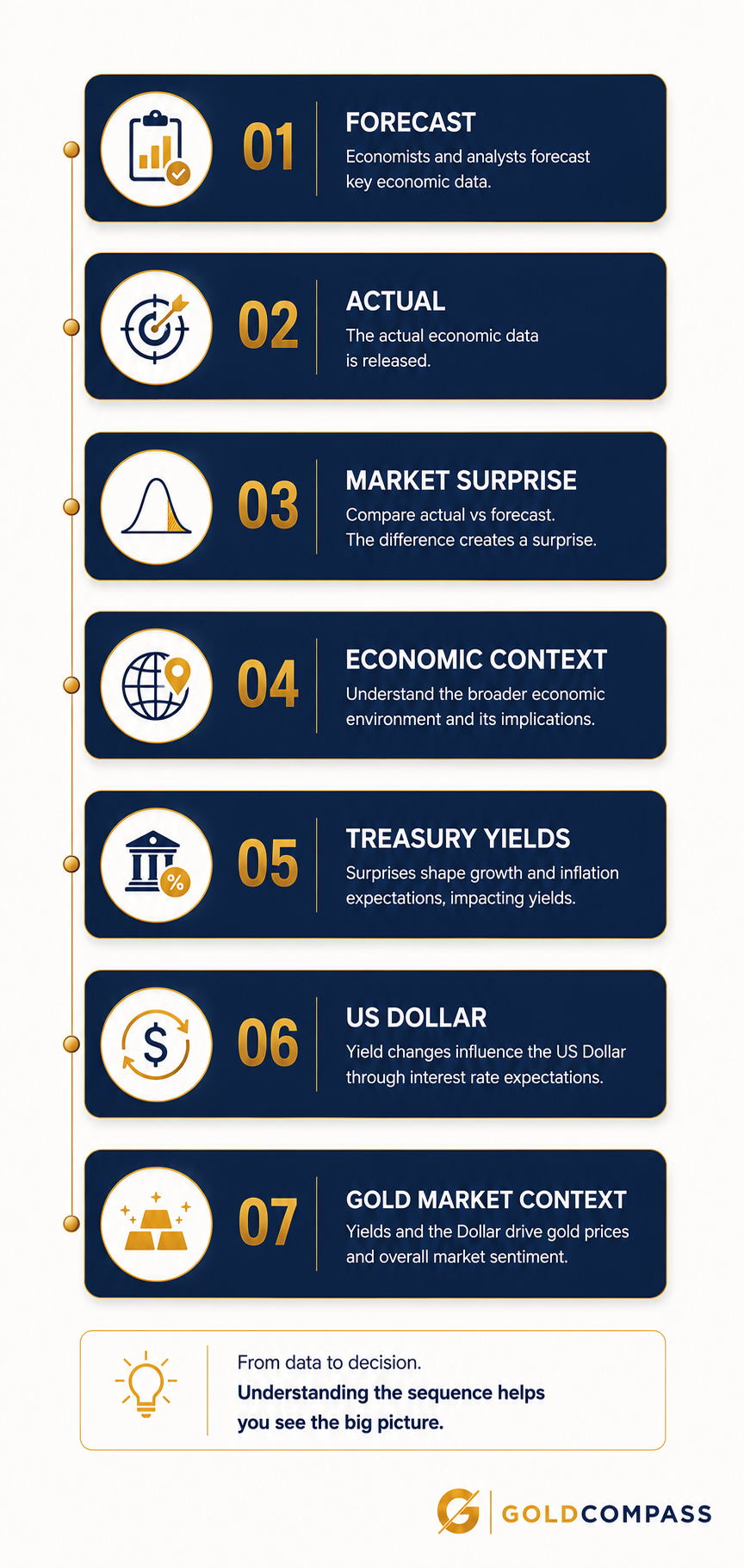
11. A Practical Framework for Reading Consumer Confidence
When Consumer Confidence is released:
- Review the Forecast.
- Compare Actual with expectations.
- Determine whether the surprise is meaningful.
- Compare the report with Retail Sales and GDP.
- Observe Treasury yields.
- Observe the US Dollar.
- Evaluate gold within the broader macroeconomic environment.
This structured approach emphasizes context rather than isolated headlines.
Key Takeaways
TopicMain IdeaConsumer ConfidenceMeasures household optimism and expectations.Retail SalesMeasures actual consumer purchases.Market ImportanceConfidence can influence expectations for economic growth.GoldIndirectly affected through macroeconomic expectations.Forecast vs ActualMarkets focus on surprises relative to expectations.Best PracticeAnalyze confidence alongside other major economic indicators.
Frequently Asked Questions
What is Consumer Confidence?
Consumer Confidence is a survey-based indicator measuring how optimistic or pessimistic households feel about current and future economic conditions.
Is Consumer Confidence the same as Consumer Sentiment?
The terms are often used similarly, although different organizations publish separate surveys using different methodologies.
Does Consumer Confidence directly determine gold prices?
No. It contributes to broader macroeconomic expectations that may influence Treasury yields, the US Dollar, and the environment in which gold trades.
Why do markets care about confidence surveys?
Changes in confidence may provide early clues about consumer behavior and future economic activity.
Can confidence rise while spending falls?
Yes. Confidence and actual spending do not always move together in the short term.
Which confidence surveys receive the most attention?
The Conference Board Consumer Confidence Index and the University of Michigan Consumer Sentiment Survey are among the most widely followed.
Should Consumer Confidence be analyzed alone?
No. It is most useful when combined with Retail Sales, GDP, employment, inflation, and other macroeconomic indicators.